
Beautiful Plants For Your Interior
Beautiful Plants For Your Interior
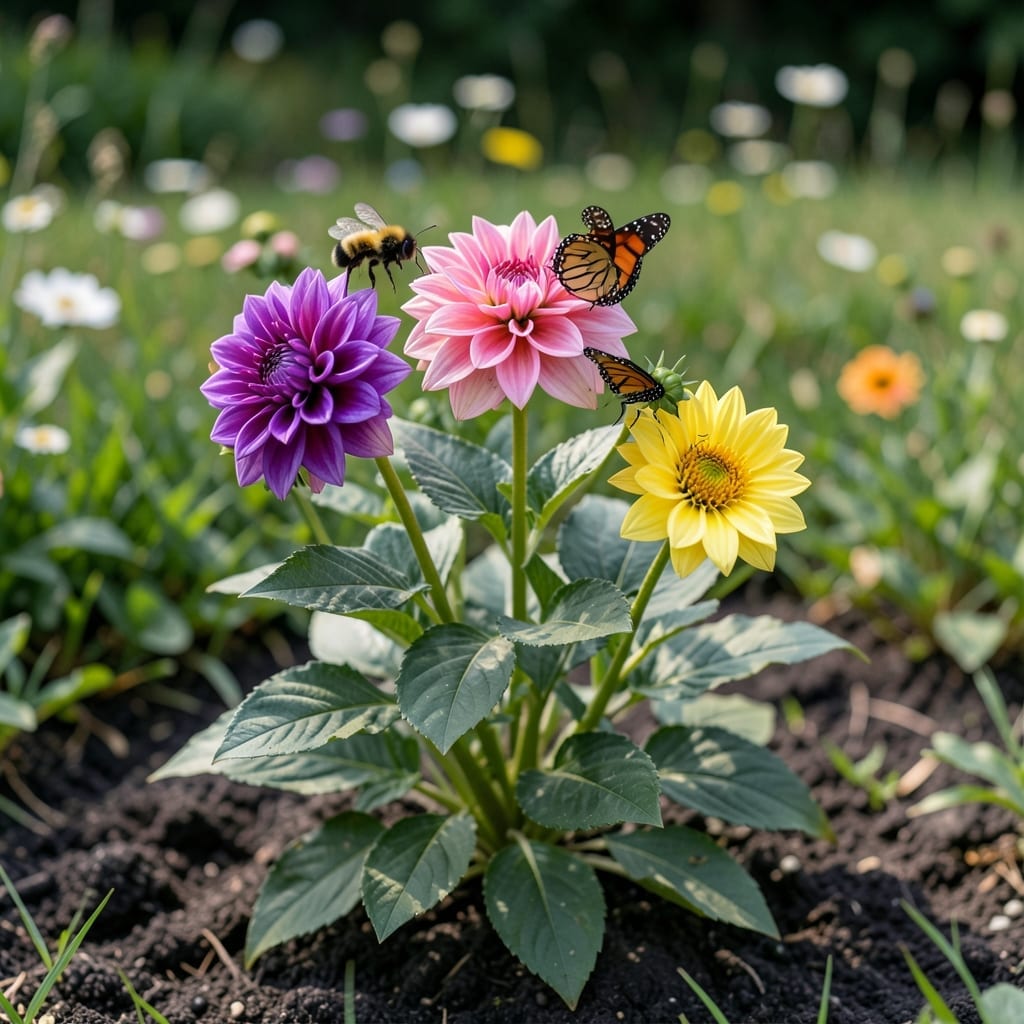
Dahlias offer limited value to pollinators because their dense, complex blooms often restrict access to nectar and pollen, though simpler varieties can attract bees and butterflies.
I’ve noticed the double-flowered types create a barrier with their tightly packed petals, making it tough for insects to reach the center. 🌟 Single or semi-double dahlias, however, have exposed centers that provide easy access to nectar, which is why these are the varieties I recommend for pollinator gardens.
What’s fascinating is that even less showy blooms can support local ecosystems when planted in clusters, offering a reliable food source during late summer when other flowers may be scarce.
💡 In This Article
The structure of double-flowered dahlias creates a physical barrier for pollinators. Their tightly packed petals form a dense, multi-layered bloom that obscures the central disc where nectar and pollen are produced. Bees and butterflies struggle to navigate through these crowded layers to reach their food source.
In these complex blooms, the reproductive parts are often hidden beneath decorative petals that serve no purpose for pollination. This is a result of selective breeding prioritizing visual appeal over biological function. Single or semi-double varieties maintain exposed centers, making them far more accessible to insects.
Research shows that pollinators visit open-faced flowers 5-10 times more frequently than double-flowered varieties. The energy required to access hidden nectar often outweighs the reward, causing insects to move on to easier food sources. This is particularly true for smaller bees and hoverflies.
Even the color palette of many modern dahlias can be less attractive to pollinators. While humans appreciate the wide range of hues, bees are particularly drawn to blues and purples, which are less common in cultivated dahlia varieties. The most pollinator-friendly dahlias typically have simpler structures in these preferred colors.
What’s happening biologically is that these flowers have essentially evolved away from their natural pollination function. The showy petals we admire are modified leaves that no longer serve their original purpose, creating a beautiful but ecologically inefficient bloom.
This doesn’t mean all dahlias are poor for pollinators. The key is selecting varieties that maintain their natural form, allowing insects to perform their essential role in the ecosystem. ✨
Double-flowered types have tightly packed petals that hide nectar and pollen. Bees can’t reach the center, so they skip these for easier food sources.
Open-centered or single-flowered varieties like ‘Bishop of Llandaff’ work best. Their exposed centers let bees land directly on nectar-rich discs.
Yes! Bees see purple, blue, and yellow best. Dark reds appear black to them, so stick to lighter, more visible hues.
Plant in clusters of 3-5 and add a shallow water dish nearby. This creates a visible target and hydration station for visiting insects.