
Beautiful Plants For Your Interior
Beautiful Plants For Your Interior
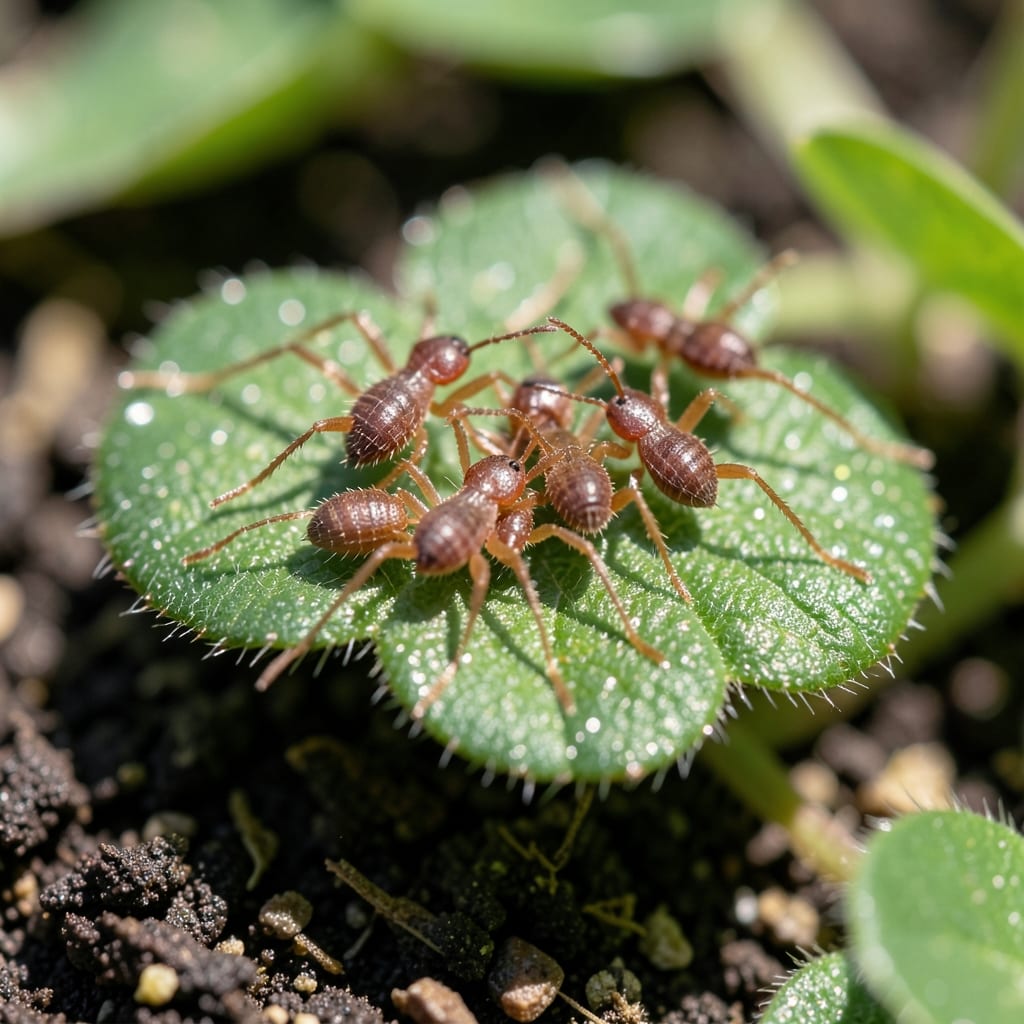
Clover mites are not dangerous to humans or pets, as they do not bite, sting, or transmit diseases. However, they can be a nuisance indoors and may damage plants by feeding on them.
What concerns many gardeners is their tendency to invade homes in large numbers, especially during seasonal transitions. These tiny reddish-brown pests feed on plant sap, which can weaken young seedlings and ornamental plants. I’ve noticed they often cluster on windowsills and walls, creating unsightly stains when crushed. ✨
💡 In This Article
These tiny arachnids, barely 0.75 mm long, belong to the Bryobia genus and thrive in cool, moist environments. They feed by piercing plant cells with their needle-like mouthparts, extracting sap that contains proteins and carbohydrates. This feeding method doesn’t harm humans because their mouths are too small and weak to penetrate our skin. 🔥
You’ll typically find them on lawns, clover patches, and ornamental plants. During spring and fall, they become most active, often migrating indoors through cracks and windows when outdoor conditions turn unfavorable. Unlike spiders or ticks, they lack venom glands entirely, making them physically incapable of biting or stinging.
Their bright reddish-orange color comes from pigments in their plant-based diet.
What makes them problematic for gardeners is their reproductive capacity. A single female can lay up to 70 eggs without mating, and these hatch within 1-2 weeks under ideal conditions. The nymphs immediately begin feeding, potentially stunting plant growth. I’ve seen heavy infestations turn healthy grass yellow in patches within days. ✨
Indoors, they don’t survive long without moisture but can leave rust-colored stains when crushed. These stains occur because their bodies contain pigments that oxidize upon contact with surfaces. Unlike dust mites, they don’t feed on human skin or household debris, which is why they quickly perish indoors. Their presence is purely accidental during migration periods.
For plants, the damage appears as silver stippling on leaves where they’ve fed. Severe cases can cause leaf drop or stunted growth, particularly in young plants. However, established gardens usually recover once the mite population is controlled. Their activity peaks at temperatures between 60-75°F, with humidity above 50%. 💫
No, they physically cannot bite humans or pets. Their mouthparts are too small and weak to penetrate skin, and they lack venom glands entirely.
They primarily damage plants by feeding on sap, causing silver stippling on leaves. Severe infestations may lead to leaf drop or stunted growth in young plants.
Those rust-colored stains come from pigments in their plant-based diet. The pigments oxidize when the mites are crushed, leaving visible marks on surfaces.
They typically die within 1-2 days indoors without moisture. They don’t reproduce inside and their presence is accidental during migration periods.