
Beautiful Plants For Your Interior
Beautiful Plants For Your Interior
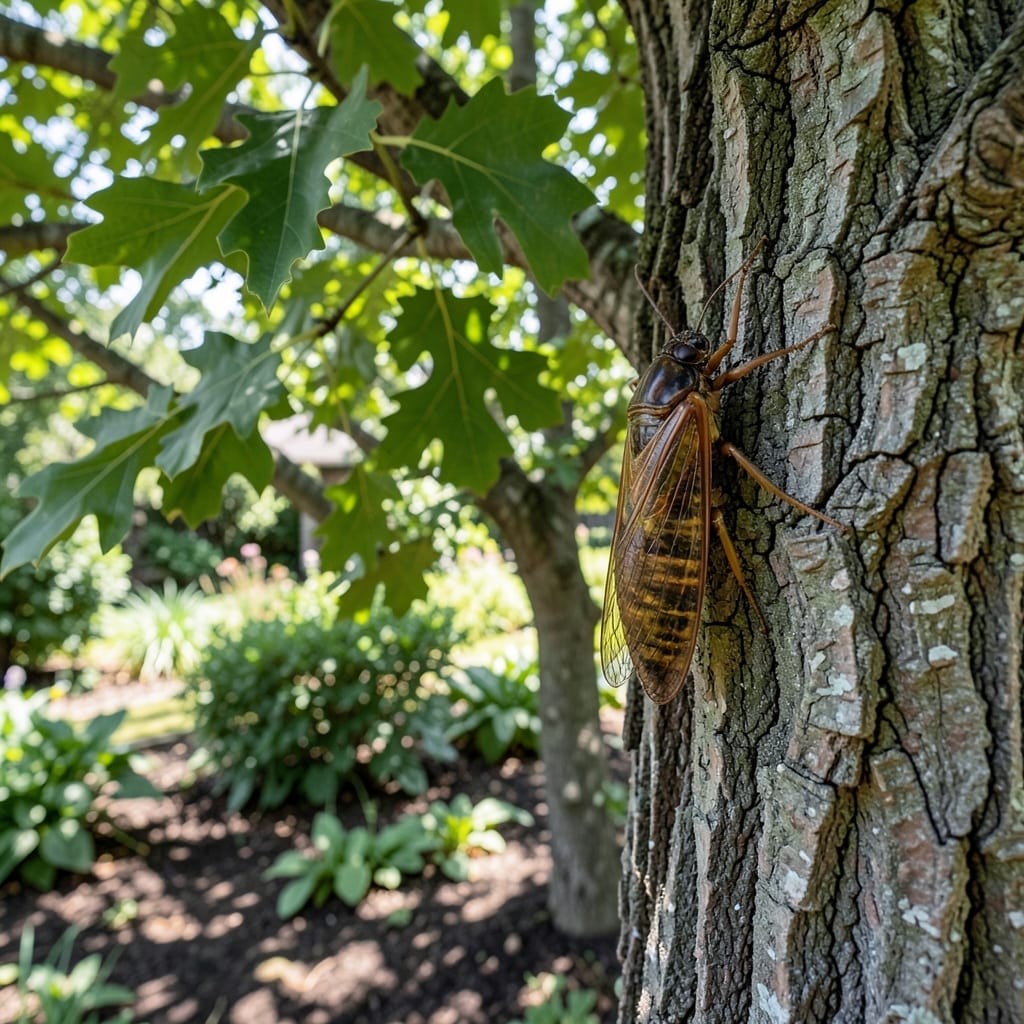
Cicada shells are harmless to humans and pets. They are empty exoskeletons left behind after molting and contain no venom or toxins, posing no danger when touched or accidentally ingested.
These hollow casings are made of chitin, the same material found in shrimp shells, which is completely inert and non-toxic. From my gardening experience, I’ve seen kids and pets handle them without any issues. They’re a natural part of the cicada life cycle, not a hazard. ✨
In fact, they can even serve as a mild fertilizer when left in garden soil, breaking down over time to return nutrients to the earth. 💫
💡 In This Article
The empty shells you find are actually molted exoskeletons, not the cicada itself. During its development, a nymph sheds its rigid outer layer to grow, leaving behind this hollow casing made entirely of chitin, a fibrous substance that’s chemically identical to the shells of crabs and lobsters.
This material is biologically inert, meaning it lacks any active compounds that could cause harm. 🔥
Chitin is a polysaccharide that’s insoluble in water and resistant to breakdown by most digestive enzymes. When a dog chews on one, it typically passes through their system undigested, much like eating a piece of dry pasta. The structure is 90-95% chitin with trace minerals, but zero proteins or toxins that would trigger allergic reactions.
Even for humans with shellfish allergies, the risk is negligible because the allergenic proteins are absent. ✨
What you’re seeing is the final stage of incomplete metamorphosis. The nymph climbs a vertical surface, splits its old skin along the back, and emerges as a winged adult, leaving the exoskeleton perfectly intact. This process takes 1-2 hours and results in a shell that’s essentially a natural, empty vessel.
There’s no venom sac, no defensive chemicals—just a fragile, lifeless structure. 💫
In the wild, these shells often accumulate at the base of trees where cicadas emerge. Gardeners sometimes collect them as natural mulch, as chitin slowly decomposes into nitrogen-rich compounds that benefit soil. Over 6-12 months, microorganisms break it down completely, returning nutrients to the ecosystem without any environmental harm. ⚡
For perspective, entomologists handle thousands of these shells annually during research with zero reported incidents. They’re as harmless as the dry leaves they resemble, just with a more intriguing backstory. The worst that might happen is the occasional startled reaction when discovering one still clinging to a branch. 🌟
Yes, they’re completely safe if accidentally ingested. The shells are made of chitin, which passes through the digestive system undigested, like dry pasta. Just monitor your pet to prevent them from eating large amounts at once.
No, they pose no disease risk. As empty exoskeletons, they contain no living tissue or pathogens. They’re as harmless as dry leaves and can be handled without gloves or precautions.
Not necessary! They decompose naturally over 6-12 months, enriching the soil with nitrogen. If you prefer a tidier look, simply sweep them up with other garden debris.
Extremely unlikely. Unlike shellfish, these shells lack the proteins that cause allergic reactions. Even those with shellfish allergies can handle them without concern.