
Beautiful Plants For Your Interior
Beautiful Plants For Your Interior
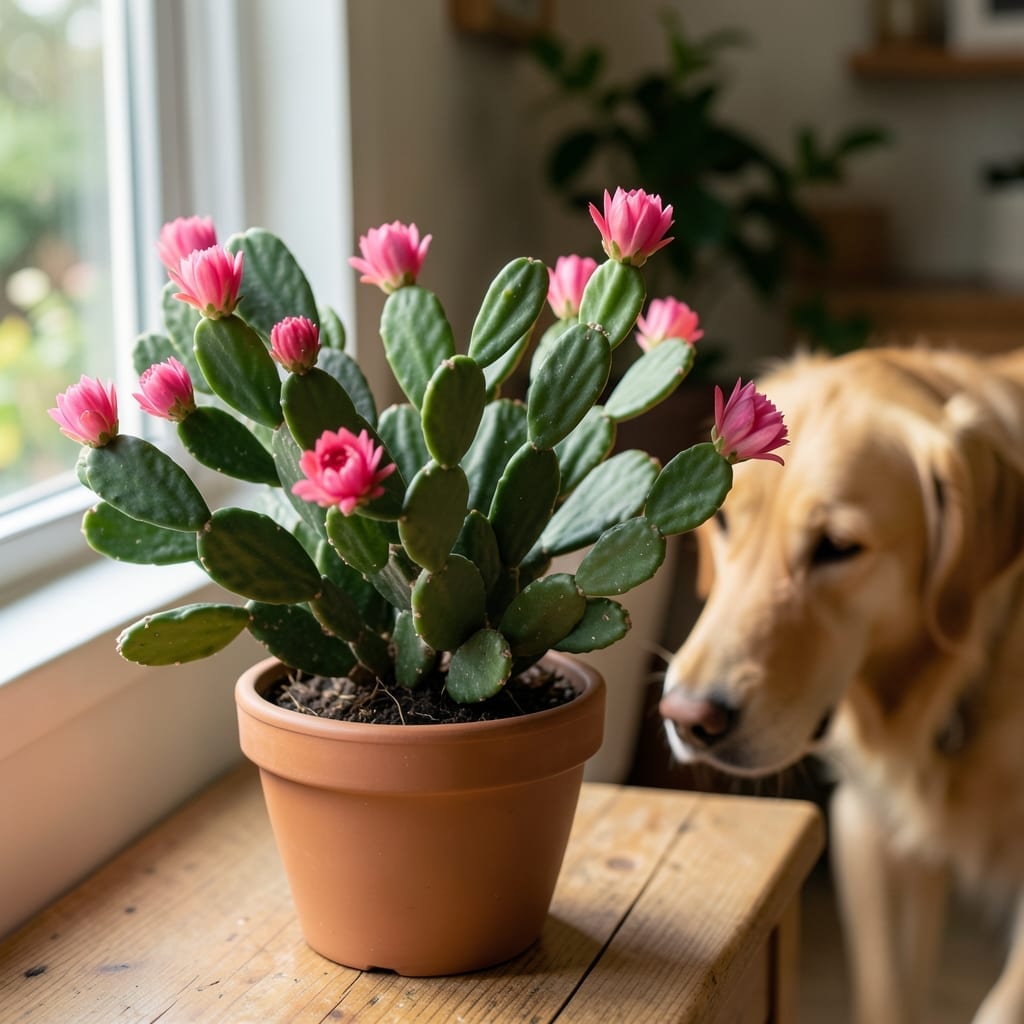
Christmas cactus is non-toxic to dogs. While ingestion may cause mild stomach upset like vomiting or diarrhea, it does not contain harmful toxins that would pose serious health risks to canines.
I’ve seen many pet owners worry about holiday plants, but this one’s actually a safe choice. The Schlumbergera lacks the dangerous compounds found in other cacti, making it a low-risk addition to your home. Still, I’d keep it out of reach to avoid any tummy troubles from curious pups. 🔥
💡 In This Article
The Schlumbergera plant, commonly known as Christmas cactus, contains no known toxic alkaloids or saponins. Unlike true cacti from the Cactaceae family, it lacks the harmful compounds that can cause severe reactions in dogs. Its non-toxic nature has been confirmed by the ASPCA and other veterinary organizations.
This plant’s edible segments contain mostly water (85-90% composition) and fiber. The mild stomach upset some dogs experience comes from the fiber content, not toxicity. Compare this to the Saguaro cactus, which contains oxalates that can cause kidney failure in pets. Christmas cactus poses no such risk.
What makes Schlumbergera particularly safe is its unique phylogenetic lineage. As an epiphytic cactus, it evolved without needing chemical defenses common in desert cacti. Instead, it developed a harmless profile to coexist with pollinators. This evolutionary adaptation makes it one of the few cacti safe for household pets.
The plant’s pH-neutral sap also reduces irritation risk. Most toxic plants have acidic or alkaline sap that burns tissues. Christmas cactus sap measures around 6.5-7.0 pH, similar to pure water. This neutrality means even if your dog chews a leaf, it won’t cause mouth or throat irritation. 🔥
Veterinary toxicology studies show dogs would need to consume 50-100 times the typical household amount to experience any significant effects. The worst-case scenario is temporary digestive discomfort, easily managed with hydration and time. This margin of safety is far greater than with truly toxic plants like lilies or poinsettias.
Remove any plant pieces from their mouth and offer fresh water. Monitor for mild upset like vomiting or diarrhea for 6-12 hours. No treatment is needed unless symptoms persist or worsen.
Christmas cactus lacks toxic compounds like oxalates found in desert cacti. Its pH-neutral sap and high water content make it harmless. It evolved differently as an epiphytic plant.
Yes, but supervise them closely. Puppies are more likely to chew plants out of curiosity. Keep it out of reach to prevent any stomach discomfort from excessive nibbling.
Yes! True cacti like Saguaro or prickly pear contain harmful oxalates. Also avoid poinsettias and lilies, which are highly toxic to dogs. Always check plant safety before bringing them home.