
Beautiful Plants For Your Interior
Beautiful Plants For Your Interior
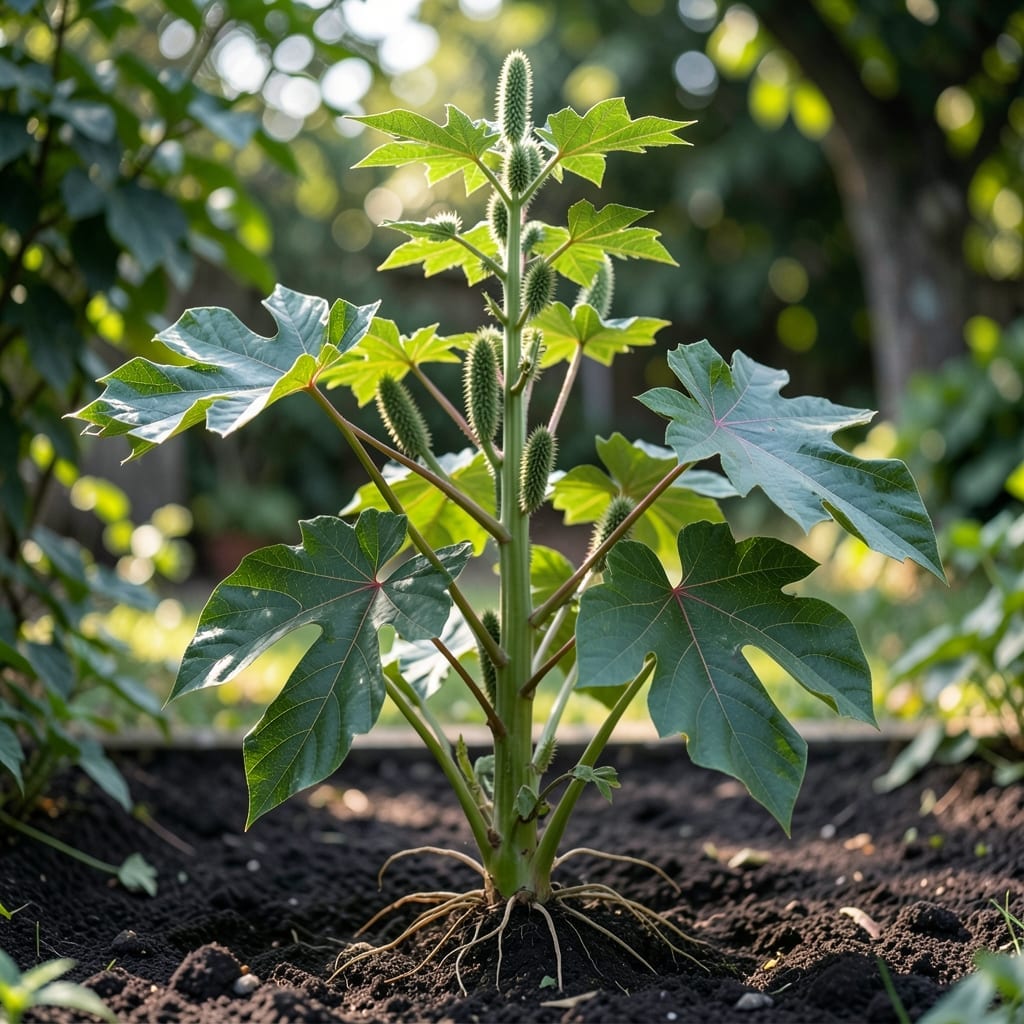
Yes, castor oil plants contain ricin, a highly toxic protein primarily in the seeds. Ingesting even one chewed seed can be deadly, but the oil itself is non-toxic due to processing.
The poison comes from ricin, which disrupts protein synthesis in the body’s cells. Children and pets are especially vulnerable, so I always recommend wearing gloves when handling seeds and storing them far from food areas. Even light exposure to crushed seeds can cause skin irritation or allergic reactions in sensitive individuals. 🔥
💡 In This Article
Ricin works by inhibiting protein synthesis at the ribosomal level. The toxin binds to the 60S subunit of ribosomes, blocking the attachment of elongation factor 2. This halts all cellular protein production, leading to cell death within 6-12 hours of exposure. 🔥
The lethal dose for humans is estimated at 1-20 milligrams per kilogram of body weight. For a 150-pound adult, this means just 8-15 castor beans (chewed) could be fatal. Children are far more vulnerable—ingesting a single seed may cause severe poisoning. Ricin’s potency is comparable to cyanide but lacks an antidote.
Symptoms typically appear within 6-12 hours and include violent vomiting, diarrhea, seizures, and organ failure. The toxin doesn’t cross intact skin but can cause blistering if crushed seeds contact mucous membranes. Inhalation of ricin powder may lead to pulmonary edema within 8-12 hours. ✨
What makes ricin particularly dangerous is its stability. It remains active at extreme temperatures and resists breakdown by digestive enzymes. The castor plant itself produces ricin as a defensive mechanism against predators, concentrating it in the endosperm of the seed where it makes up about 1-5% of the seed’s weight. 💫
Interestingly, the processing of castor oil removes ricin entirely. The oil is extracted through cold-pressing followed by heat treatment at 100°C (212°F) for 20-30 minutes, which denatures the protein. This is why pharmaceutical-grade castor oil is completely safe for internal and topical use. ⚡
The seeds contain the highest concentration of ricin, with 1-5% of their weight being the deadly protein. The leaves and stems have minimal amounts but should still be handled with caution.
Processing involves cold-pressing followed by heating at 100°C (212°F) for 20-30 minutes, which completely denatures the ricin protein. This makes the oil non-toxic for consumption.
Symptoms typically develop within 6-12 hours of ingestion. Initial signs include nausea and vomiting, progressing to severe diarrhea and organ failure without treatment.
Yes, dogs and cats are equally vulnerable to ricin poisoning. Even small amounts can be fatal, so keep pets away from the plants and fallen seeds. Always establish a 5-foot buffer zone.