
Beautiful Plants For Your Interior
Beautiful Plants For Your Interior
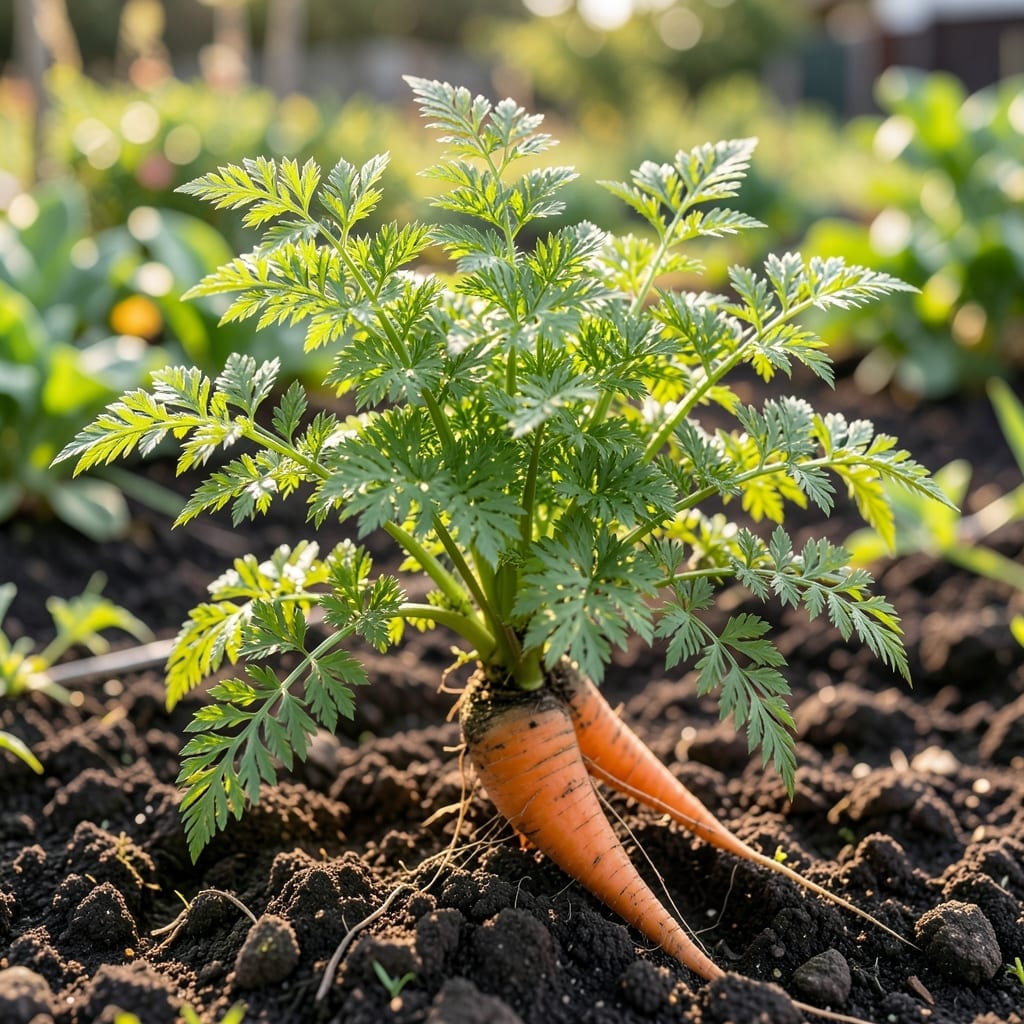
Yes, carrots are root vegetables. They are the edible, taproot portion of the Daucus carota plant, grown underground to store nutrients for the plant.
This classification comes from their growth pattern as taproots, which develop directly beneath the soil to anchor the plant and absorb water. 🔥 I find it fascinating that carrots convert sunlight into energy stored in their thick, orange roots, making them both a nutritious food source and a vital part of the plant’s survival system. Gardeners often focus on loose, deep soil to encourage straight, unobstructed root growth.
💡 In This Article
Carrots develop as taproots, meaning they grow directly downward from the seed as a single, thick root. This specialized structure serves as the plant’s primary storage unit, converting sunlight into sugars that fuel growth. The taproot system allows carrots to anchor deeply while absorbing water and nutrients from the soil efficiently. 🔥
The Daucus carota plant stores its energy reserves in this underground organ, which is why carrots grow thicker as they mature. Unlike fibrous root systems that spread in all directions, a taproot grows in a straight line, typically reaching 6-12 inches in length for standard varieties.
This focused growth pattern makes carrots particularly efficient at accessing water from deeper soil layers.
What distinguishes carrots from other vegetables is their role as both a root and a storage organ. While leafy greens like spinach store energy in their leaves, and stem vegetables like celery use their stalks, carrots pack their nutritional value into this single underground structure.
The orange color comes from beta-carotene, a pigment the plant produces specifically in the root. ✨
Botanically, this classification separates carrots from vegetables like potatoes (which are tubers) or onions (which are bulbs). The taproot’s structure contains vascular tissues arranged in a ring pattern, visible when you cut a carrot crosswise. This unique anatomy allows for both water transport and energy storage in one efficient package. 🌟
In the garden, you can observe this classification in action. The green foliage above ground photosynthesizes while the root below ground acts as a living pantry.
This separation of functions is why carrot tops can be removed without harming the edible portion, unlike with bulb vegetables where the storage organ is part of the stem system.
Carrots are taproots, growing as a single main root, unlike potatoes (tubers) or onions (bulbs). Their straight, thick structure stores nutrients directly from the plant’s leaves.
Loose, deep soil allows the taproot to expand without obstruction. Rocky or compacted earth forces roots to split or twist, resulting in misshapen vegetables.
Yes, the leafy greens are edible and rich in nutrients, though they taste bitter. Remove them before storing to prevent moisture loss from the root.
Most varieties reach harvest size in 60-80 days. Baby carrots can be pulled earlier at 30-50 days for tender, sweet roots.