
Beautiful Plants For Your Interior
Beautiful Plants For Your Interior
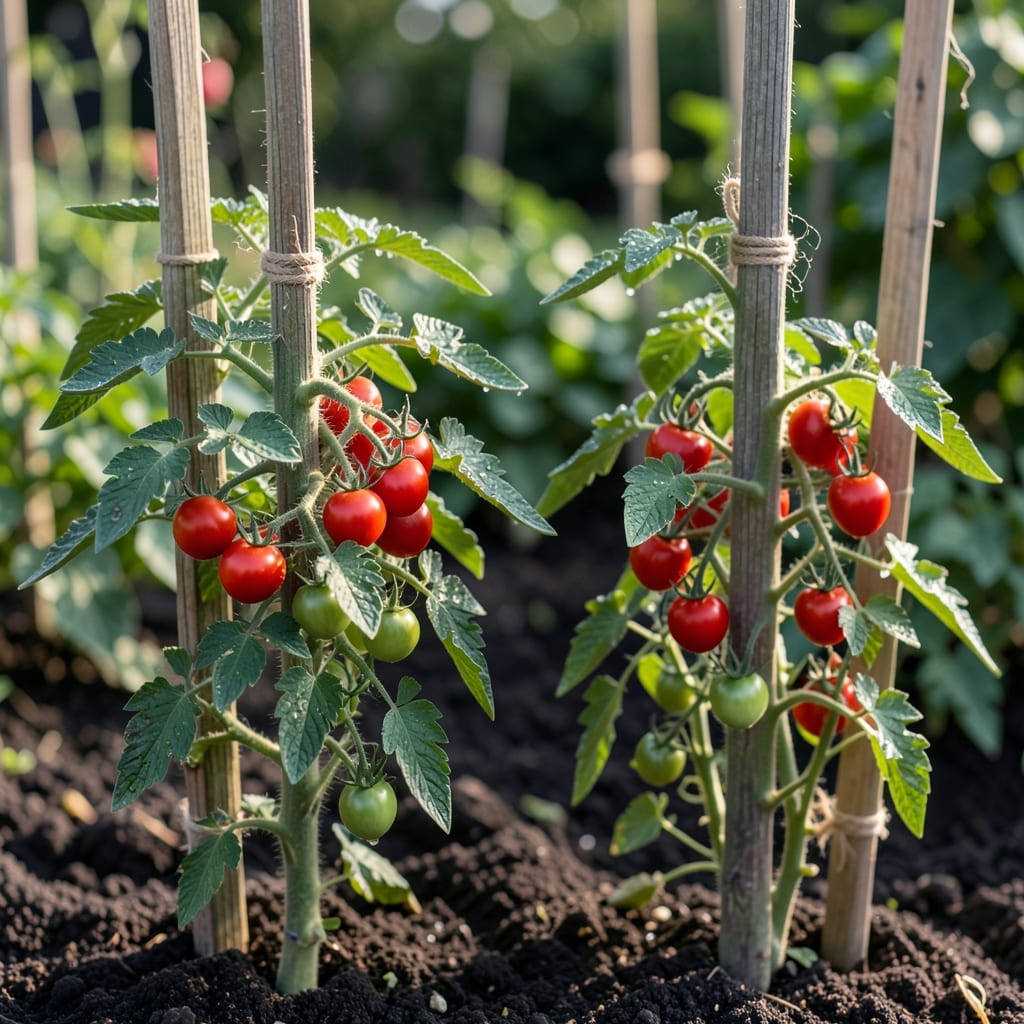
Campari tomatoes are indeterminate, meaning they grow continuously as vines, producing fruit throughout the season until frost. They require staking or caging for support.
I’ve found that their vining nature is what sets Campari tomatoes apart from bush-type varieties. This growth pattern allows them to keep producing new fruit clusters for months, which is ideal for gardeners wanting a steady harvest. However, their sprawling habit means you’ll need to plan for vertical support early in the season. ✨
Without proper structures, the plants can become unruly and less productive. 🔥
💡 In This Article
The indeterminate nature of Campari tomatoes stems from their genetic coding. Unlike determinate varieties that grow to a fixed size and produce one large harvest, indeterminate types like Campari have a vining growth habit that continues until killed by frost.
This is governed by the SP (self-pruning) gene, which in indeterminate plants remains inactive, allowing continuous stem elongation.
This genetic trait results in plants that can reach 6-10 feet in length under ideal conditions. The main stem produces new leaves and flower clusters at regular intervals, with each cluster typically yielding 4-6 tomatoes. This creates a staggered harvest pattern, with ripe fruit available every 7-10 days during peak production. ⚡
Botanically, the difference is visible in the plant structure. Determinate tomatoes form compact bushes with limited side shoots, while Campari’s indeterminate vines develop suckers (side shoots) at each leaf axil. These suckers can grow into additional main stems if not pruned, contributing to the plant’s sprawling habit and increased fruit production.
The continuous growth also affects nutrient and water needs. Indeterminate Campari plants require consistent feeding with a balanced fertilizer (like 10-10-10) throughout the growing season to support their ongoing development. Their extensive root systems, which can spread 2-3 feet wide, need deep watering of 1-2 inches per week to maintain productivity. 💫
Environmental factors can modify this growth pattern. In cooler climates, the vines may grow more slowly, while in warm regions with long growing seasons, they can become particularly vigorous. The indeterminate nature also makes them more adaptable to different pruning techniques, allowing gardeners to train them into various support systems.
What sets Campari apart from other indeterminates is their balance of vigor and fruit quality. While some indeterminate varieties focus on sheer plant size, Campari directs energy toward producing uniformly sweet, 1-2 inch tomatoes with that signature deep red color and high sugar content, making them a favorite among home gardeners and commercial growers alike.
✨
Campari vines can reach 6-10 feet in length under ideal conditions. Their continuous growth means they’ll keep extending until frost kills the plant.
Pruning is optional but recommended. Removing suckers (side shoots) helps direct energy toward fruit production. Limit to 2-3 main stems for best results.
Expect a staggered harvest with ripe fruit every 7-10 days during peak production. Each cluster typically yields 4-6 tomatoes.
Yes, but choose large containers (5+ gallons) and provide tall supports. Ensure proper drainage and consistent watering for container-grown plants.