
Beautiful Plants For Your Interior
Beautiful Plants For Your Interior
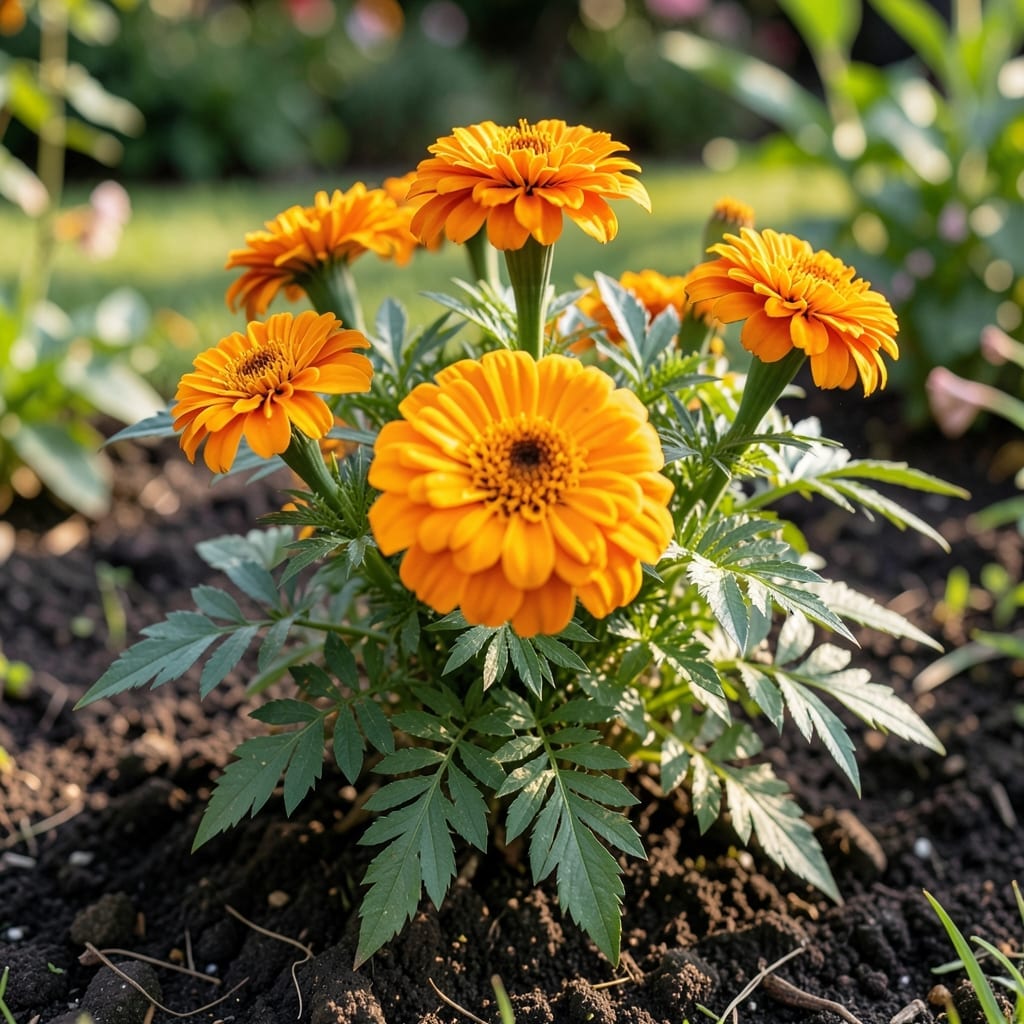
No, true blue marigolds do not exist naturally. Marigolds come in shades of yellow, orange, and gold, but the blue color is a myth often spread through digitally altered images.
I’ve seen those striking images of blue marigolds circulating online, but they’re always the result of photo editing. The reality is that marigold genetics simply don’t produce the delphinidin pigment needed for blue tones. Their natural palette comes from carotenoids, which only create warm hues. 💫
Gardeners sometimes try to mimic the look by planting blue flowers nearby or using special lighting, but the marigold itself stays true to its golden roots. This limitation is why breeders have never successfully cultivated a genuine blue variety. ✨
💡 In This Article
The missing link is delphinidin, the anthocyanin pigment responsible for true blue in plants. Marigolds lack the genetic pathway to produce this compound, which requires specific enzymes not present in their DNA. Instead, their petals synthesize carotenoids—yellow, orange, and red pigments that absorb different light wavelengths.
Carotenoids like lutein and zeaxanthin create marigolds’ signature warm hues, ranging from pale lemon yellow to deep burnt orange. These fat-soluble compounds are chemically distinct from water-soluble anthocyanins. Even under UV light or varying soil pH, marigolds cannot shift to blue because their pigment production is hardwired at the genetic level. ✨
Breeders have experimented with cross-pollination for decades, but the absence of delphinidin-synthesizing genes makes blue marigolds biologically impossible. The closest natural variation is the “Blue Metamorph” marigold, which appears lavender under specific light but remains genetically orange. 💫
For comparison, true blue flowers like delphiniums or hydrangeas contain high concentrations of delphinidin-based anthocyanins. Marigolds, however, max out at 0% delphinidin content, with their color palette capped at 560-600 nm wavelengths (yellow-orange spectrum) versus the 450-495 nm range needed for blue. ⚡
This genetic limitation explains why even advanced biotechnology hasn’t produced blue marigolds. The metabolic pathways for carotenoid production dominate their biochemistry, with no evolutionary pressure to develop blue pigments in their native Central American habitats.
Those images are digitally edited or use filters to change the color. True marigolds only produce warm hues like yellow and orange due to their carotenoid pigments.
Some pale varieties may appear lavender under specific lighting, like the “Blue Metamorph”. However, they remain genetically orange and won’t appear blue in natural daylight.
Yes! Delphiniums, hydrangeas, and bachelor’s buttons all contain the delphinidin pigment that creates true blue. Marigolds lack the genes to produce this compound.
You can temporarily dye cut marigolds with food-safe blue dye, but this only works on white or pale blooms. Dyeing living plants is not recommended as it can harm them.