
Beautiful Plants For Your Interior
Beautiful Plants For Your Interior
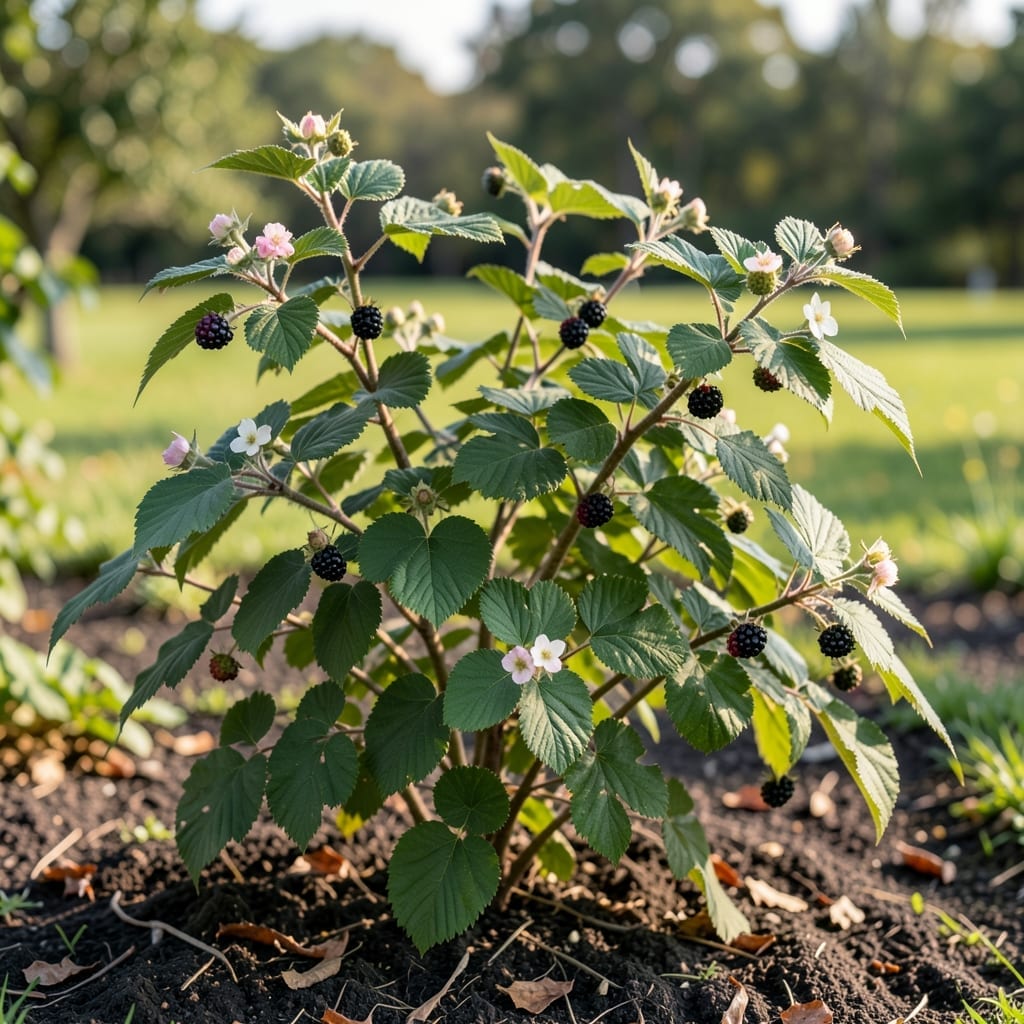
Most blackberry varieties are self-fruitful, meaning they can produce berries without cross-pollination from other plants. However, some benefit from nearby pollinators for better yields.
I’ve found that self-fruitful varieties like Natchez or Ouachita thrive independently, but adding a few bee-friendly flowers nearby can boost production. 🌟 The natural process relies on wind or insects to transfer pollen within the same plant, making it efficient for home gardeners. Still, a diverse garden ecosystem often leads to more abundant and consistent harvests.
💡 In This Article
The mechanism behind this process lies in the flower structure. Blackberry blossoms contain both male (stamens) and female (pistils) reproductive parts, enabling self-fertilization. Wind and insects like bees transfer pollen from stamen to pistil within the same plant, triggering fruit development without external pollinators. 🔥
Genetics play a crucial role here. Self-fruitful varieties produce viable pollen that can fertilize their own ovules, while some older cultivars may require cross-pollination due to genetic incompatibility. Modern thornless types like Apache or Navaho were specifically bred for self-fertility, achieving 80-90% fruit set without assistance.
What most gardeners notice is the difference in berry size and quantity. Self-pollinated berries tend to be slightly smaller but numerous, while cross-pollinated ones often develop larger, more uniform fruits. This variation occurs because cross-pollination introduces greater genetic diversity in the seeds, which can enhance growth characteristics.
The process begins at bloom time when flowers open sequentially along the cane. Each blossom remains receptive for 2-3 days, during which pollen must reach the stigma. Temperature and humidity affect pollen viability—ideal conditions are 60-75°F with 40-70% humidity for maximum pollination efficiency.
Interestingly, blackberry plants also benefit from “geitonogamy,” where pollen moves between different flowers on the same plant. This maintains genetic similarity while still achieving fertilization. The plant’s canes grow in arcs, naturally positioning flowers to facilitate this pollen transfer through wind or insect movement. ✨
No, most modern varieties like Natchez or Ouachita are self-fruitful. They produce berries without another plant nearby. However, yields may improve with cross-pollination from a different variety.
Wind and bees are the primary pollinators. Each flower stays receptive for 2-3 days, so good airflow and active bee populations boost success rates. Planting bee-friendly flowers nearby enhances this process.
Small berries often result from incomplete pollination. While self-fruitful, they benefit from cross-pollination for larger, more uniform fruit. Ensure good airflow and consider adding a companion variety.
Ideal conditions are 60-75°F with 40-70% humidity. These temperatures keep pollen viable, and moderate humidity prevents drying out. Avoid overhead watering during bloom to protect pollen.