
Beautiful Plants For Your Interior
Beautiful Plants For Your Interior
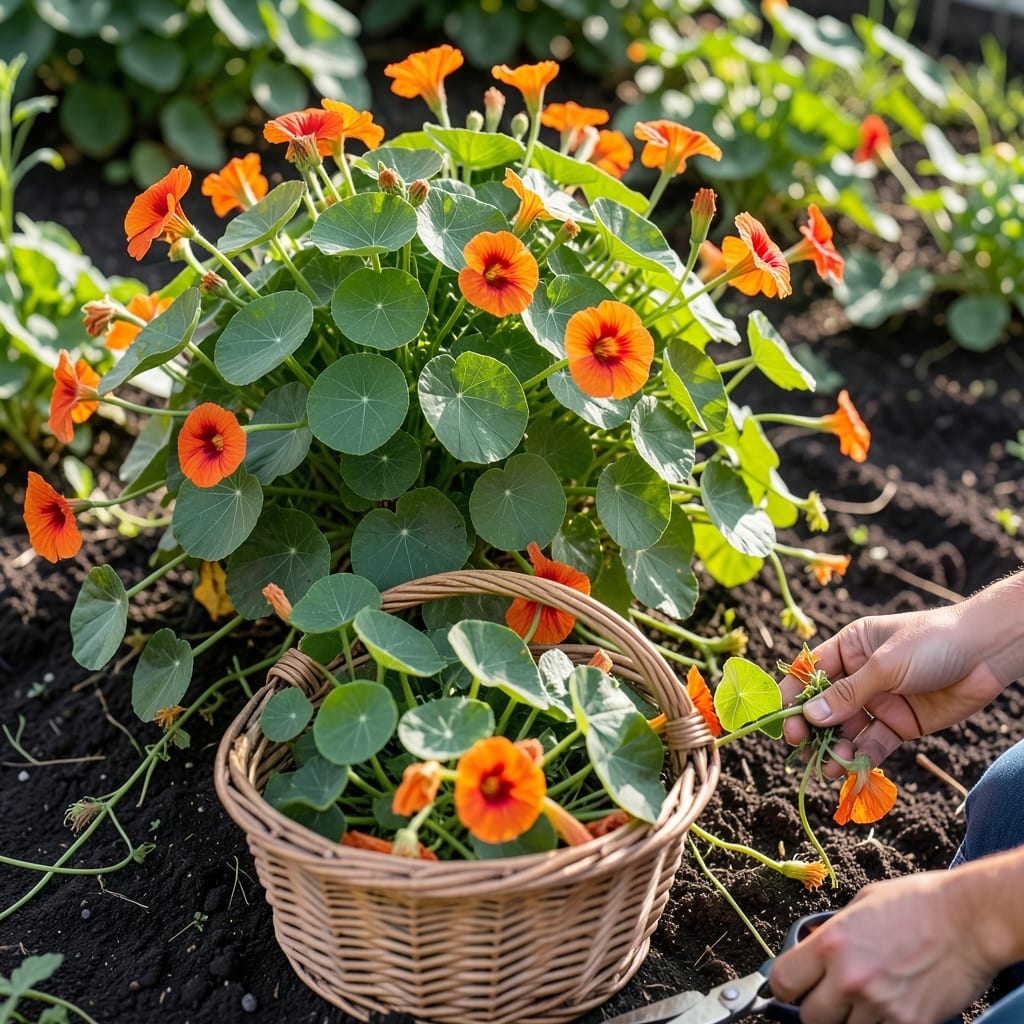
Yes, all parts of the nasturtium plant—leaves, flowers, seeds, and stems—are edible, offering a peppery flavor perfect for salads and garnishes.
I love how versatile these plants are in the kitchen. The leaves bring a bold, peppery kick similar to arugula, while the flowers add a colorful, mild spice to dishes. Even the seeds can be pickled as a caper substitute, making every part useful. ✨
Just ensure they’re grown without pesticides if you plan to eat them. 💫
💡 In This Article
All nasturtiums belong to the Tropaeolum genus, and their edibility stems from the absence of toxic compounds found in some other flowering plants. The peppery kick comes from glucosinolates—sulfur-containing compounds that also give mustard and radishes their spice. These compounds are concentrated in the leaves and stems, making them the most pungent parts.
Different varieties offer subtle flavor variations. ‘Alaska’ produces mild, buttery notes, while ‘Empress of India’ delivers a stronger, almost horseradish-like heat. The flowers, regardless of color (orange, red, or yellow), tend to be sweeter and more delicate, with a honey-like undertone that pairs well with soft cheeses or fruit salads. 🌟
Seeds are the most versatile—they can be eaten fresh for a radish-like crunch or pickled in vinegar to mimic capers. Their flavor intensifies as they mature, developing a sharpness that cuts through rich dishes. Unlike the leaves, which soften when cooked, seeds retain their texture even after light sautéing.
Nutritionally, nasturtiums pack a punch. They’re rich in vitamin C (leaves contain about 130mg per 100g—more than oranges) and lutein, an antioxidant that supports eye health. The entire plant also contains antibacterial properties, historically used in traditional medicine to treat minor infections. ✨
Gardeners often overlook the stems, but they’re the most fibrous part and work best when finely chopped. Their slightly bitter edge balances sweet ingredients like melon or berries. For maximum flavor, harvest in the morning when the glucosinolate concentration is highest. 💫
Flowers are the sweetest, with a mild honey-like flavor. Leaves pack the strongest peppery punch, while seeds offer a radish-like crunch when fresh.
Yes, but introduce them slowly due to the spicy kick. Always ensure they’re pesticide-free and washed thoroughly. Start with small amounts of flowers first.
Heat softens the peppery bite, especially in leaves. For maximum flavor, add them raw or at the end of cooking. Seeds retain texture when pickled or lightly sautéed.
Yes! Never confuse them with watercress or marsh marigold, which grow in similar conditions but may be toxic. Stick to plants you’ve grown yourself or bought as edible varieties.