
Beautiful Plants For Your Interior
Beautiful Plants For Your Interior
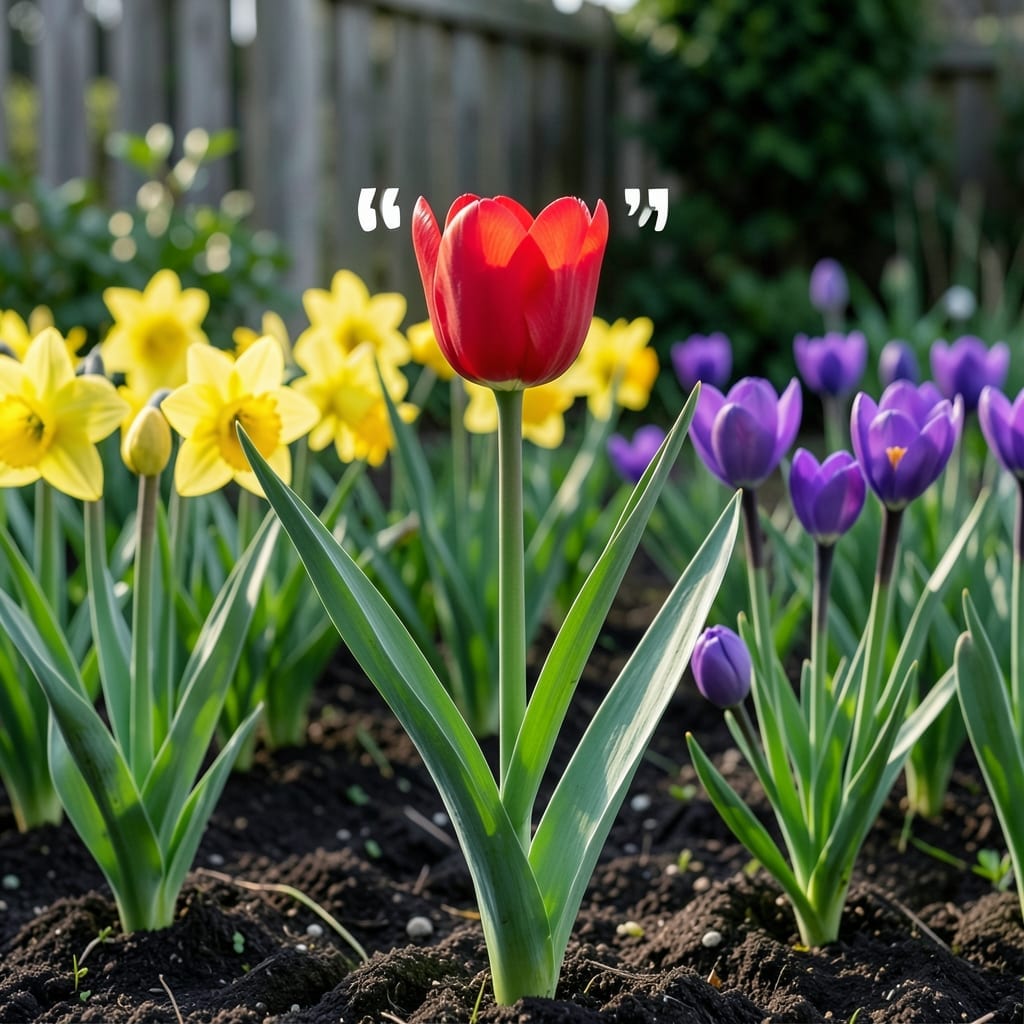
Not all bulbs are perennials. True bulbs like tulips and daffodils often return yearly, but some like amaryllis may not survive cold winters, and corms or tubers have different lifespans.
I’ve learned through experience that the secret lies in their underground structures. True bulbs store energy efficiently, allowing them to regrow each season, while corms and tubers often need replanting. Climate plays a huge role too—what thrives in one zone might struggle in another. 🌟
This is why I always check hardiness ratings before planting. It saves a lot of heartache when spring arrives!
💡 In This Article
True bulbs like tulips and daffodils store nutrients in fleshy scales, enabling them to survive winter dormancy and regrow each spring. This energy reserve supports 3-5 years of blooming before depletion. Their layered structure creates a self-sustaining system. ✨
Corms, like those of crocuses, are solid stem bases with no scales. They typically last 2-3 years before exhausting their energy stores. Tubers, such as dahlias, have a more irregular shape and require annual replanting in colder climates. 🔥
The key difference lies in their storage capacity. True bulbs can store more nutrients, enabling longer lifespans. Corms and tubers have less efficient storage, making them less reliable as perennials. Climatic conditions also play a crucial role. 💛
In USDA zones 7-10, many bulbs naturalize and spread over time. However, in zones 3-6, even true bulbs may struggle without winter protection. The amaryllis, for instance, is tropical and won’t survive freezing temperatures without being dug up. ⚡
Genetic programming determines dormancy periods too. Some bulbs require a 12-16 week cold period to trigger spring growth, while tropical varieties may skip dormancy entirely in warm climates. This explains why the same bulb type may behave differently across regions. 💫
True bulbs like daffodils store energy in layered scales. This allows them to survive dormancy and regrow for 3-5 years in ideal conditions. Their structure acts like a built-in battery for next season’s growth.
Corms and tubers often lack the storage capacity of true bulbs. They may exhaust their energy in a single growing cycle. Climate also plays a role—tropical bulbs won’t survive freezing temperatures without protection.
Look for thick, papery outer layers on true bulbs. Solid, rounded shapes indicate corms, while knobby textures suggest tubers. True bulbs are most likely to return yearly in appropriate zones.
Plant 2-3 times deeper than the bulb’s height. In cold zones, add a 4-6 inch mulch layer after the ground freezes. This protects against temperature swings that can damage or kill bulbs.