
Beautiful Plants For Your Interior
Beautiful Plants For Your Interior
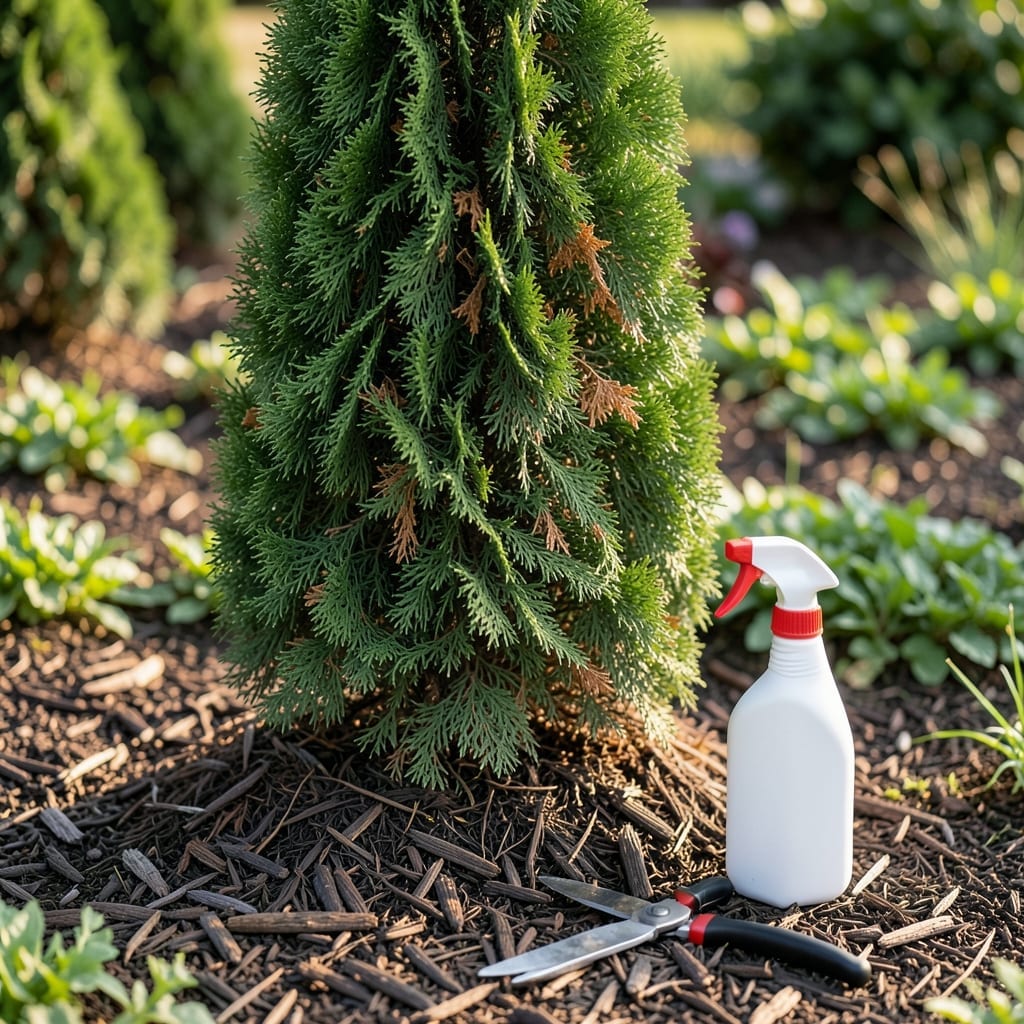
That sickening moment when you notice your arborvitae turned brown overnight. Winter burn hits hard, but here’s the good news—it’s often reversible with the right approach.
I’ve saved more than a few evergreens by acting fast after spotting the damage. The key is distinguishing between dead and dormant foliage, then giving your plants what they need to recover.
With consistent watering and a little protection from harsh winds, you’ll see new green growth pushing through the brown within weeks. Patience and proper care make all the difference.
This method works for all arborvitae varieties, whether they’re young plantings or established hedges. The sooner you start, the better your chances of full recovery.
Arborvitae winter burn doesn’t happen overnight—it’s the result of a few key environmental stressors working against your evergreens. Understanding these causes helps you prevent and treat the damage effectively.
Cold, dry winter winds pull moisture from arborvitae needles faster than the roots can absorb water from frozen soil. Since evergreens retain foliage year-round, they continue to lose water through transpiration even in dormancy. Without sufficient soil moisture or root uptake, the needles dry out, turn brown, and die—especially on the windward side of the plant.
When the ground freezes, arborvitae roots can’t replace the water lost through their needles. This creates a water deficit in the foliage, leading to cellular damage. Shallow-rooted or recently planted arborvitaes are particularly vulnerable, as their root systems haven’t yet established deep access to unfrozen water sources.
Bright, reflective winter sunlight can heat up arborvitae needles during the day, stimulating transpiration. But when temperatures plummet at night, the plant can’t compensate for the moisture loss. This thermal shock disrupts normal cellular function, accelerating browning—often on the south or southwest sides of the plant, where sun exposure is most intense.
Rapid swings between freezing and thawing confuse the plant’s natural defenses. Arborvitaes may break dormancy prematurely during warm spells, only to be hit by a sudden cold snap. This false spring effect exhausts the plant’s energy reserves and leaves foliage unprotected against the next freeze, increasing susceptibility to burn.
Arborvitae winter burn can be fixed with targeted care once you identify the root cause. Below are solutions mapped to common causes, along with prevention tips to keep your evergreens lush year-round.
If dry winter winds or intense sun are to blame, erect burlap screens or windbreaks on the windward side of the plant before winter sets in. For existing burn, deeply water the soil around the base (if the ground isn’t frozen) to replenish lost moisture. Prevention tip: 💡 Apply a 2-3 inch layer of mulch in late fall to retain soil moisture and insulate roots.
Rapid freezes and thaws stress arborvitae, leading to browning. Wrap vulnerable plants in frost cloth during extreme cold snaps, especially for young or exposed trees. In early spring, avoid removing protective coverings too soon—wait until consistent daytime temperatures rise above freezing. Prevention tip: 🎯 Plant arborvitae in sheltered locations, such as near fences or buildings, to buffer temperature swings.
Winter drought is a silent culprit. Water thoroughly during dry spells in late fall and early winter (when soil isn’t frozen). Use a slow-release soaker hose to ensure deep penetration. For damaged foliage, prune dead branches in early spring to encourage new growth. Prevention tip: ✨ Check soil moisture monthly in winter—if the top 2 inches are dry, water midday when temperatures are above 40°F.
Weak or nutrient-deficient trees are more susceptible to winter burn. Fertilize in early fall with a balanced, slow-release formula to strengthen roots before dormancy. If soil is compacted, aerate around the base and add organic matter. Prevention tip: 🌡️ Test soil pH—arborvitae thrive in slightly acidic to neutral soil (6.0–7.5). Amend as needed.
With these fixes and proactive steps, your arborvitae can recover and stay resilient against future winter stress.
Look for brown or bronze foliage, especially on the windward side. Unlike disease, winter burn often affects one side and turns the needles dry and crisp to the touch.
Wait until early spring to prune. Removing dead branches too early can expose the plant to further stress. Cut back to live wood where you see green growth.
Yes, but only when the ground isn’t frozen. Water deeply during dry spells in late fall and early winter, ideally midday when temperatures are above 40°F.