
Beautiful Plants For Your Interior
Beautiful Plants For Your Interior
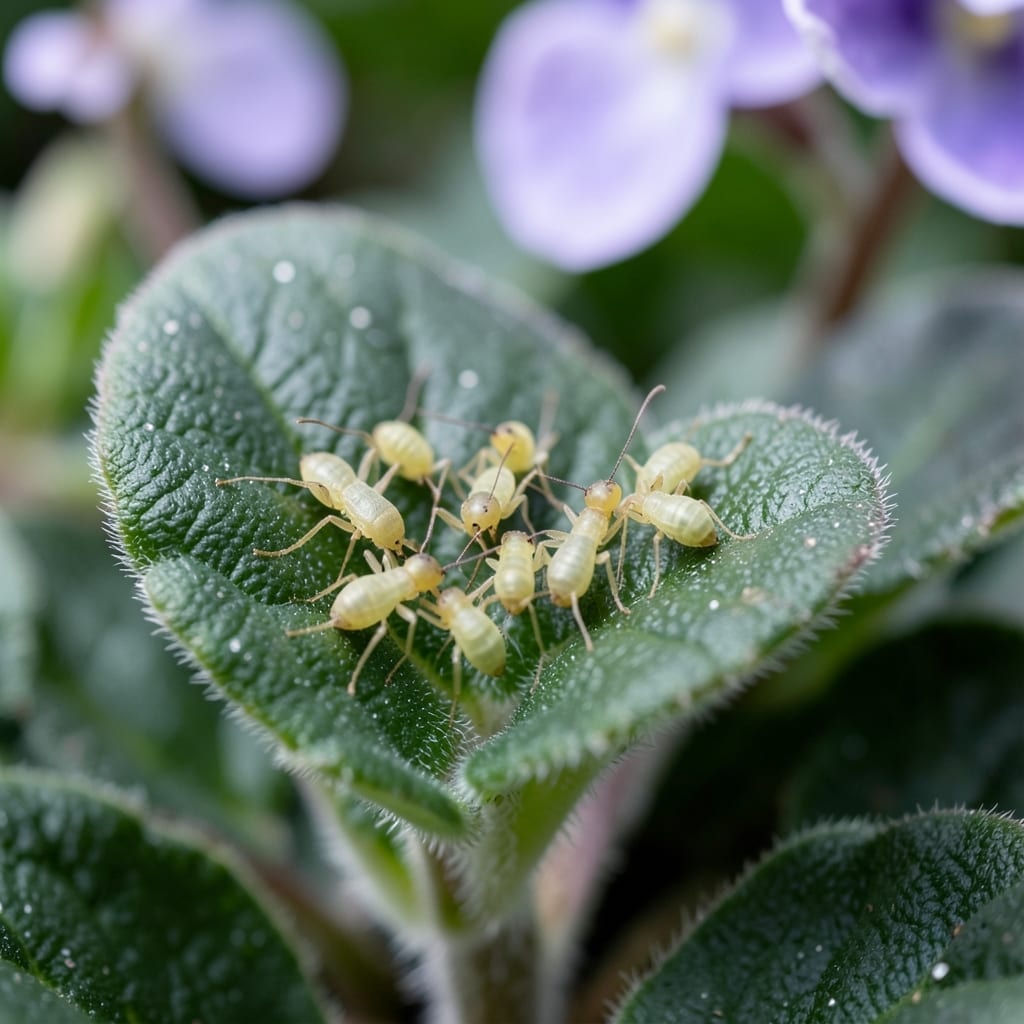
Tiny green invaders on your African violets are more than annoying—they’re stealing your plant’s life force. I’ve battled these pests on my own windowsill collection and found the gentle soap solution that works without harming delicate foliage.
Most people reach for harsh chemicals that can burn leaves or leave residue. The better approach uses what you already have in your kitchen: a few drops of mild soap and water. It’s effective, safe, and ready in 2 minutes.
Your violets will show improvement within 24-48 hours as the soap breaks down the aphids’ protective coating. The plants recover quickly, and you avoid the cycle of reinfestation that plagues chemical treatments.
This method works for any houseplant collection, from a single treasured specimen to a windowsill jungle. The key is consistency and catching the problem early.
Aphids thrive on African violets due to a mix of environmental and plant health factors. Understanding these triggers helps you prevent and manage outbreaks effectively.
Excess moisture creates an ideal breeding ground for aphids. African violets prefer slightly dry soil, and overwatering leads to soft, weak growth that aphids target. Ensure pots have drainage holes and use well-draining soil to discourage these pests.
Stagnant air traps humidity around the plant, making it easier for aphids to settle and multiply. African violets in crowded or enclosed spaces are especially vulnerable. Improve airflow with a small fan or by spacing plants apart.
Aphids are drawn to the tender new growth spurred by high-nitrogen fertilizers. While African violets need nutrients, excessive nitrogen produces soft leaves that aphids love. Switch to a balanced fertilizer and follow recommended dosages.
Aphids often hitchhike on new plants or garden tools. Quarantine new additions for at least a week and inspect them thoroughly before placing them near your African violets. Clean tools with rubbing alcohol to prevent cross-contamination.
Tackling aphids on your African violets doesn’t have to be complicated. Here’s a straightforward, step-by-step guide to eliminate these pests and keep your plants thriving.
Mix 1 teaspoon of mild liquid soap (like Castile soap) with 1 liter of lukewarm water. Shake well and spray directly onto the aphids, focusing on the undersides of leaves where they love to hide. Reapply every 4-5 days until the infestation clears.
Why it works: The soap breaks down the aphids’ protective outer layer, causing them to dehydrate.
For a quick fix, use a gentle stream of water to dislodge aphids from the leaves. Do this in the sink or outdoors to avoid making a mess. Repeat daily until the aphids are gone.
Pro tip: 💡 Early morning is the best time—plants dry faster, reducing the risk of fungal issues.
Introduce ladybugs or lacewings to your plant area. These beneficial insects feast on aphids and provide long-term control. Purchase them from garden centers or attract them naturally by planting pollinator-friendly flowers nearby.
Inspect your African violets every 3-4 days during active growth periods. Focus on new leaves and flower buds where pests like to gather. Early detection prevents major outbreaks.
Regular dish soap can work but may be harsher on delicate foliage. Use 1/2 the amount and test on a single leaf first. Castile soap is gentler and preferred for these sensitive plants.
Apply sprays or water blasts in the early morning when plants are dry. This gives them time to dry before nightfall, reducing the risk of fungal problems.
Quarantine new plants for 1 week and maintain good airflow. Clean tools with rubbing alcohol between uses to prevent cross-contamination.