
Beautiful Plants For Your Interior
Beautiful Plants For Your Interior
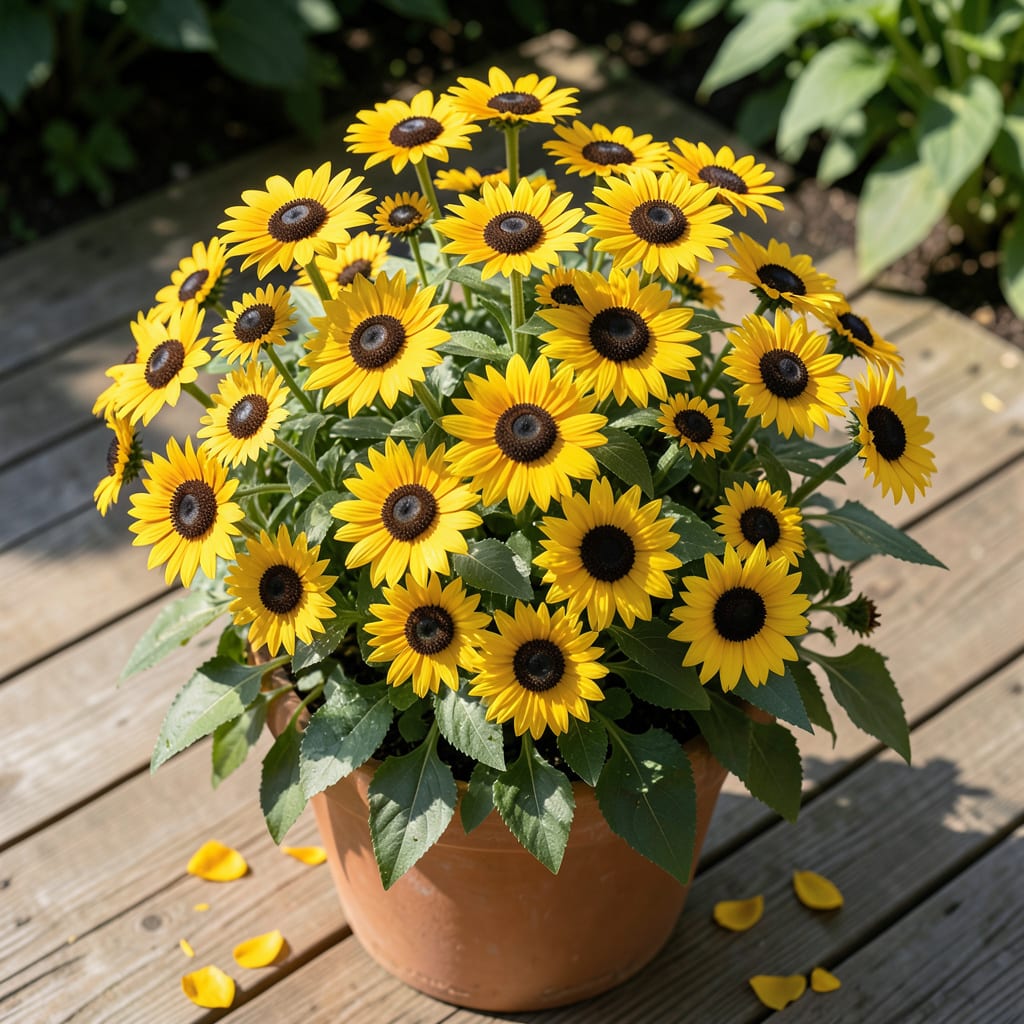
Summer gardens need these golden daisies. Annual black eyed susans bring nonstop yellow blooms from June until frost with almost zero fuss from me.
They thrive in full sun and tolerate poor soil, making them my go-to for roadside strips and containers. Deadhead spent flowers weekly and they’ll reward you with constant color all season long.
📚 In This Guide
This foolproof method delivers vibrant, long-lasting blooms with minimal fuss.
Select a location with full sun exposure—at least 6-8 hours of direct sunlight daily. Annual black eyed susan thrives in bright, open spaces but tolerates light afternoon shade in scorching climates. Avoid low-lying areas where water pools after rain.
Soil should be well-draining with a pH between 6.0-7.5. If your garden has heavy clay, amend it with compost or aged manure to improve texture. I test drainage by digging a 1-foot hole, filling it with water, and checking if it drains within 4 hours.
Loosen the soil to a depth of 12-15 inches using a garden fork, breaking up any compacted clumps. Mix in a 2-3 inch layer of organic matter like compost or well-rotted manure to boost fertility. Annual black eyed susan isn’t picky, but richer soil rewards you with more abundant blooms.
Space plants 12-18 inches apart to allow for air circulation and prevent fungal diseases. Dig a hole twice as wide as the root ball but no deeper. Place the plant so the top of the root ball sits slightly above the soil line to prevent settling and waterlogging.
Water deeply immediately after planting, ensuring the soil is moist to a depth of 6 inches. Use a slow, steady stream to avoid dislodging the roots. For the first 1-2 weeks, keep the soil consistently moist but not soggy—this helps roots establish quickly.
Apply a 2-3 inch layer of organic mulch, such as shredded bark or straw, around the base of the plants. Mulch retains moisture, suppresses weeds, and regulates soil temperature. Keep it 1-2 inches away from the stems to prevent rot.
Once established, annual black eyed susan is drought-tolerant. Water only when the top 1-2 inches of soil feels dry, typically 1-2 times per week depending on rainfall and heat. Overwatering leads to leggy growth and fewer blooms.
Deadhead spent flowers regularly to encourage continuous blooming. Pinch off faded blooms just below the flower head, where the stem meets the foliage. This redirects energy into producing new flowers rather than seed. I use sharp bypass pruners for a clean cut.
Fertilize sparingly—too much nitrogen promotes leafy growth at the expense of flowers. A light application of balanced 10-10-10 fertilizer in early summer is sufficient. Avoid high-nitrogen formulations.
Here’s what I’ve learned after years of growing these cheerful blooms.
Sunlight Strategy: The 6-8 hours of direct sunlight daily isn’t just a suggestion—it’s the difference between sparse blooms and a vibrant display. If your garden gets intense afternoon sun, a touch of light shade won’t hurt, but don’t skimp on the morning rays. I’ve seen plants in partial shade grow tall and leggy with fewer flowers.
Soil Preparation: That 12-15 inch soil depth in Step 2 matters more than you’d think. Compacted soil stifles root growth, and these plants need room to stretch. Mixing in compost or aged manure isn’t just for fertility—it also improves drainage, which is critical for preventing root rot in clay-heavy soil.
Watering Wisdom: During the first 1-2 weeks after planting, consistency is key. The soil should stay moist to that 6-inch depth, but never waterlogged. I use my finger to test—if the top 1-2 inches feel dry, it’s time to water again. Overwatering early on can drown the roots before they establish.
Bloom Maintenance: Deadheading isn’t just about aesthetics—it’s how you keep the flowers coming all season. When you pinch off spent blooms just below the flower head, the plant redirects energy into new growth instead of seed production. A sharp pair of bypass pruners makes this task quick and precise.
Plant them in early spring after the last frost or in early fall for blooms the following summer. They thrive in warm soil and full sun, making late spring to early summer ideal for most regions.
Water them deeply once a week, allowing the soil to dry slightly between waterings. During extreme heat, increase frequency to twice a week. Overwatering can lead to root rot, so ensure good drainage.
Yes! Choose a large pot with drainage holes and use well-draining potting mix. They’ll need full sun and regular watering, as containers dry out faster than garden beds.
Lack of sunlight, over-fertilizing, or poor soil drainage are common culprits. Ensure they get 6+ hours of sun daily, avoid high-nitrogen fertilizers, and check for soggy soil.
