
Beautiful Plants For Your Interior
Beautiful Plants For Your Interior
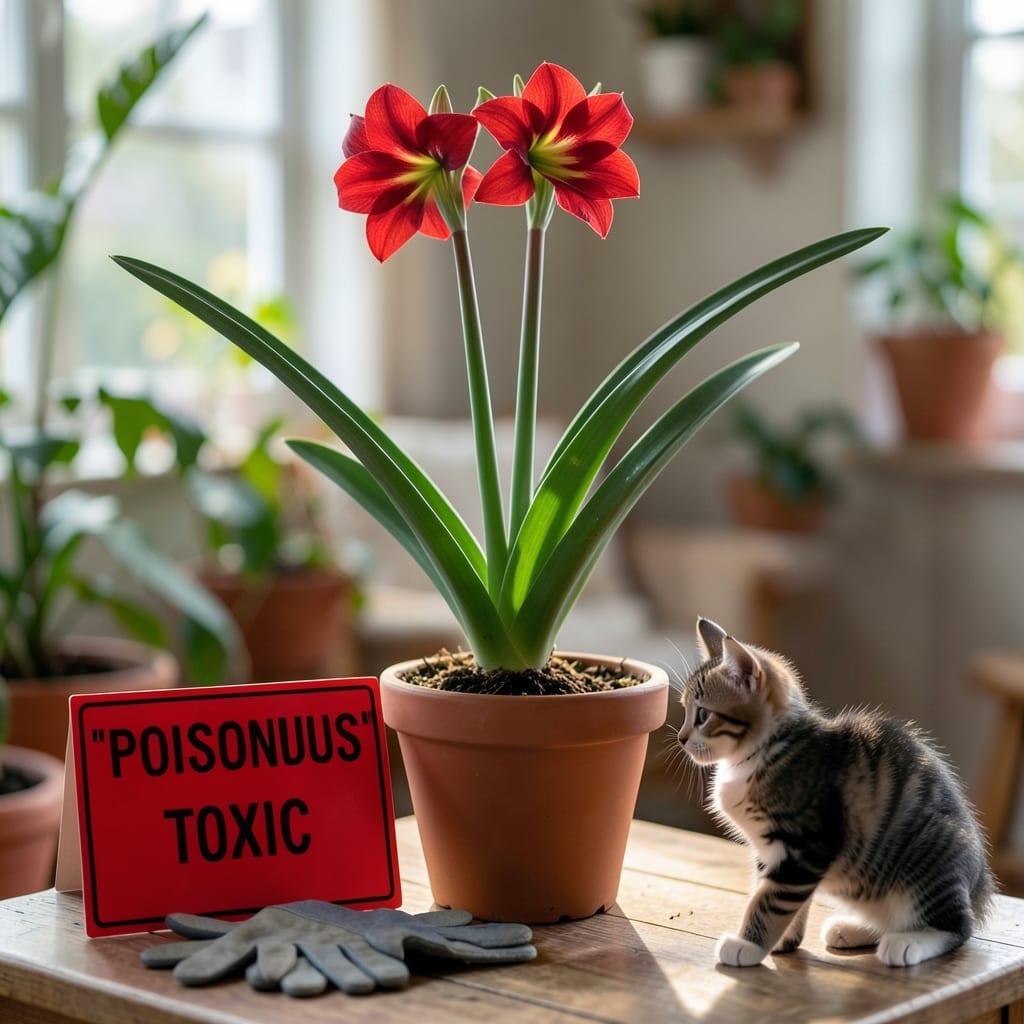
Yes, amaryllis plants are toxic to pets and humans due to poisonous alkaloids like lycorine. Ingesting any part, especially bulbs, can cause vomiting, diarrhea, or tremors.
I always advise caution with these popular holiday plants because their bulbs contain the highest concentration of lycorine and other harmful compounds. Even small amounts can trigger gastrointestinal distress or neurological symptoms in cats and dogs. For families with curious pets or young children, it’s best to keep amaryllis out of reach or choose non-toxic alternatives. 🔥
💡 In This Article
The primary culprit is lycorine, a toxic alkaloid concentrated in the bulb but present throughout the plant. This compound interferes with cell division, particularly affecting rapidly dividing cells like those in the gut lining. Even 0.1% of a bulb by body weight can trigger severe symptoms in small pets.
Other harmful compounds include phenanthridine alkaloids like tazettine and haemanthamine, which disrupt nerve signal transmission. In humans, these cause nausea within 1-3 hours of ingestion, while pets may show drooling, vomiting, or tremors within 30-60 minutes. The bulb’s bitter taste often deters large consumption, but pets may still chew enough to cause harm. 🔥
Severity varies by species and amount ingested. The Hippeastrum variety (common holiday amaryllis) contains higher toxin levels than true Amaryllis belladonna. A 50-pound dog eating half a bulb may experience mild GI upset, while a 10-pound cat consuming the same could face kidney failure without prompt treatment.
Veterinary toxicologists note that symptoms typically appear within 2-6 hours and can persist for 12-24 hours. In severe cases, animals may develop low blood pressure or irregular heart rhythms. The ASPCA’s Animal Poison Control Center reports most amaryllis exposures result in mild to moderate symptoms when treated quickly.
What makes these toxins particularly dangerous is their stability. Unlike some plant poisons that degrade with drying, amaryllis alkaloids remain potent even in dried arrangements or wilted plants. This means old holiday decorations can still pose risks months later if pets access them. ✨
The bulb contains the highest concentration of lycorine and other toxins. While all parts are poisonous, ingesting even small amounts of the bulb can cause severe symptoms in pets and humans.
In pets, symptoms like drooling or vomiting often start within 30-60 minutes. For humans, nausea typically begins 1-3 hours after eating any part of the plant.
Yes, the toxins remain active even after drying. Old holiday decorations with amaryllis can still pose risks months later if pets or children access them.
Remove any plant material from their mouth and rinse with water. Call your vet or ASPCA Poison Control at 888-426-4435 immediately. Time is critical for treatment.