
Beautiful Plants For Your Interior
Beautiful Plants For Your Interior
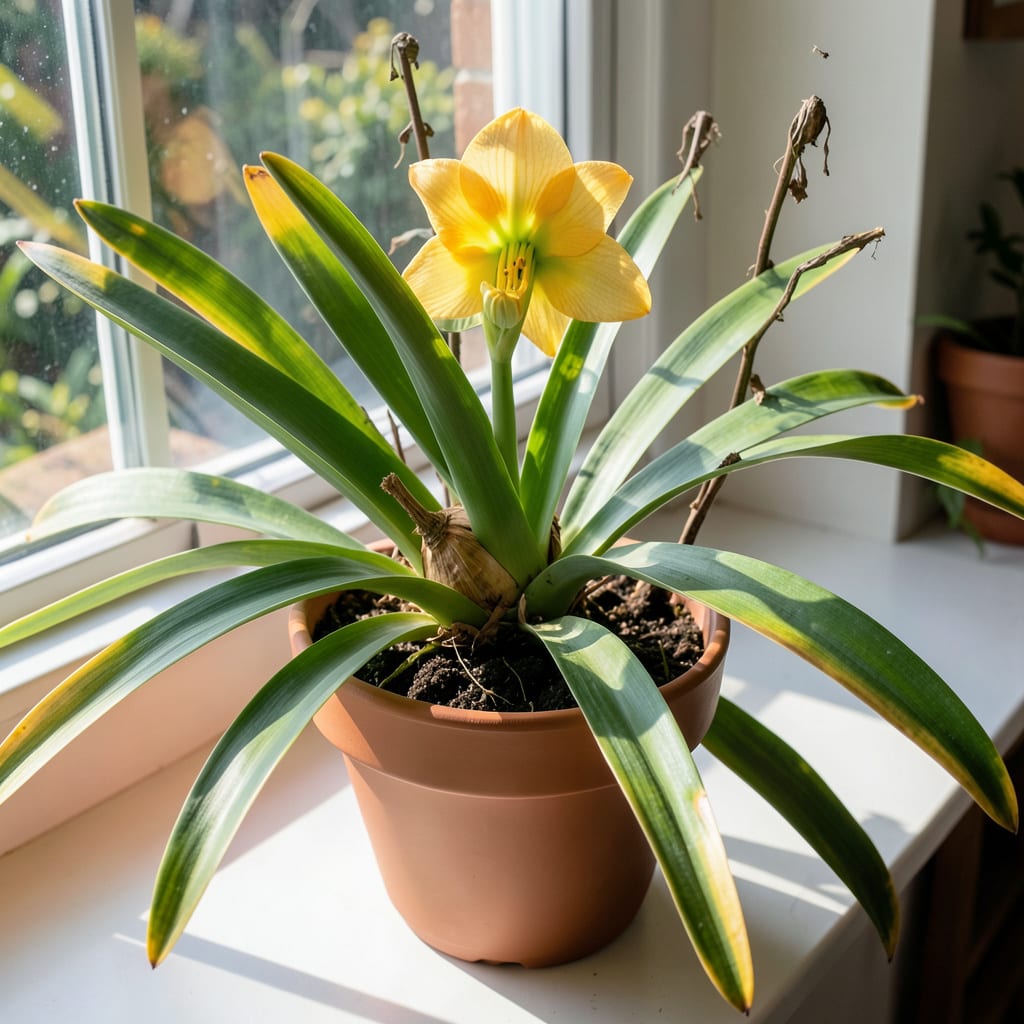
Yellowing amaryllis leaves caught me off guard the first time it happened. Turns out, it’s the plant’s way of saying something’s wrong—usually overwatering, poor light, or a hungry root system starving for nutrients.
I’ve learned to check the soil first. If it’s soggy, that’s your culprit. If it’s bone dry, you’ve waited too long. The fix is often simpler than you think: adjust your watering, move to better light, or give it a light fertilizer boost.
Within 2-3 weeks, you’ll see fresh green growth if you’ve nailed the diagnosis. The plant bounces back fast once conditions improve, and those vibrant blooms will return next season.
Prevention is easier than cure. Stick to a consistent care routine, and your amaryllis will stay lush and green year after year.
Yellowing leaves on your amaryllis are a distress signal, and pinpointing the cause is the first step to revival. Below are the most common culprits, along with the science behind them.
Excess water suffocates the roots, preventing oxygen uptake and leading to root rot. Fungi like Phytophthora and Pythium thrive in soggy soil, breaking down root tissues. As roots die, they can’t absorb nutrients, causing leaves to turn yellow (a condition called chlorosis) and wilt. Action: Check soil moisture with your finger—water only when the top 1–2 inches are dry. Ensure pots have drainage holes.
A lack of essential nutrients, particularly nitrogen or magnesium, disrupts chlorophyll production. Nitrogen deficiency often starts in older leaves, while magnesium deficiency appears as yellowing between leaf veins (interveinal chlorosis). Action: Use a balanced, water-soluble fertilizer (e.g., 10-10-10) every 2–4 weeks during active growth. For magnesium, add Epsom salt (1 tbsp per gallon of water) monthly.
Amaryllis are sun-lovers. In low light, photosynthesis slows, reducing chlorophyll (the green pigment). Leaves turn yellow as chlorophyll breaks down. Action: Move your plant to a bright, indirect light source (east or west-facing window). Rotate the pot weekly for even exposure.
Sap-sucking pests like spider mites and aphids drain the plant of fluids, causing yellow stippling or mottling. Their feeding also spreads viruses, which can trigger systemic yellowing. Action: Inspect leaf undersides. Wipe leaves with a damp cloth or use insecticidal soap (1 tsp mild soap per liter of water).
Extreme heat (above 80°F) or cold drafts (below 50°F) disrupt enzyme activity in leaves, accelerating chlorophyll degradation. Action: Keep amaryllis in a stable environment (60–75°F). Avoid placing near AC vents, heaters, or cold windows.
Yellow leaves on your amaryllis are a cry for help, but the right fixes can nurse your plant back to health. Below are targeted solutions for the most common causes, along with prevention tips to keep your amaryllis thriving.
If soggy soil is the culprit, let the top 1–2 inches of soil dry out before watering again. Ensure your pot has drainage holes to prevent waterlogging. Prevention tip: Use a well-draining potting mix and water only when the soil feels dry to the touch. 💡
Move your amaryllis to a brighter spot with indirect sunlight (east or west-facing windows are ideal). If natural light is limited, supplement with a grow light for 12–14 hours a day. Prevention tip: Rotate the pot weekly to ensure even light distribution. ☀️
Use a balanced, water-soluble fertilizer (10-10-10 or 20-20-20) every 2–4 weeks during the growing season. Avoid over-fertilizing, which can burn roots. Prevention tip: Flush the soil with water every few months to remove excess salts. 🌱
Wipe leaves with a damp cloth to remove pests like aphids or mealybugs. For stubborn infestations, use insecticidal soap or neem oil, applying every 5–7 days until pests are gone. Prevention tip: Inspect new plants before bringing them near your amaryllis. 🚫
Keep your amaryllis in a room with temperatures between 60–75°F (15–24°C). Avoid drafts, heaters, or AC vents. Prevention tip: Use a humidity tray to maintain consistent moisture levels. 🌡️
If leaves yellow after blooming, it’s often part of the plant’s dormant cycle. Trim dead foliage and reduce watering until new growth appears. Prevention tip: Store bulbs in a cool, dark place (50–60°F) for 8–10 weeks to encourage reblooming. ✨
Water when the top 1-2 inches of soil feel dry. Typically this means every 7-10 days, but always check soil moisture first. Overwatering is the most common cause of yellowing leaves.
Once leaves turn yellow, they won’t regain their green color. However, fixing the underlying issue will allow new healthy growth. Remove severely yellowed leaves to redirect energy to new foliage.
Use a balanced, water-soluble fertilizer like 10-10-10 or 20-20-20 every 2-4 weeks during active growth. Epsom salt can provide magnesium if you notice yellowing between leaf veins.
Only remove leaves that are fully yellow or brown. If just part of the leaf is yellow, wait to see if the plant recovers. Cutting too early may remove nutrients the plant is still using.
