
Beautiful Plants For Your Interior
Beautiful Plants For Your Interior
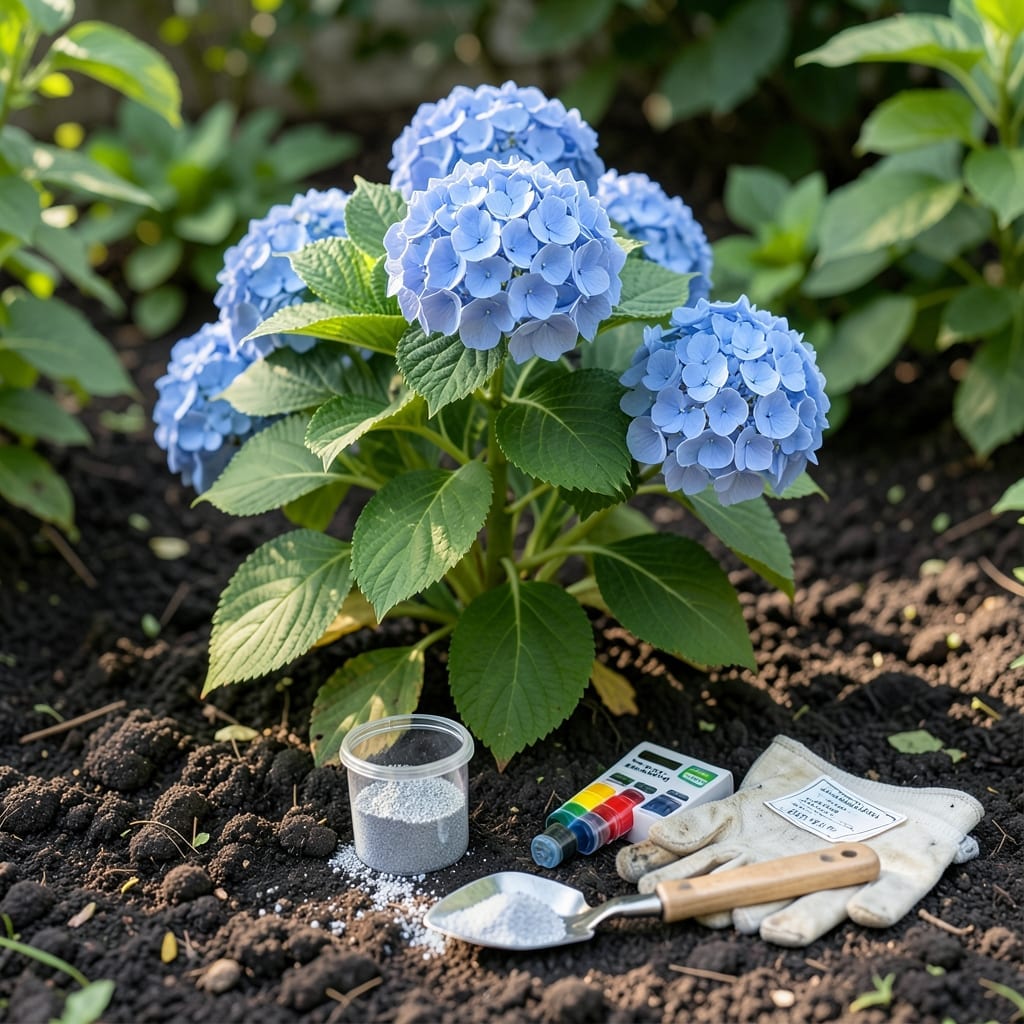
Aluminum sulphate typically has a highly acidic pH between 2.0 and 3.5 in solution, making it effective for lowering soil pH in gardening applications.
I’ve seen firsthand how this compound transforms alkaline soils into the perfect environment for acid-loving plants like hydrangeas and blueberries. Its strong acidity comes from sulfuric acid formation when dissolved, which is why it works so quickly compared to other amendments. Just remember that a little goes a long way—overapplication can harm plant roots and soil microbes. 🔥
💡 In This Article
When aluminum sulphate dissolves in water, it splits into aluminum ions, sulphate ions, and hydrogen ions. The hydrogen ions are what create that sharp pH 2.0-3.5 acidity, immediately interacting with soil particles.
This isn’t just about adding acid—it’s a chemical reaction where aluminum ions actually displace other positive ions in the soil, making room for more hydrogen.
The real transformation happens when those hydrogen ions replace calcium and magnesium on soil colloids. Each aluminum ion can displace multiple hydrogen ions, creating a chain reaction that significantly lowers soil pH. Gardeners often see pH drops of 0.5-1.0 units within weeks of application, much faster than organic amendments like peat moss.
What’s fascinating is how the aluminium ions then combine with water to form aluminum hydroxide and additional hydrogen ions. This secondary reaction sustains the acidifying effect long after initial application. The sulphate component also contributes by forming weak sulfuric acid, adding another layer of pH reduction.
This dual-action mechanism makes aluminum sulphate uniquely effective for stubborn alkaline soils. Unlike elemental sulfur which requires microbial action to convert to sulfuric acid, aluminum sulphate works immediately upon dissolution. That’s why it’s a favorite for quick corrections in blueberry patches or hydrangea beds.
However, this potency comes with responsibility. The rapid pH shift can temporarily lock up phosphorus in the soil, making it unavailable to plants. That’s why we always recommend testing soil pH 7-10 days after application and adjusting future treatments accordingly. ✨
You’ll typically see a pH drop of 0.5-1.0 units within 2-3 weeks after application. This makes it much faster than organic alternatives like peat moss, which can take months to show effects.
It works well for most, like blueberries and azaleas, but use caution with delicate plants. Always test a small area first and monitor for leaf yellowing, which may indicate aluminum toxicity.
Overapplying is the most common error. More isn’t better—excess can create soil pH that’s too acidic or cause aluminum to build up to toxic levels for plants.
Keep the powder in a dry, sealed container to prevent moisture absorption. Store away from children and pets, and never near food or water sources.