
Beautiful Plants For Your Interior
Beautiful Plants For Your Interior
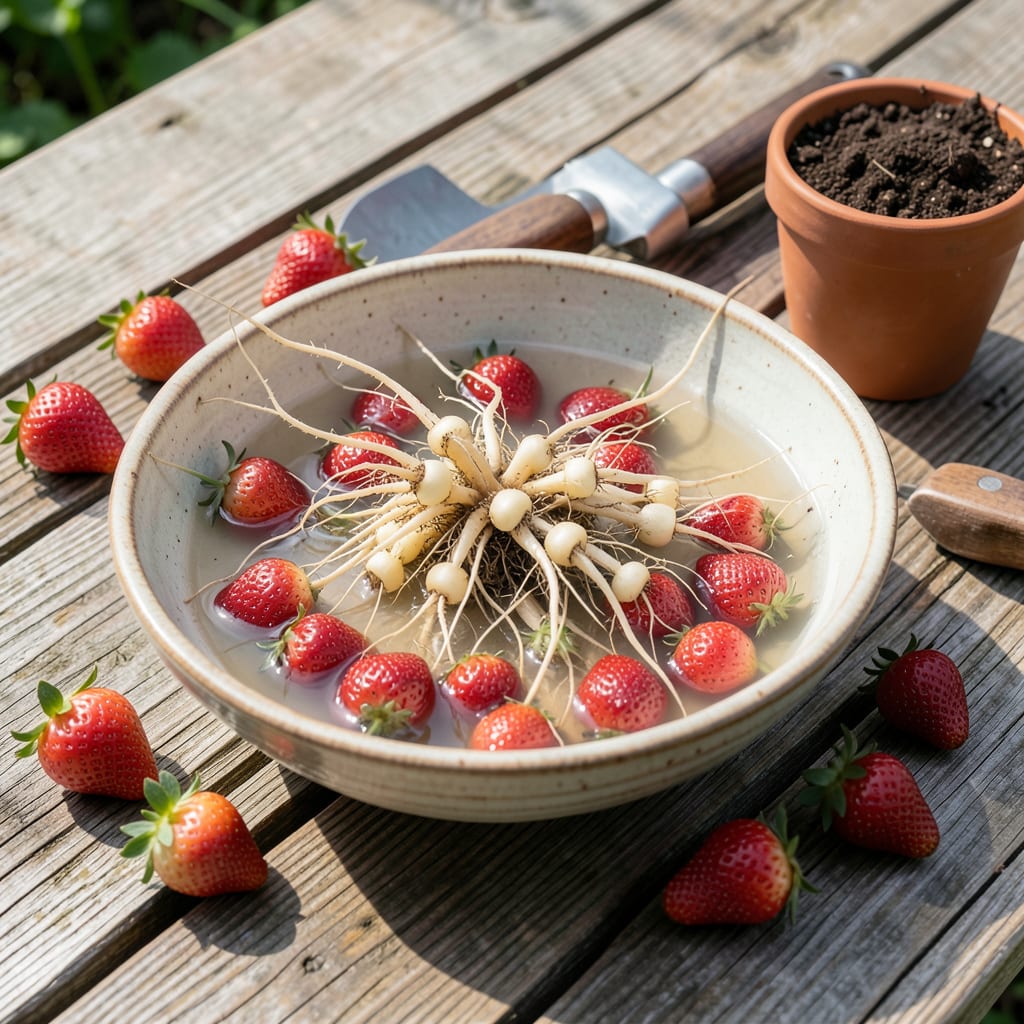
Planting bare root Albion strawberries changed my spring routine forever. These plants arrive dormant but wake up fast with the right start, producing juicy berries that outshine anything from the store.
You’ll need well-draining soil, full sun, and a little patience. The payoff comes in 6-8 weeks with the first flush of fruit, and they keep producing all season with minimal effort.
📚 In This Guide
Here’s the method I’ve refined over years to ensure vigorous plants and abundant, flavorful berries.
Begin by soaking the bare roots in lukewarm water for 1-2 hours to rehydrate them. This step revives the roots after dormancy and kickstarts growth. Meanwhile, choose a location with full sun and well-draining soil—a raised bed or slightly mounded row works best.
Amend the soil with 2-3 inches of compost worked into the top 6-8 inches. Albion strawberries thrive in rich, loose soil, so avoid heavy clay. Test drainage by digging a 1-foot hole and filling it with water—if it drains within 1 hour, you’re good to go.
Dig holes large enough to accommodate the spread roots without bending them. The crown—the point where roots meet the stem—must sit just above soil level. Burying it too deep suffocates the plant, while leaving it exposed dries it out.
Space holes 12-18 inches apart in rows 2-3 feet apart to allow airflow and prevent disease. Gently fan out the roots in the hole, then backfill with soil, pressing lightly to eliminate air pockets. Water each plant with 1 pint of water to settle the soil.
Apply a 2-3 inch layer of straw or pine needle mulch around each plant, keeping it 1 inch away from the crown. Mulch retains moisture, suppresses weeds, and keeps berries clean as they ripen. Avoid wood chips—they can tie up nitrogen in the soil.
Water deeply after planting, then maintain consistent moisture—1-1.5 inches per week—throughout the growing season. Check soil daily by sticking your finger 1 inch deep; if it feels dry, water thoroughly. Overhead watering can promote disease, so aim for the base of the plant.
Albion strawberries are ever-bearing, so they’ll produce flowers within 4-6 weeks. For the strongest plants, pinch off the first set of blooms to direct energy into root and foliage development. This sacrifice results in larger, more prolific harvests later.
Watch for new growth—healthy leaves should emerge within 10-14 days. If leaves yellow, test soil pH; Albion strawberries prefer 5.5-6.5. Adjust with lime or sulfur as needed, following package instructions precisely.
Took me a few seasons to figure these out, so let me save you the trial and error.
The Soaking Secret: Don’t rush the 1-2 hour soak in lukewarm water for your bare roots. This step is critical for rehydrating dormant roots and jumpstarting growth. I learned the hard way that skipping or shortening this soak leads to weak, slow-growing plants that struggle to establish.
Crown Placement: In Step 2, be meticulous about crown positioning—it must sit just above soil level, not buried. I’ve seen entire rows fail because the crown was planted too deep. Use your finger to gauge: the crown should peek above the soil like a tiny volcano summit.
Drainage Test: That 1-foot hole drainage test in Step 1 isn’t optional. If water doesn’t drain within 1 hour, your strawberries will suffocate. I once planted in a spot that passed the “eye test” but failed this drainage check—resulted in a complete loss after heavy rains.
First Flower Discipline: This is the hardest part for new growers. When you see those first blooms in 4-6 weeks, pinch them off. It feels counterintuitive, but sacrificing the first flowers directs energy into root and foliage development. The payoff comes in the form of significantly larger, more abundant harvests later in the season.
Plant Albion strawberry bare roots in early spring or fall, when temperatures are cool (40–60°F). This allows roots to establish before extreme heat or frost. Avoid planting in summer or during freezing conditions for best results.
Dig a hole deep enough to spread the roots naturally, ensuring the crown (where roots meet leaves) sits just above the soil. Burying the crown too deep can cause rot, while exposing it may dry out the plant.
Yes! Albion strawberries thrive in containers with good drainage. Use a pot at least 8–12 inches deep and wide, filled with well-draining potting mix. They’re perfect for patios or small spaces!
Slow growth could be due to poor soil contact, overwatering, or cold shock. Ensure roots are fully buried, soil stays moist (not soggy), and plants are protected from frost. Patience helps—establishment can take 2–3 weeks.
