
Beautiful Plants For Your Interior
Beautiful Plants For Your Interior
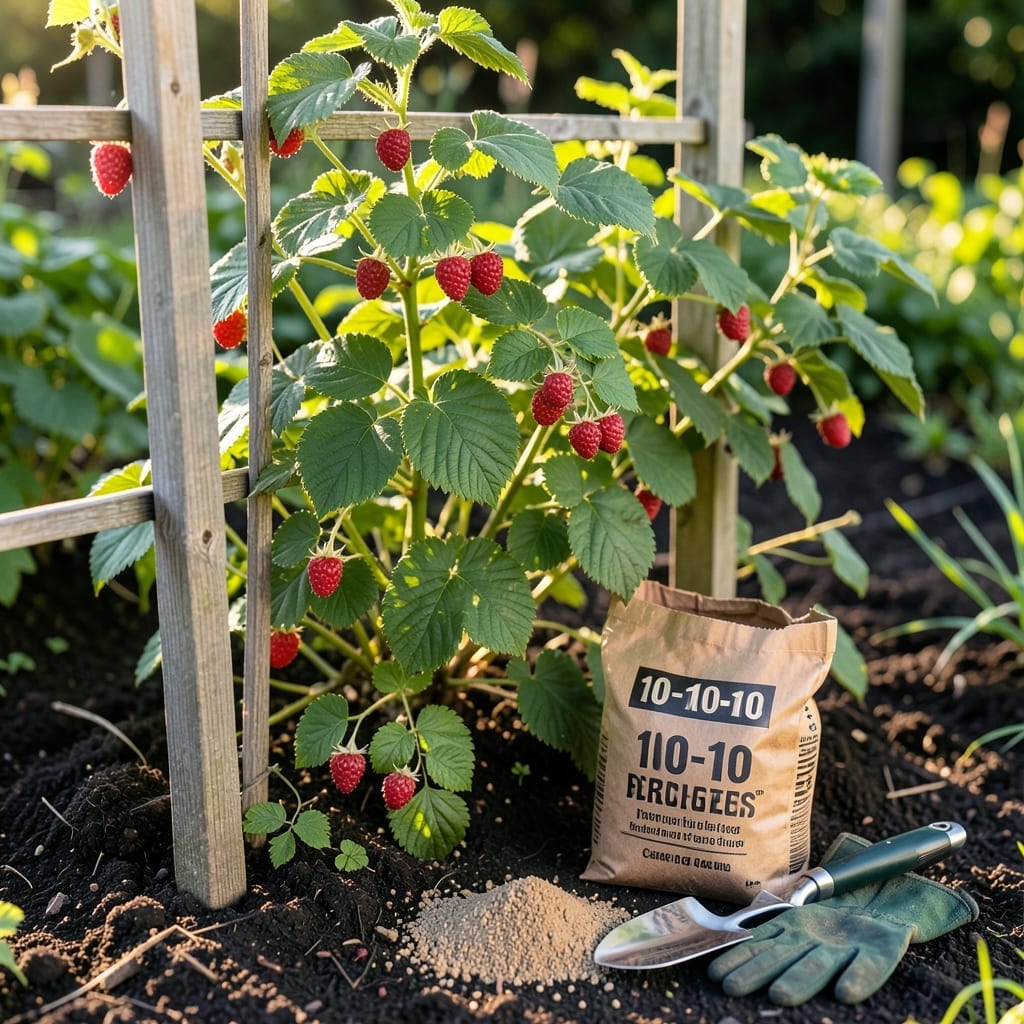
Raspberry plants thrive with the right nutrients, and balanced fertilization can transform your harvest. I’ve seen 🫐 Raspberry bushes go from struggling to abundant with the proper approach.
Getting the timing and method right is the key to success. Whether you’re new to gardening or have years of experience, understanding how to nourish your plants makes all the difference.
Discover how to give your Raspberry plants exactly what they need for bigger, sweeter yields. Let’s get started with this simple yet effective method.
I love using 10-10-10 fertilizer for my raspberry plants because it provides balanced nutrition in one simple application. This all-purpose formula delivers equal parts nitrogen, phosphorus, and potassium to support every growth stage.
The nitrogen in 10-10-10 promotes lush foliage and strong cane development, while phosphorus encourages root growth and flower production. The potassium helps with disease resistance and fruit quality. 🌱
| Nutrient | Role in Raspberry Growth | Key Benefits |
| Nitrogen (10%) | Leaf & cane development | Vigorous growth, deep green leaves |
| Phosphorus (10%) | Root & flower production | Strong roots, abundant blooms |
| Potassium (10%) | Fruit & disease resistance | Sweeter berries, healthier plants |
For raspberry bushes, this balanced ratio is ideal because it supports both vegetative growth and fruit production without overemphasizing one aspect. I’ve noticed my plants produce more canes and larger berries when using this fertilizer.
The slow-release nature of granular 10-10-10 means your raspberry plants get steady nutrition over time. This prevents the growth spikes and crashes that can happen with uneven feeding schedules. It’s particularly effective in well-draining soil. 🌿
I recommend applying 10-10-10 in early spring when new growth appears. This gives your raspberry plants the boost they need for the growing season. The balanced formula works well for both summer-bearing and everbearing varieties.
Another advantage is its versatility. Whether you’re growing red raspberries, black raspberries, or golden varieties, 10-10-10 provides consistent results. I’ve used it successfully with all types in my garden.
Remember that soil testing is always wise before fertilizing. While 10-10-10 works for most raspberry plants, a soil test might reveal specific deficiencies that need addressing. This ensures you’re not over-applying any nutrient.
The ease of use makes 10-10-10 perfect for beginners. Just follow the package instructions for application rates, and you’ll see noticeable improvements in your raspberry harvest. I appreciate how it simplifies my fertilization routine. ✂️
For established raspberry patches, I apply 10-10-10 every 4-6 weeks during the growing season. This maintains steady growth without overwhelming the plants. The results speak for themselves with bigger yields and healthier canes.
In my experience, combining 10-10-10 with organic matter like compost gives the best results. The fertilizer provides immediate nutrients while the compost improves soil structure long-term. This combination has transformed my raspberry plants into thriving producers.
Timing your 10-10-10 fertilizer application is crucial for raspberry plants. I always apply the first dose in early spring when I see new growth emerging from the canes. This gives the plants a strong start.
For established raspberry bushes, I recommend applying 1 lb per 100 sqft or 1 tbsp per plant. This rate provides enough nutrients without risking fertilizer burn. Always water thoroughly after applying granular fertilizer.
I prefer using granular 10-10-10 for my raspberry patch because it’s easy to spread and releases nutrients slowly. For liquid applications, I dilute according to package instructions and apply at the base of plants. 🌱
Always apply fertilizer to moist soil and avoid getting it on the leaves or canes. This prevents burning and ensures the nutrients reach the root zone where they’re needed most. Morning applications work best.
For summer-bearing raspberries, I stop fertilizing by late July to avoid encouraging late growth that might be damaged by frost. Everbearing varieties can benefit from a light feeding after their first harvest.