
Beautiful Plants For Your Interior
Beautiful Plants For Your Interior
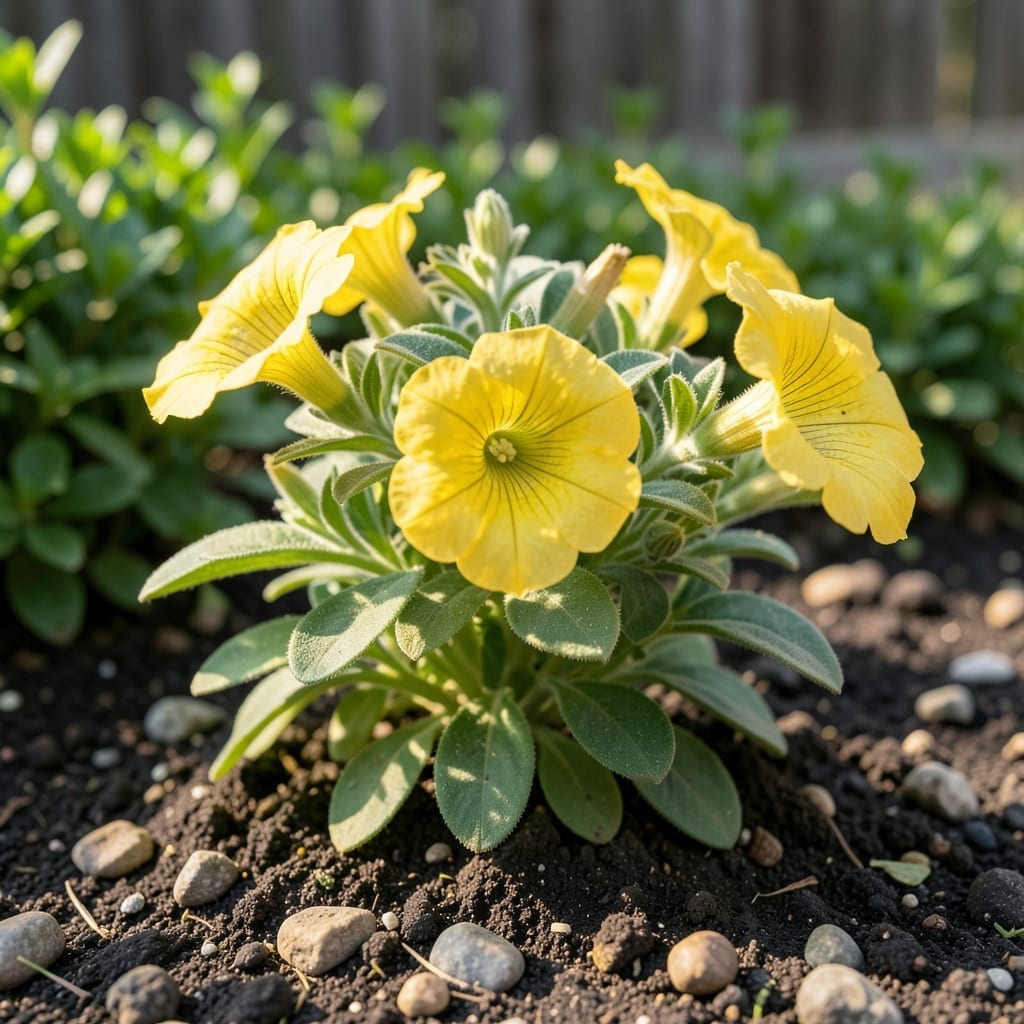
Sunshine on a stem, that’s what yellow petunias bring to any garden. I planted my first batch three summers ago, and they’ve been my go-to for reliable color ever since.
These flowers thrive in full sun and well-draining soil, blooming nonstop from spring until frost. They’re drought-tolerant once established, making them perfect for busy gardeners who want low-maintenance vibrancy.
You’ll get waves of bright yellow blooms that attract pollinators and brighten any space. They work in beds, borders, containers—anywhere you need a pop of cheerful color.
With minimal care, they’ll reward you with season-long beauty. Here’s how to grow them right.
Understanding why Petunia flowers turn yellow can help you maintain their vibrant hues. Here are the most common causes:
Yellowing in petunias often signals a lack of essential nutrients. Nitrogen deficiency causes uniform yellowing of older leaves, while iron or magnesium shortages lead to interveinal chlorosis (yellowing between veins). A balanced, water-soluble fertilizer (10-10-10 or 20-20-20) can correct this. For iron, apply chelated iron to the soil.
Excessive heat or sunlight can bleach petunia petals, turning them yellow. Petunias thrive in full sun to partial shade (6+ hours of sunlight). If temperatures exceed 90°F (32°C), provide afternoon shade. Mulching helps retain moisture and regulate soil temperature.
Root rot from soggy soil disrupts nutrient uptake, leading to yellowing. Ensure pots have drainage holes, and water only when the top inch of soil feels dry. Use well-draining soil mixed with perlite or sand to prevent waterlogging.
Aphids, spider mites, or fungal infections (like powdery mildew) stress the plant, causing yellowing. Inspect leaves for pests or white powdery spots. Treat with neem oil or insecticidal soap for pests, and improve air circulation to deter fungi.
Older petunia blooms naturally fade to yellow as they age. Regular deadheading (removing spent flowers) encourages new, vibrant blooms and prevents seed formation, which can also cause yellowing.
If your yellow petunia isn’t thriving, don’t worry—most issues are fixable with a few simple adjustments. Below are targeted solutions for common problems, along with prevention tips to keep your blooms vibrant.
Cause: Overwatering or poor drainage. Petunias hate soggy roots!
Fix: Let the soil dry slightly between waterings. Ensure pots have drainage holes, and use well-draining soil. Trim affected leaves to redirect energy.
Prevention: Water at the base (not overhead) early in the day. Pro tip: 💡 Use a moisture meter to avoid guesswork.
Cause: Aphids, spider mites, or whiteflies sucking sap from leaves and stems.
Fix: Spray with a mild soap-and-water solution (1 tsp dish soap per quart of water) or introduce beneficial insects like ladybugs. For severe cases, use neem oil.
Prevention: Inspect plants weekly, especially under leaves. 🎯 Remove debris around the garden to deter pests.
Cause: Insufficient sunlight or overcrowding.
Fix: Move pots to a sunnier spot (6+ hours of light daily) or thin out dense plantings. Prune leggy stems to encourage bushier growth.
Prevention: Space petunias 10–12 inches apart. ✨ Rotate pots occasionally for even sun exposure.
Cause: Lack of fertilizer or imbalanced soil pH.
Fix: Feed with a balanced, water-soluble fertilizer (10-10-10) every 2–3 weeks. For yellow leaves with green veins (iron deficiency), add chelated iron to the soil.
Prevention: Test soil pH (aim for 6.0–7.0) and amend with compost before planting. 🌡️
Water when the top 1 inch of soil feels dry, typically every 2-3 days in hot weather. Always water deeply at the base to avoid wetting the leaves.
Excessive sun or heat can bleach petals. If temperatures exceed 90°F, provide afternoon shade. Mulch helps retain moisture and regulate soil temperature.
Use pots with drainage holes and well-draining soil. Containers allow you to move plants for optimal sunlight and protection from harsh weather.
A balanced, water-soluble fertilizer like 10-10-10 or 20-20-20 works well. Feed every 2-3 weeks during the growing season for vibrant blooms.