
Beautiful Plants For Your Interior
Beautiful Plants For Your Interior
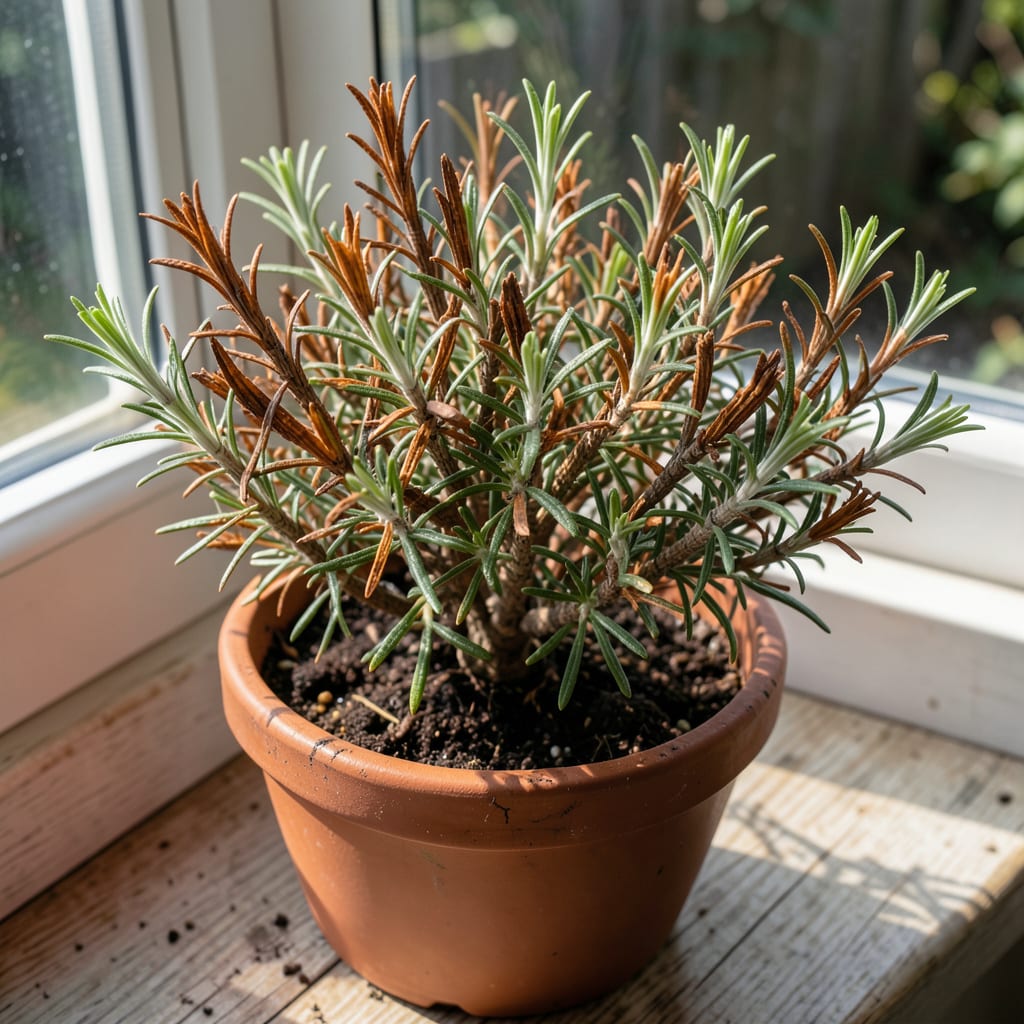
That sinking feeling when your rosemary’s vibrant green turns to crispy brown. I’ve been there, staring at my once-thriving plant wondering where I went wrong.
Between you and me, it’s usually one of four culprits: too much love (water), too little light, uninvited pests, or a sudden temperature swing. Each leaves a distinct calling card on the leaves and stems.
Here’s the thing—most brown rosemary can bounce back with the right fix. I’ve revived plants that looked completely goners with simple adjustments to their care routine.
We’ll walk through how to play plant detective and nurse your rosemary back to its fragrant, needle-green glory.
Rosemary turns brown due to a mix of environmental stressors, improper care, or disease. Here’s a breakdown of the most common causes:
Rosemary is a Mediterranean native, thriving in warm, sunny conditions. Extreme cold (below 30°F/-1°C) or sudden frost can damage its foliage, turning it brown or black. Similarly, heat stress (above 90°F/32°C) paired with low humidity can scorch the leaves, leading to a crispy, brown appearance.
Overwatering is a leading cause of browning. Rosemary prefers dry soil, and soggy roots suffocate, rot, and fail to deliver nutrients, causing leaves to yellow, then brown. Underwatering can also stress the plant, leading to dry, brittle brown tips. Check the soil: it should be dry an inch down before watering again.
Rosemary requires well-draining, sandy or loamy soil with a pH between 6.0 and 7.0. Heavy, clay-rich soil retains too much moisture, leading to root rot. Conversely, nutrient-poor or compacted soil can starve the plant, manifesting as browning leaves, especially at the tips.
Spider mites, aphids, or scale insects sap the plant’s juices, weakening it and causing brown spots or discoloration. Fungal diseases like Phytophthora root rot or Botrytis (gray mold) thrive in damp conditions, leading to brown, mushy stems or leaves. Inspect the plant regularly for webbing, sticky residue, or moldy patches.
Rosemary needs 6-8 hours of direct sunlight daily. Insufficient light weakens the plant, reducing its ability to photosynthesize effectively. This often results in leggy growth with brown, dying lower leaves as the plant struggles to sustain itself.
Don’t panic if your rosemary is turning brown—here’s how to nurse it back to health. Each issue has a targeted fix, so start with the most likely culprit and give your plant the care it needs.
Fix: Let the soil dry out completely between waterings. Ensure the pot has drainage holes, and use a well-draining soil mix with perlite or sand. If root rot is suspected, trim the affected roots and repot in fresh soil.
Prevention: Water only when the top 1–2 inches of soil are dry. Use a pot with drainage holes and avoid saucers that trap water. 💡 Pro tip: Rosemary thrives on neglect—when in doubt, water less!
Fix: Give the plant a deep watering until water runs out the drainage holes. If your air is dry, mist the leaves lightly or place a tray of water with pebbles nearby to boost humidity.
Prevention: Check soil moisture weekly. In hot climates, water every 5–7 days; in cooler weather, every 10–14 days may suffice.
Fix: Remove brown, spotted, or mushy leaves immediately to prevent spread. Apply a copper-based fungicide or a diluted solution of baking soda (1 tsp baking soda + 1 quart water + a few drops of dish soap) to the leaves.
Prevention: Space plants for airflow, avoid wetting the foliage when watering, and clean up fallen debris around the base. ✨ Pro tip: Prune regularly to improve air circulation.
Fix: Spray the plant with neem oil or insecticidal soap, focusing on the undersides of leaves where pests hide. For severe infestations, isolate the plant and repeat treatment every 3–5 days until pests are gone.
Prevention: Inspect new plants before bringing them home, and keep your rosemary in a well-ventilated area. Encourage beneficial insects like ladybugs in your garden.
Fix: Move potted rosemary indoors or to a sheltered spot if temperatures drop below 30°F (-1°C). If it’s suffering from heat stress, provide afternoon shade and ensure the soil stays moist (but not soggy).
Prevention: Rosemary prefers 60–75°F (15–24°C). Use mulch to protect roots from extreme temperatures, and avoid placing pots near heaters or drafty windows.
Water only when the top 1-2 inches of soil are completely dry. In hot weather, this might be every 5-7 days, but in cooler months, 10-14 days is often enough. Rosemary thrives on less water.
Unfortunately, once leaves turn brown, they won’t recover. However, the plant can grow new green foliage if you address the underlying issue (like overwatering or pests) and provide proper care.
Use a well-draining mix with perlite or sand to prevent waterlogging. Rosemary prefers slightly alkaline soil (pH 6.0-7.0) and struggles in heavy clay.
Check for tiny webbing (spider mites), sticky residue (aphids), or white cottony spots (mealybugs). Look closely at leaf undersides where pests often hide.
