
Beautiful Plants For Your Interior
Beautiful Plants For Your Interior
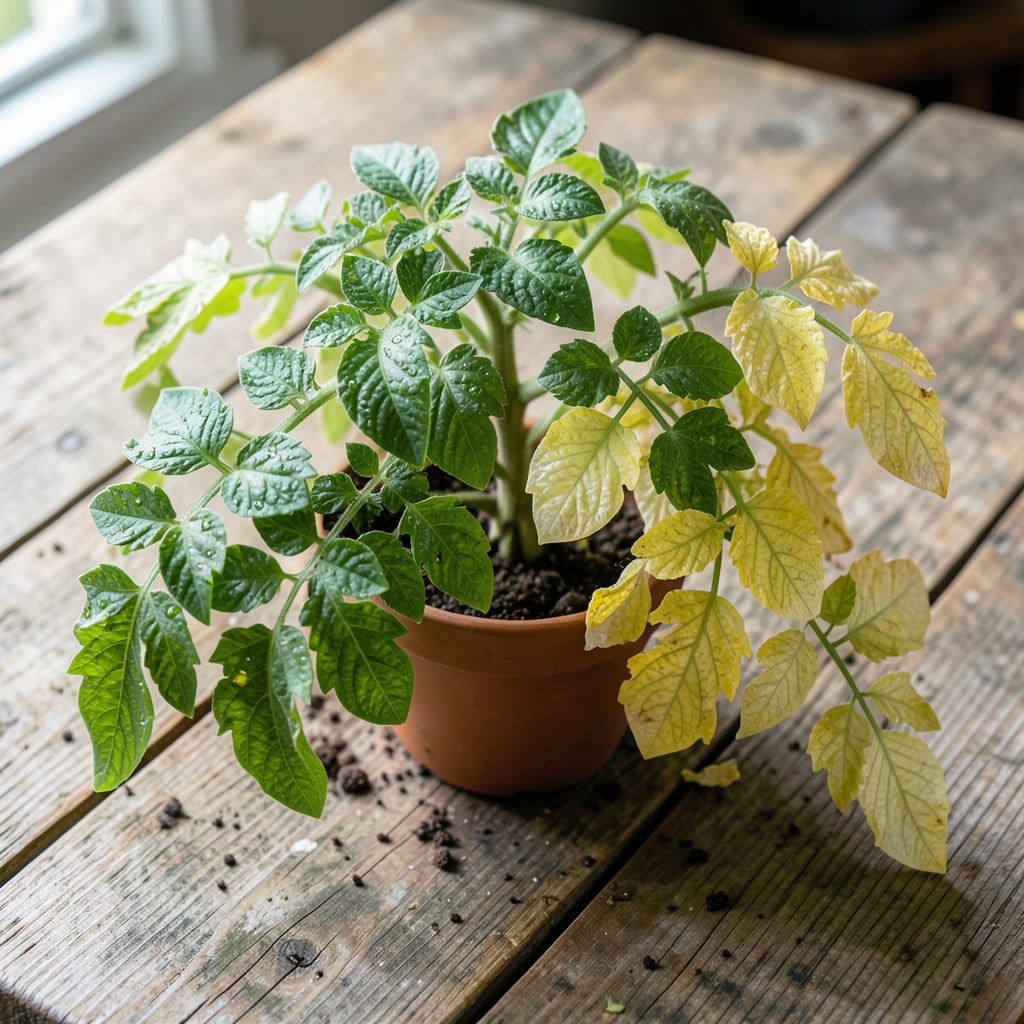
Yellow leaves on your tomato plants aren’t just unsightly—they’re a cry for help. I’ve seen this happen to my own crops, and the fix is usually simpler than you think.
Whether it’s too much water, not enough nutrients, or sneaky pests, each cause has a tell. Overwatering leaves them soggy and pale, while nitrogen deficiency starts at the bottom. Aphids love to cluster under leaves, leaving sticky residue behind.
You’ll spot the difference once you know what to look for. The solution often starts with adjusting your care routine—sometimes in 24 hours, you’ll see improvement. Early action saves your harvest.
No need to panic. With a little observation and the right tweaks, your plants can bounce back stronger than before.
Tomato leaves turning yellow is often a sign of underlying issues that can be grouped into several key causes. Below are the most frequent culprits, explained in clear, actionable terms.
Yellowing leaves, or chlorosis, often point to a lack of essential nutrients. Nitrogen deficiency typically causes uniform yellowing of older leaves first, as the plant redirects nitrogen to newer growth. Magnesium deficiency appears as yellowing between leaf veins (interveinal chlorosis), often in lower leaves. Meanwhile, iron deficiency affects younger leaves first, turning them pale yellow while veins stay green. A soil test can confirm which nutrient is lacking, allowing you to amend the soil with the right fertilizer or supplement.
Too much water suffocates tomato roots, preventing them from absorbing oxygen and nutrients. This leads to yellowing leaves, often accompanied by wilting or edema (blisters on leaf undersides). Poor drainage worsens the problem, as waterlogged soil encourages root rot. Ensure your tomato plants are in well-draining soil and water only when the top 1-2 inches of soil feel dry.
Pests like aphids, whiteflies, and spider mites sap nutrients from tomato leaves, causing yellowing, curling, or speckling. Aphids often cluster on new growth, while spider mites create fine webbing. Check leaf undersides for tiny insects or sticky residue (honeydew). Treat infestations with neem oil or insecticidal soap to restore plant health.
Extreme temperatures, either too hot or too cold, can stress tomato plants, leading to yellow leaves. Heat stress often causes leaf scorch (brown edges), while cold stress slows growth and nutrient uptake. Additionally, excessive sunlight (without acclimation) or sudden temperature drops can trigger chlorosis. Use shade cloth during heatwaves and protect plants from cold snaps with row covers.
Fungal diseases like early blight and septoria leaf spot cause yellowing leaves with dark spots or concentric rings. These pathogens thrive in wet, humid conditions. Bacterial leaf spot also leads to yellowing, often with water-soaked lesions. Remove infected leaves immediately, improve air circulation, and apply copper-based fungicides to prevent spread.
Yellowing tomato leaves can often be fixed with a few targeted adjustments. Below are solutions mapped to the most common causes, along with prevention tips to keep your plants thriving.
Fix: Test your soil with a kit to identify missing nutrients. For nitrogen deficiency, add a balanced fertilizer (10-10-10) or compost. If magnesium is lacking, use Epsom salt (1 tablespoon per gallon of water) as a foliar spray. For potassium or phosphorus, opt for organic options like bone meal or wood ash.
Prevent: Enrich soil with compost before planting and use a slow-release fertilizer during the growing season. Rotate crops yearly to avoid depleting the same nutrients.
Fix: Check soil moisture by sticking your finger 1–2 inches deep. If it’s soggy, hold off on watering and improve drainage with perlite or sand. For dry soil, water deeply at the base (not leaves) in the early morning to reduce evaporation.
Prevent: Use a drip irrigation system for consistent moisture. Mulch with straw to retain water and prevent splash-back, which can spread disease.
Fix: Inspect leaves for aphids, whiteflies, or spider mites. Blast pests off with a strong water spray or apply neem oil (mix 1 tbsp per gallon of water + 1 tsp dish soap) every 5–7 days. For severe cases, use insecticidal soap.
Prevent: Encourage beneficial insects like ladybugs by planting companion flowers (e.g., marigolds). Remove weeds and debris where pests hide.
Fix: For fungal issues (e.g., early blight), remove infected leaves and apply a copper fungicide. Bacterial leaf spot requires removing affected plants to prevent spread. Prune lower leaves to improve airflow.
Prevent: Space plants 18–24 inches apart for ventilation. Avoid overhead watering, and disinfect tools with rubbing alcohol between uses.
Fix: Shield plants from extreme heat with shade cloth. If temperatures drop below 50°F, use row covers. For transplant shock, trim the lowest leaves and water with a weak seaweed solution to reduce stress.
Prevent: Harden off seedlings before transplanting and choose heat-tolerant varieties if you’re in a hot climate.
💡 Pro tip: Yellow leaves won’t turn green again, so focus on correcting the issue to protect new growth.
No, once leaves turn yellow they won’t recover. Focus on fixing the underlying issue to protect new growth. Remove severely yellowed leaves to redirect energy to healthy foliage.
Check the soil 1-2 inches deep. If it’s soggy, you’re overwatering. If bone dry, underwatering is likely. Both can cause yellowing, but overwatering often includes wilting.
Use a foliar spray for quick absorption. For magnesium, mix 1 tablespoon Epsom salt per gallon of water. For nitrogen, a diluted liquid fertilizer works in 24-48 hours.
Yes, if they’re severely yellow or damaged. This prevents pests and diseases from spreading. Use clean scissors to avoid infecting healthy leaves.
