
Beautiful Plants For Your Interior
Beautiful Plants For Your Interior
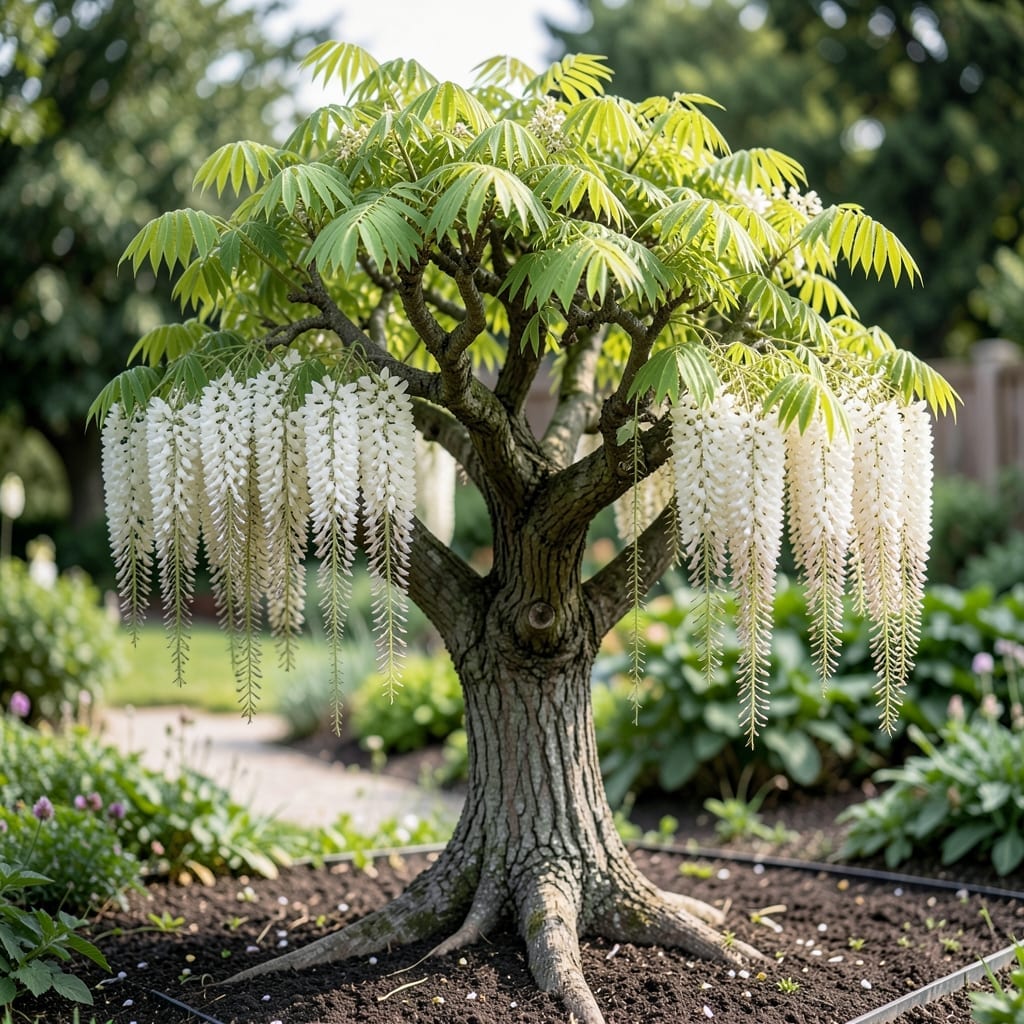
This climber transformed my shady backyard corner from boring to breathtaking. White wisteria thrives where most flowering vines give up, filling the air with a sweet scent that stops neighbors in their tracks.
With the right support and a little patience, you’ll get 20-foot cascades of white blooms by year three. It handles partial shade better than the purple varieties, making it perfect for those tricky spots under trees.
📚 In This Guide
Here’s the method I use to establish this fragrant climber for years of reliable blooms.
Choose a spot with well-draining soil where the vine can climb a sturdy structure like a trellis or arbor. White wisteria tolerates partial shade but blooms most profusely in full sun. Avoid low-lying areas where water pools after rain.
I always check the soil pH first—wisteria thrives in slightly acidic to neutral soil (6.0-7.0). If your soil is too alkaline, amend it with compost or sulfur before planting. The location should also allow for the plant’s mature size: expect it to spread 15-25 feet with proper support.
Dig a hole that’s twice as wide and just as deep as the root ball. This gives the roots room to spread and establish quickly. I loosen the soil at the sides of the hole to encourage outward growth—this prevents the roots from circling and girdling the plant later.
Remove any rocks, weeds, or debris from the hole. If your soil is heavy clay, mix in some compost or aged manure to improve drainage. Wisteria hates soggy roots, so this step is non-negotiable for long-term success.
Gently remove the wisteria from its container and loosen any circling roots with your fingers. Place the plant in the hole so the top of the root ball sits 1-2 inches above the surrounding soil level—this accounts for settling. Backfill with native soil, tampering lightly as you go to eliminate air pockets.
Water deeply after planting to settle the soil, then add a 2-3 inch layer of mulch around the base, keeping it 6 inches away from the stem to prevent rot. Immediately attach the main vine to its support with soft garden ties—this trains the plant upward from day one.
Keep the soil consistently moist but not waterlogged for the first 2-3 months after planting. I water deeply once a week, adjusting for rainfall. The goal is to encourage deep root growth, so shallow daily watering won’t cut it.
After establishment, white wisteria is surprisingly drought-tolerant. At that point, water only during prolonged dry spells. You’ll know it’s thirsty when the top 1-2 inches of soil feel dry to the touch. Overwatering is a bigger risk than underwatering for this plant.
Prune in late winter while the plant is still dormant. Remove any dead, damaged, or crossing branches first. Then, cut back the remaining stems by about one-third to encourage flowering spurs. I also thin out excess growth to improve air circulation.
After the first bloom cycle in spring, do a light pruning to shape the vine and remove any unwanted suckers at the base. This is the moment that matters: consistent pruning is what transforms a wild tangle into a stunning, manageable climber with abundant white flowers.
These practical insights will help you avoid the most common pitfalls when establishing your vine.
Location Wisdom: In Step 1, remember that while white wisteria tolerates partial shade, you’ll get the most abundant blooms in full sun. I’ve found that plants in sunnier spots can produce up to 50% more flowers. Also, when checking soil pH, aim for that 6.0-7.0 range—this single factor can make or break your plant’s long-term health.
Planting Depth Secret: For Step 3, placing the root ball 1-2 inches above soil level is non-negotiable. I learned this the hard way after losing a plant to rot from settling. This simple elevation prevents water from pooling around the stem, which is especially important in clay-heavy soils.
Watering Discipline: During those first 2-3 months mentioned in Step 4, resist the urge to water daily. Deep, weekly watering encourages those strong root systems that make wisteria so drought-tolerant later. I use the finger test—if the top 1-2 inches are dry, it’s time to water deeply.
Pruning Precision: When you get to Step 5, cutting back by one-third each winter might seem aggressive, but it’s the key to abundant blooms. I was hesitant at first, but the difference in flowering after consistent pruning was dramatic. Always prune while dormant to avoid cutting off potential flower buds.
Water young plants deeply 1-2 times per week, ensuring the soil stays moist but not soggy. Once established, white wisteria is drought-tolerant and only needs watering during prolonged dry spells.
White wisteria typically blooms in late spring to early summer, usually between May and June. Proper pruning and sunlight exposure can encourage more abundant and timely flowering.
Consider cold-hardy alternatives like clematis, honeysuckle, or climbing roses. These plants also offer beautiful blooms and can thrive in cooler climates where wisteria might struggle.
Lack of blooms can be due to insufficient sunlight, improper pruning, or young age (wisteria can take 3-5 years to flower). Ensure it gets at least 6 hours of sunlight and prune correctly after the blooming season.