
Beautiful Plants For Your Interior
Beautiful Plants For Your Interior
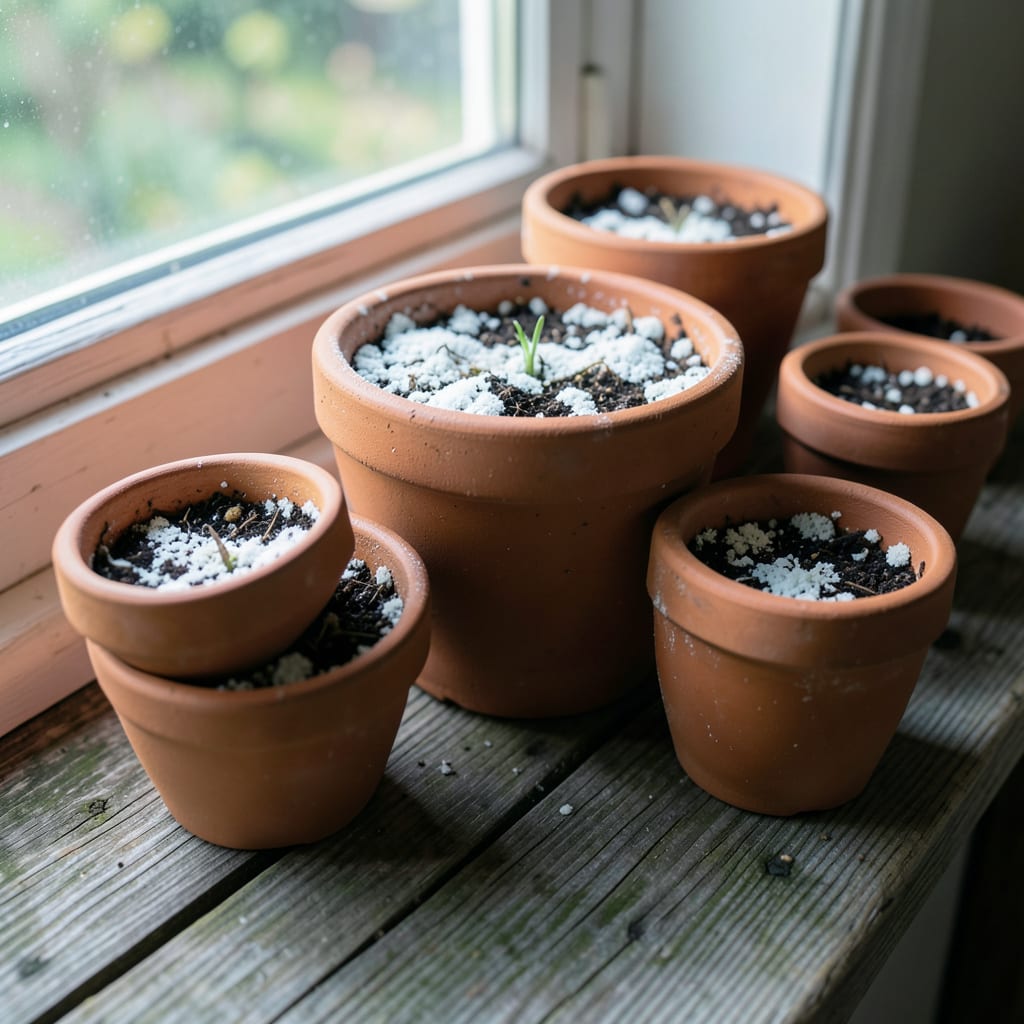
White fuzz on your plant pots isn’t just ugly—it’s a sign your plants might be in trouble. I’ve seen this stuff spread faster than gossip at a garden party.
It usually starts with excess moisture, poor airflow, or organic buildup. Left unchecked, it can move from the pot to the plant, causing real damage. The good news? Most cases are 100% treatable with stuff you already have at home.
You’ll learn to spot the difference between harmless mold and dangerous fungi, plus the organic solutions that work in under a week. No fancy equipment needed.
Whether you’re growing herbs on a windowsill or tomatoes in a greenhouse, this method keeps your pots clean and your plants thriving.
White mold on plant pots is often the result of environmental and cultural conditions that favor fungal growth. Here are the most common causes:
Overwatering or poor drainage creates a damp environment where Sclerotinia and other fungi thrive. Potting mix that stays soggy prevents oxygen from reaching roots, encouraging mold spores to germinate. Solution: Water only when the top inch of soil is dry and ensure pots have drainage holes.
Decaying leaves, dead plant matter, or leftover compost in pots provide a food source for mold. These materials break down slowly in confined spaces, releasing nutrients that fuel fungal growth. Solution: Remove debris regularly and avoid over-mulching.
Stagnant air traps humidity around the pot, especially in crowded greenhouse settings or indoor growing areas. Without airflow, moisture lingers on surfaces, promoting mold development. Solution: Space plants apart and use a small fan to improve ventilation.
Low-quality or reused soil may contain dormant fungal spores. If the mix isn’t sterilized, these spores activate when exposed to moisture and warmth. Solution: Use pasteurized potting soil and avoid reusing mix from infected plants.
Insufficient light weakens plants and slows evaporation, keeping the soil surface damp for longer. Shaded or indoor pots are particularly vulnerable. Solution: Move pots to brighter areas or use grow lights to reduce moisture retention.
White mold on plant pots is manageable with the right approach. Below are targeted solutions for common causes, along with prevention tips to keep your plants healthy.
If soggy soil is the culprit, stop watering immediately and let the soil dry out. Repot the plant in fresh, well-draining soil and ensure the pot has drainage holes. Use a moisture meter to monitor soil dampness going forward. Prevention: Water only when the top inch of soil is dry.
Move your plant to a spot with better airflow, like near an open window or a fan on low. Prune dense foliage to allow air to reach the soil. Prevention: Space plants apart and avoid overcrowding on shelves or trays.
Remove fallen leaves, dead plant matter, or old mulch from the pot’s surface. Wipe the pot’s exterior with a vinegar-water solution (1:3 ratio) to disinfect. Prevention: Keep the area around your plants tidy and free of decaying material.
For severe cases, discard the infected soil and repot with fresh, sterilized potting mix. You can also bake used soil at 200°F (93°C) for 30 minutes to kill mold spores. Prevention: Use high-quality, sterile soil from trusted suppliers.
Use a dehumidifier or place a small fan nearby to reduce moisture levels. Grouping plants together can trap humidity, so space them out. Prevention: Aim for 40-50% humidity for most houseplants.
💡 Pro Tip: Sprinkle cinnamon or baking soda on the soil surface as a natural antifungal to deter future mold growth.
It’s generally safe if the mold is only on the pot’s exterior. However, if it spreads to the soil or plant, it can harm growth. Remove the mold immediately and improve growing conditions to prevent recurrence.
Ensure proper drainage, reduce watering frequency, and increase airflow around your plants. Regularly clean pots and use sterilized soil to minimize the risk of regrowth.
Yes, but only after thorough cleaning. Scrub the pot with a vinegar-water solution or bleach mixture (1:10 ratio), then rinse well. Let it dry completely in sunlight before reuse.
