
Beautiful Plants For Your Interior
Beautiful Plants For Your Interior
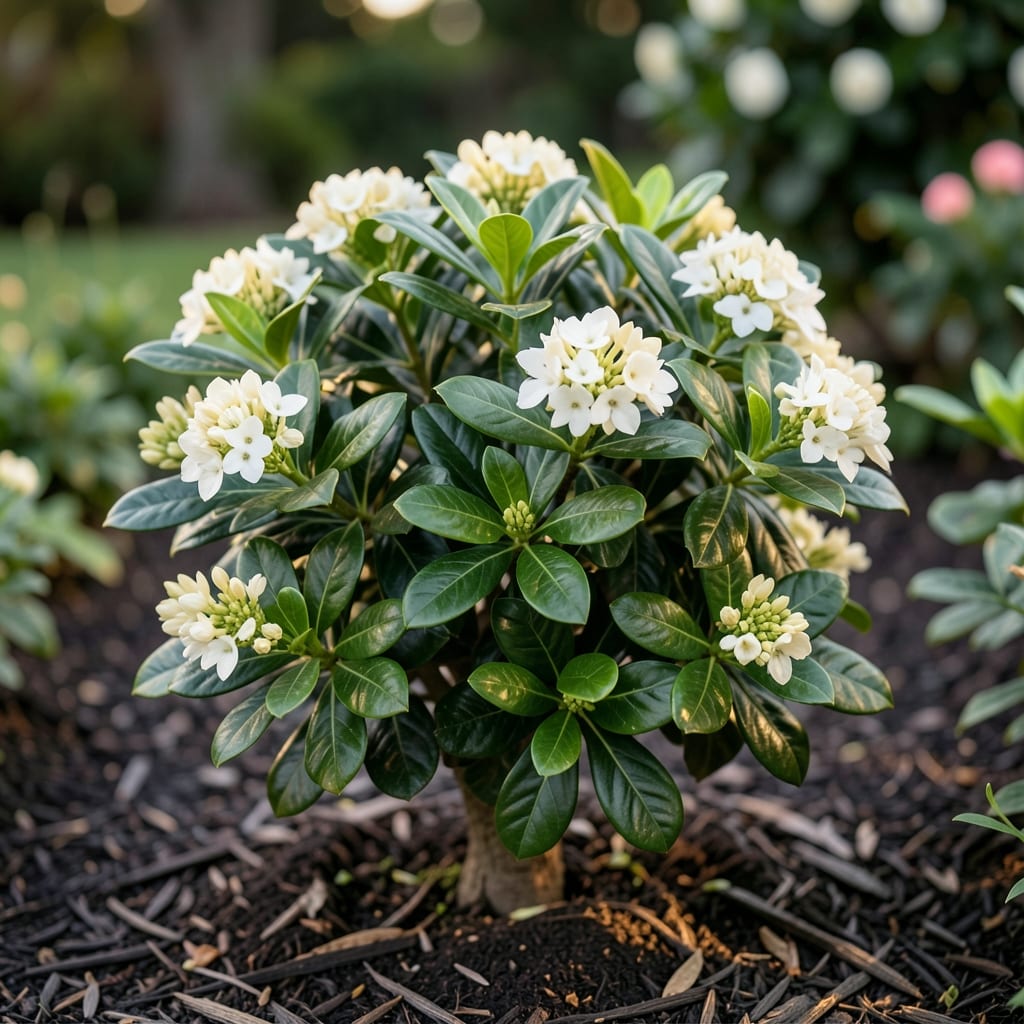
That first whiff of gardenia bloom stops me in my tracks every time. These evergreen shrubs bring luxurious fragrance and glossy foliage to any garden space, but they do demand attention to thrive.
Get the soil right—acidic and well-draining—and you’ll see glossy leaves and abundant white flowers. They need consistent moisture without soggy roots, and morning sun with afternoon shade works best in most climates.
📚 In This Guide
Follow these expert steps to keep your gardenias thriving with glossy foliage and abundant fragrant blooms.
Gardenia shrubs demand partial to full sun with protection from harsh afternoon rays, especially in warmer climates. I’ve found they perform best in a spot with morning sun and afternoon shade to prevent leaf scorch. Ensure the location has well-draining, acidic soil with a pH between 5.0 and 6.0.
Dig a hole twice as wide as the root ball but no deeper. Place the shrub in the hole, backfill with native soil, and water deeply to settle the roots. Mulch around the base with 2-3 inches of organic material like pine bark, which helps maintain soil acidity as it breaks down.
Keep the soil consistently moist but never soggy. I water my gardenias deeply 2-3 times per week during the growing season, adjusting for rainfall. The goal is to maintain even moisture—dry soil stresses the plant, while waterlogged roots invite rot.
Use a soaker hose or drip irrigation to deliver water directly to the roots, avoiding wetting the foliage, which can lead to fungal issues. Check soil moisture by sticking your finger 1-2 inches into the soil—if it feels dry, it’s time to water.
Feed your gardenia with a fertilizer formulated for acid-loving plants, such as one labeled for azaleas or camellias. I apply a slow-release granular fertilizer in early spring, just as new growth begins, and again in late spring for a second flush of blooms.
Avoid fertilizing in late summer or fall, as this can encourage tender new growth that’s vulnerable to frost damage. Always follow the package instructions for application rates, and water thoroughly after fertilizing to help distribute nutrients and prevent root burn.
Gardenia shrubs bloom on old wood, so prune immediately after the flowering period ends, usually in late summer or early fall. I use sharp, clean pruners to remove spent blooms and shape the shrub, cutting back errant branches to maintain its natural form.
Remove any dead, diseased, or crossing branches first, then thin out crowded areas to improve air circulation. Avoid heavy pruning late in the season, as this can reduce next year’s blooms. Light shaping is fine, but never remove more than one-third of the plant in a single pruning session.
Watch for common gardenia pests like aphids, mealybugs, and scale, which often appear on the undersides of leaves. I inspect my plants weekly, especially during warm weather, and treat infestations early with neem oil or insecticidal soap to avoid chemical damage to the delicate blooms.
Yellowing leaves often indicate a nutrient deficiency or improper soil pH. If you notice this, test your soil and adjust as needed with amendments like sulfur to lower pH or lime to raise it. Consistent care and vigilance will keep your gardenia healthy and blooming abundantly.
Small adjustments in care will keep your gardenias blooming beautifully.
The Light Factor: Morning sun with afternoon shade is non-negotiable for preventing leaf scorch, especially in warmer climates. If you notice brown edges on leaves, your plant is likely getting too much harsh afternoon sun. A spot with dappled light under taller trees can work beautifully if full morning sun isn’t available.
Watering Wisdom: The 2-3 times per week watering schedule works perfectly when you check soil moisture 1-2 inches down. If your finger comes out dry, it’s time to water deeply. Remember that gardenias prefer consistently moist soil, so don’t let it dry out completely between waterings. A soaker hose delivers water directly to the roots while keeping foliage dry, which prevents fungal issues.
Soil pH Precision: That 5.0 to 6.0 pH range is critical for nutrient uptake. If your leaves are yellowing between the veins, it’s often a sign of iron deficiency caused by soil that’s too alkaline. Test your soil regularly and amend with sulfur if the pH creeps above 6.0. Pine bark mulch helps maintain acidity as it breaks down.
Pruning Discipline: Resist the urge to prune heavily in late season. Since gardenias bloom on old wood, cutting back more than one-third of the plant at once can sacrifice next year’s flowers. Focus on removing dead or diseased branches first, then shape lightly to maintain the natural form.
Water deeply 2-3 times a week for the first few months, then reduce to weekly once established. Keep the soil moist but not soggy—gardenia roots dislike sitting in water.
Yellow leaves often signal overwatering, poor drainage, or iron deficiency. Test soil pH (aim for 5.0–6.0) and adjust with acidic fertilizer if needed.
Plant in early spring or fall to avoid extreme heat or cold. This gives roots time to establish before summer blooms or winter dormancy.
Try jasmine, mock orange, or sweet olive for similar fragrance with lower maintenance. These thrive in comparable conditions but may tolerate less humidity.
Check soil moisture first—wilting often means thirst or root rot. Prune dead branches, improve drainage, and mist leaves to boost humidity.