
Beautiful Plants For Your Interior
Beautiful Plants For Your Interior
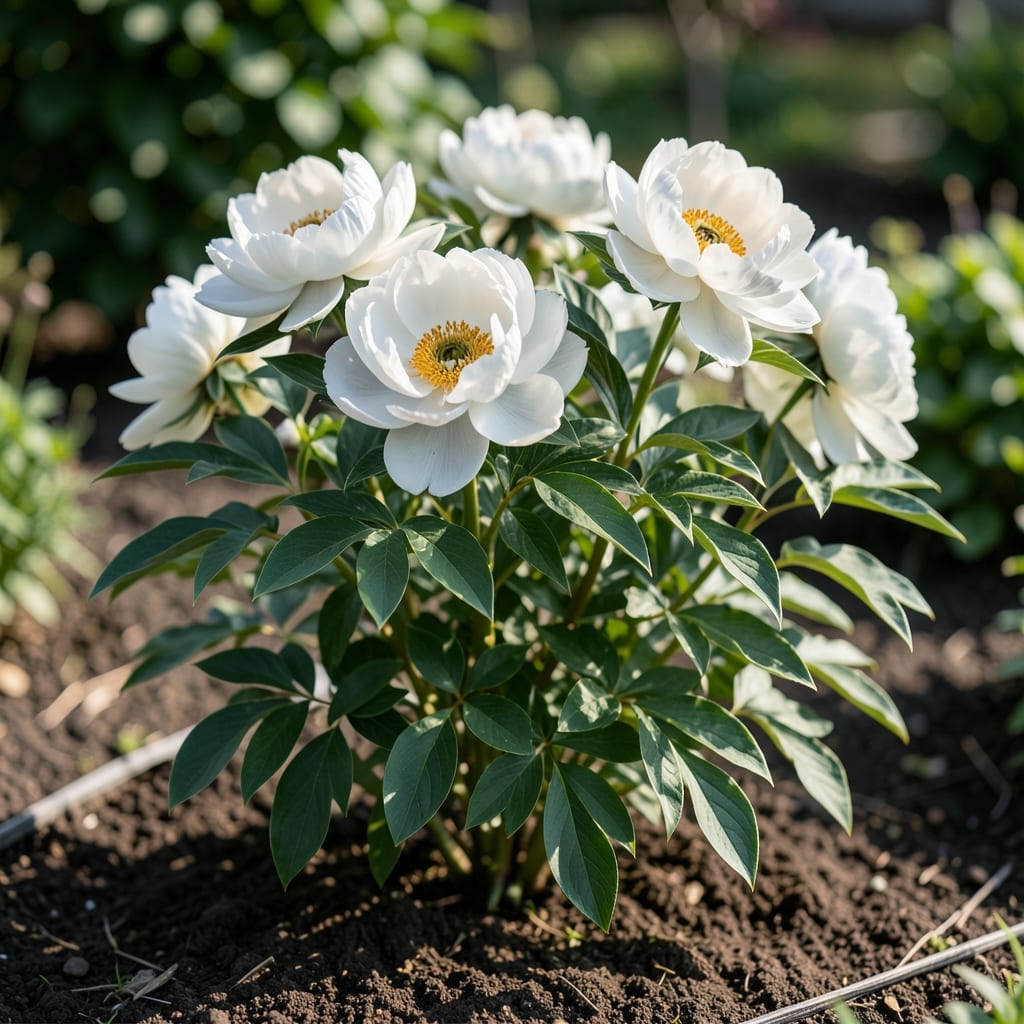
White Cap peonies transform spring gardens with their striking white blooms. I’ve grown these beauties for years, and their fragrant flowers and lush foliage never fail to impress.
They thrive in well-drained soil and full sun, rewarding you with massive blooms that return every year. Plant once, enjoy for decades with minimal care.
📚 In This Guide
Here’s the method I use to ensure these stunning perennials thrive with minimal fuss.
Choose a location with full sun to light afternoon shade—at least 6 hours of direct sunlight daily is ideal. White Cap peonies perform best in well-draining, fertile soil with a slightly acidic to neutral pH (6.5-7.0). Avoid low-lying areas where water pools, as soggy roots are a death sentence for these plants.
Test drainage by digging a 12-inch deep hole and filling it with water. If it doesn’t empty within 2-3 hours, amend the area with compost or choose a different spot. Loosen the soil to a depth of 18-24 inches, removing rocks and breaking up clumps to encourage root establishment.
Position the bare-root crown so the “eyes” (buds) face upward and are no more than 2 inches below the soil surface. Planting too deep is the most common mistake—it delays blooming or prevents flowers entirely. Space divisions 3-4 feet apart to allow for mature spread and airflow.
Backfill the hole with native soil, gently firming it around the roots to eliminate air pockets. Water thoroughly after planting to settle the soil, adding more if it sinks. A 2-3 inch layer of organic mulch (like shredded bark) helps retain moisture but keep it away from the crown to prevent rot.
Water deeply 1-2 times per week during the first growing season, providing 1-1.5 inches of water each time. The goal is to keep the soil evenly moist but not waterlogged—stick your finger 2 inches into the soil; if it feels dry, it’s time to water.
Once established (after the first year), White Cap peonies are surprisingly drought-tolerant. Reduce watering to every 10-14 days unless you’re experiencing extreme heat. Overwatering leads to floppy stems and increased disease risk, so err on the side of caution.
Install peony rings or stakes in early spring as new growth emerges—waiting until stems are heavy with buds often results in broken stems. The supports should encircle the plant, with stems tied loosely to the rings using soft twine or cloth strips to avoid girdling.
Deadhead spent blooms immediately after flowering to prevent seed formation, which diverts energy from root and bud development for next year. However, leave the foliage intact until it yellows in fall—this feeds the roots for the following season’s growth. Apply a balanced 10-10-10 fertilizer in early spring and again after blooming to encourage vigor.
These small details make a big difference in helping your plants establish strong roots and produce those gorgeous blooms.
Site Selection: The 6 hours of direct sunlight mentioned in Step 1 isn’t negotiable—White Cap peonies will produce significantly fewer blooms in shadier spots. I learned this the hard way when my first planting in partial shade yielded only a handful of flowers. Also, that pH range of 6.5-7.0 is ideal for nutrient uptake, so test your soil if you’re unsure.
Planting Depth: In Step 2, the instruction to keep eyes no more than 2 inches below the soil surface is critical. I’ve seen gardeners plant too deep, thinking it offers more protection, but this almost always results in no flowers the first year. If your hole is too shallow, add more soil to the bottom rather than planting deeper.
Watering Wisdom: That 1-1.5 inches of water per session in Step 3 might seem like a lot, but it encourages deep root growth. The finger test—checking 2 inches down—is more reliable than any moisture meter I’ve tried. And remember, that 2-3 hour drainage test from Step 1 will save you from root rot headaches later.
Support Timing: Step 4 mentions installing supports in early spring, and this timing is everything. Waiting until you see buds forming means you’re already too late—those heavy blooms will snap stems that aren’t properly supported from the start.
The ideal time is early fall (September to October) or early spring (before new growth starts). This allows roots to establish before extreme temperatures.
After blooming, deadhead spent flowers but leave foliage until fall. This helps the plant store energy for next year’s blooms. Water moderately and avoid over-fertilizing.
Common reasons include insufficient sunlight, improper planting depth, or young age (they may take 2-3 years to bloom). Ensure they get 6+ hours of sun and are planted shallowly.
Yes! Try Sarah Bernhardt (pink) or Duchesse de Nemours (creamy white) for a similar lush, double-bloom appearance. Both are fragrant and low-maintenance.
Improve air circulation by spacing plants properly, water at the base (not leaves), and remove affected foliage promptly. Fungicides can help if the issue persists.