
Beautiful Plants For Your Interior
Beautiful Plants For Your Interior
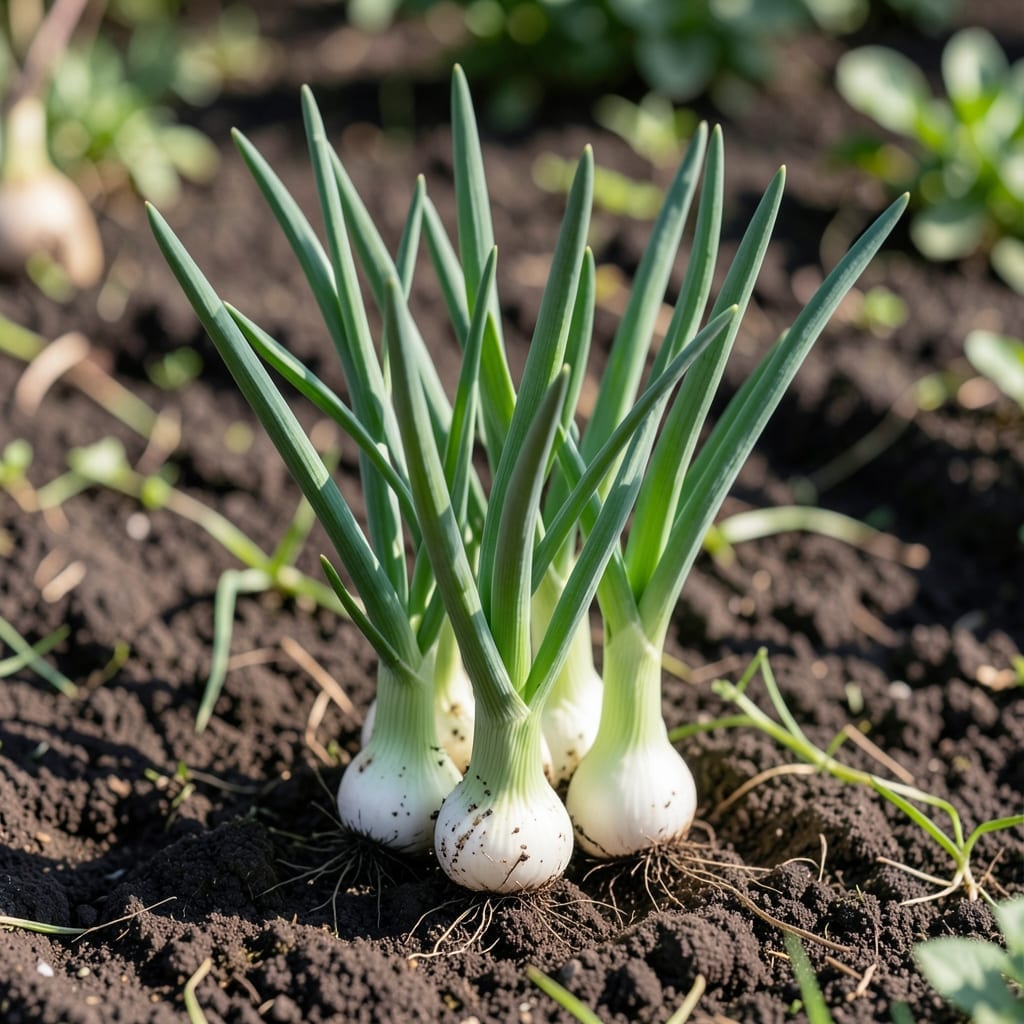
I planted my first white bunching onions on a whim last spring. Within 60 days, I had more green onions than my kitchen could handle.
These are the easiest alliums to grow—tolerant of cool temperatures, resistant to pests, and happy in both containers and garden beds. You’ll get multiple harvests from a single planting, and the flavor beats store-bought every time.
📚 In This Guide
Here’s my reliable method for growing these onions fast, with minimal fuss and maximum yield.
Choose a location with full sun exposure for at least 6-8 hours daily. White bunching onions thrive in loose, well-draining soil with a pH of 6.0-7.0. I test my soil first—if it’s too dense, I amend it with compost to improve aeration and nutrient content.
Clear the area of weeds and debris, then loosen the soil to a depth of 8-10 inches. This encourages strong root development. If your soil is heavy clay, consider raising the bed slightly to prevent waterlogging, which can rot the bulbs before they mature.
Sow seeds ¼ inch deep and 1 inch apart in rows spaced 12 inches apart. If using transplants, set them at the same depth they were growing in their containers, spacing 4-6 inches apart. I prefer transplants for a head start, especially in cooler climates.
Water immediately after planting to settle the soil around the roots. Keep the soil consistently moist but not soggy—you’ll know it’s right when the top 1 inch feels damp to the touch. Overwatering at this stage can cause seeds to rot before germination.
White bunching onions need consistent moisture for rapid, tender growth. Water deeply 1-2 times per week, depending on rainfall, ensuring the soil never dries out completely. Mulching with a 1-inch layer of organic matter helps retain moisture and suppress weeds.
Feed lightly with a balanced fertilizer every 3-4 weeks to support quick growth. I use a liquid fertilizer diluted to half strength to avoid burning the plants. You’ll see a noticeable difference in leaf vigor within a week of the first application.
These onions are ready for harvest in as little as 60-70 days. You can start pulling them when the green tops are 8-12 inches tall and the white bases are ½ to ¾ inch in diameter. I harvest a few at a time as needed, which keeps the rest growing.
Grasp the leaves near the base and pull gently but firmly. If the soil is dry, water the bed the day before to loosen the soil and make harvesting easier. Avoid tugging too hard, as this can break the stems and leave the bulbs behind.
For a continuous supply, succession plant new seeds or transplants every 2-3 weeks through early summer.
These insights will help you maximize your harvest with minimal effort.
Sunlight Strategy: That 6-8 hours of daily full sun isn’t just a suggestion—it’s critical for rapid growth. I’ve noticed plants in partial shade produce thinner, weaker stems. If your garden has limited sun, prioritize these onions for your sunniest spot.
Depth and Spacing: When sowing seeds at that specified ¼ inch deep and 1 inch apart, use a ruler for precision. I learned the hard way that even a slight variation in depth can delay germination by days. For transplants, the 4-6 inch spacing allows room for bulb development without competition.
Moisture Management: The instruction to keep the top 1 inch of soil damp is your best guide. I check by pressing my finger into the soil—if it comes away clean, it’s time to water. That 1-2 times per week watering schedule works perfectly in most climates, but adjust if you get heavy rainfall.
Harvest Timing: Don’t rush the 60-70 days—these onions reward patience. I start checking when tops hit that 8-12 inch range, but the ½ to ¾ inch bulb diameter is the true indicator of readiness. Pulling too early gives you skinny green onions rather than plump bunching onions.
Plant seeds or transplants in well-drained soil with full sun. Keep the soil moist but not soggy, and harvest when the green tops are 6-8 inches tall. They’re low-maintenance and perfect for beginners!
Sow seeds in early spring or late summer for a fall harvest. They thrive in cool weather, so avoid extreme heat for the best results.
Absolutely! They’re a milder, sweeter alternative and can be used interchangeably in recipes like salads, soups, or stir-fries.
They’re grown for their greens, not bulbs. If they’re not thriving, check for overwatering, poor soil, or pests.