
Beautiful Plants For Your Interior
Beautiful Plants For Your Interior
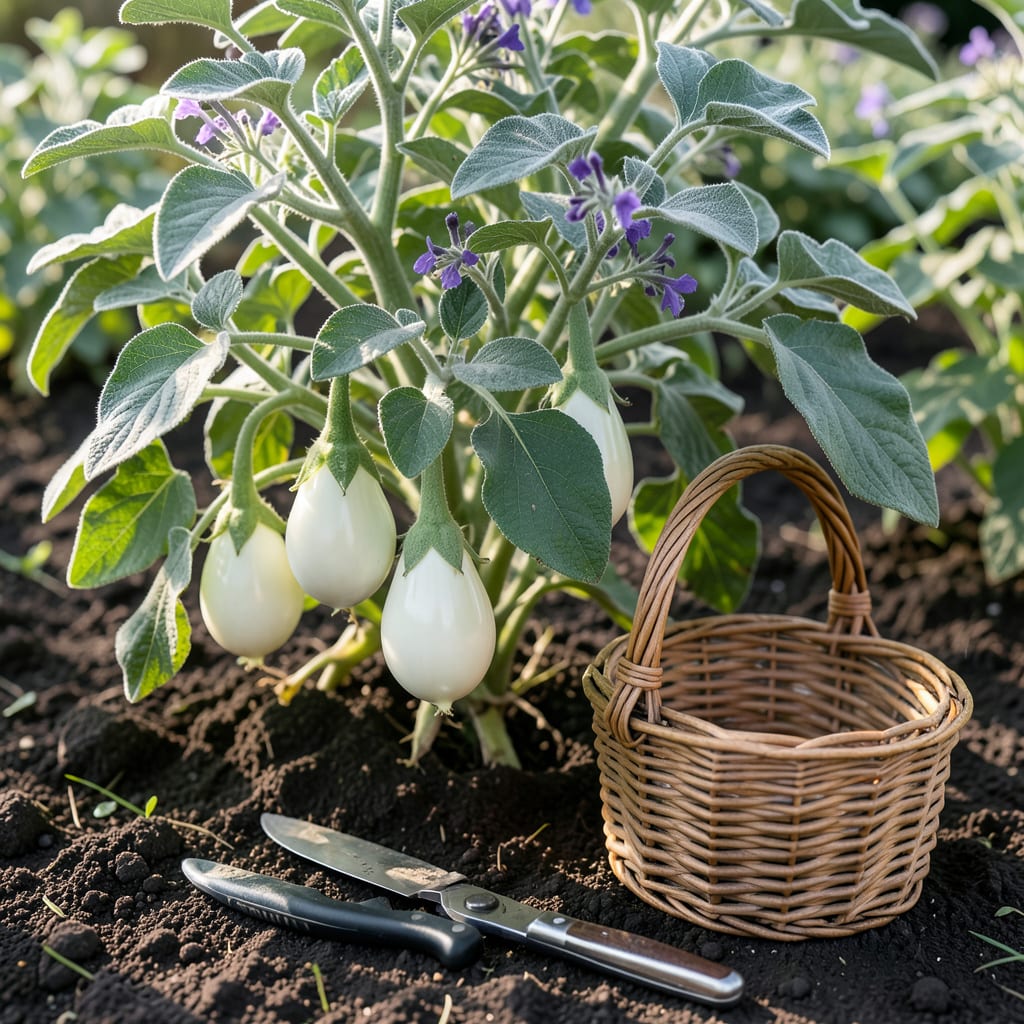
Timing is everything when it comes to harvesting your 🍆 Eggplant. Picking at the right moment means the difference between a firm, flavorful vegetable and one that’s bitter or seedy.
With white varieties, you’ll want to look for that perfect glossy finish and full size before the skin starts to turn yellow. I’ll show you exactly what to watch for.


Harvesting white eggplant at the perfect time ensures the best flavor and texture. Unlike purple varieties, white eggplants show unique visual cues when they’re ready to pick.
I always look for a glossy skin and firm texture as the first indicators. The fruit should feel heavy for its size and have a uniform bright white color.
| Harvest Sign | Description |
| Full Size | 6-8 inches long |
| Skin Texture | Glossy and taut |
| Color | Uniform bright white |
| Stem Condition | Slightly green, fruit detaches easily |
The size of your white eggplant is crucial. Most varieties reach 6-8 inches in length when fully mature. Anything smaller may not have developed its full flavor.
A glossy skin indicates freshness and proper hydration. If the skin appears dull or discolored, it’s a sign the eggplant isn’t ready or may be past its prime.
I always check the firmness by gently squeezing the fruit. It should feel solid and heavy for its size, not soft or spongy. This ensures the flesh inside is tender and seed development is optimal.
The color should be a consistent bright white all over. Any yellowing, especially near the stem, means you’ve waited too long and the eggplant may be bitter.
Another key indicator is how easily the fruit detaches from the plant. When ready, it should come off with a gentle twist or by cutting the stem with pruning shears.
I’ve found that harvesting in the early morning helps preserve freshness. The cooler temperatures help maintain the eggplant’s firm texture and prevent wilting.
Remember, the stem should still be slightly green. If it’s completely brown and dry, the eggplant may be overripe. The fruit should also feel slightly springy when pressed gently.
By paying attention to these visual and tactile cues, you’ll ensure your white eggplants are picked at the peak of perfection, ready for storage or immediate use in your garden fresh 🌱
Harvesting your white eggplant at the wrong time can significantly impact its flavor and texture. Picking too early often results in underdeveloped seeds and a less satisfying taste.
I’ve learned that waiting too long leads to a bitter taste and a spongy texture. The skin may also start to turn yellow, which is a clear sign of overripeness.
If you pick your eggplant too early, you might notice the seeds inside are still very small and soft. This can lead to a less desirable texture when used fresh.
On the other hand, if left on the plant too long, the eggplant can become overripe. The flesh turns spongy, and the seeds become hard and bitter, making it unappetizing.
One way to recover from an early harvest is to let the remaining eggplants stay on the plant a bit longer. Monitor them closely for the glossy skin and firm texture we discussed earlier.
For overripe eggplants, if the yellowing is minimal, you can still use them, but the flavor won’t be as good. It’s best to compost these and focus on harvesting the next batch at the right time ✂️
Mastering the harvest timing for white eggplant takes practice, but these pro tips will help you pick like a seasoned gardener. I’ve refined my approach over the years to ensure every fruit comes off the plant in perfect condition.
First, always use clean pruning shears or a sharp knife to avoid damaging the plant or the fruit. This prevents disease and ensures a clean cut that heals quickly.
Use pruning shears for a clean cut and minimal plant damage.
Leave a short stem (1-2 inches) to prevent rot and extend shelf life.
Harvest in the morning when temperatures are cool and plants are hydrated.
Second, leave a short stem attached to the eggplant. This doesn’t just look better—it helps prevent the fruit from rotting too quickly after harvest.
Finally, timing your harvest for the early morning makes a big difference. The fruit is at its firmest and most hydrated after a cool night, which helps maintain quality during storage.
I also recommend checking your plants every 2-3 days once they start producing. White eggplants can go from perfect to overripe surprisingly quickly, especially in warm weather.
By following these simple but effective techniques, you’ll maximize both the yield and quality of your white eggplant harvest 🌱
Check for a dull skin and small size. Underripe eggplants often feel light for their size and have a firm, almost hard texture. The seeds inside will be tiny and underdeveloped
Overripe eggplants develop yellow skin and a spongy texture. The seeds turn hard and bitter, making them unappetizing. It’s best to harvest before this stage
Always use clean pruning shears or a sharp knife. This prevents damage to both the plant and fruit. Leave a 1-2 inch stem for better storage life
Inspect every 2-3 days once fruits form. White varieties can mature quickly, especially in warm weather. Morning checks reveal the best harvest candidates
