
Beautiful Plants For Your Interior
Beautiful Plants For Your Interior
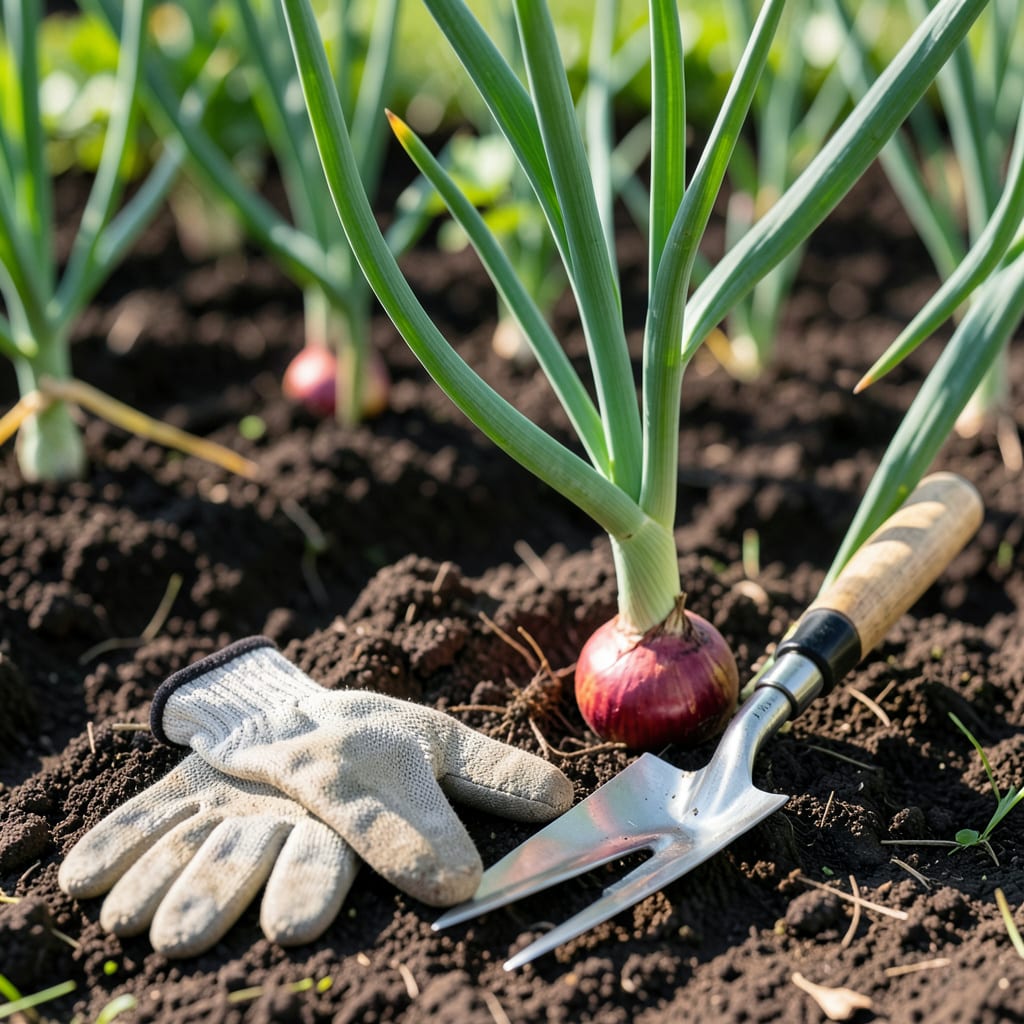
Knowing exactly when to pick 🧅 Red Onion can mean the difference between a mild, sweet harvest and a pungent disappointment. Timing is everything for peak flavor.
I’ll show you the field-tested signs to watch for, from yellowing foliage to neck softening, so you can harvest at just the right moment.


I always watch for the first sign: yellowing foliage. When the green tops of your red onions start turning yellow and falling over, that’s nature’s way of saying they’re nearing maturity.
Another key indicator is the neck softening. As the onion matures, the neck just above the bulb becomes soft and thin, rather than firm and thick.
| Harvest Sign | Description |
|---|---|
| Tops yellowing | Leaves turn yellow and flop over |
| Neck softening | Thin and pliable just above bulb |
| Papery skin | Outer layer becomes dry and crisp |
| Bulb size | 2-4 inches in diameter |
The outer skin is another telltale sign. When it becomes dry and papery, your onions are ready. This is a protective layer that forms as the bulb matures.
Size matters too. Most red onion varieties reach maturity at about 2-4 inches in diameter. I measure across the widest part of the bulb to check.
If the tops are still green and upright, your onions aren’t ready yet. They need more time to develop their full flavor and storage potential.
I also check the days to maturity. Most red onions take 90-130 days from planting. Counting from your planting date gives you a good timeframe.
Weather plays a role. In my USDA Zone 6 garden, I typically harvest from July to August. Warmer zones may see earlier harvests.
Remember, it’s better to harvest a little late than too early. Onions left in the ground too long may split or rot, but picking too soon means smaller bulbs.
Once you see these signs, it’s time to act. I use a garden fork to gently lift the bulbs, being careful not to bruise them.
After harvest, let them cure in the sun for a few days. This helps the outer skin dry completely for better storage.
I always start my red onion harvest in the early morning when the soil is still cool. This helps preserve the bulbs and reduces stress on the plants during the process.
My go-to tool is a garden fork rather than a shovel. It allows me to gently lift the onions without damaging the bulbs or cutting through them accidentally.
Before pulling, I loosen the soil around each bulb with my fork. This makes it easier to remove the onions without breaking the stems or damaging the skin.
Once the soil is loose, I grasp the green tops and pull gently. If the tops break, I use my fork to carefully lift the bulb from below.
After harvesting, I brush off any excess soil but don’t wash the bulbs. Getting them wet can lead to rot during storage, which we want to avoid.
The curing process is crucial. I lay my red onions in a single layer in a sunny spot for 2-3 days. This helps the outer skin dry completely.
Once cured, I store them in a cool, dry place with good air circulation. Properly cured onions can last for months in storage. ☀️
I’ve seen many gardeners rush the harvest and pick their red onions too early. When the tops are still green and upright, the bulbs haven’t reached full maturity.
Another common error is waiting too long. If you leave onions in the ground past their prime, they may split open or start to rot, especially in wet conditions.
⚠️ Warning: Harvesting with wet foliage can promote rot. Always pick on a dry, sunny day for best results.
Improper curing is a mistake I’ve learned to avoid. Skipping the drying process or doing it in a damp area can lead to moldy onions that won’t store well.
Many people also wash their onions after harvesting. This is a no-no as it can introduce moisture that leads to spoilage during storage. Just brush off the soil.
Lastly, storing onions in plastic bags or airtight containers traps moisture. I always use mesh bags or open crates for proper air circulation. 🌱
Picking before the tops yellow means smaller bulbs with milder flavor. They won’t store well and may lack the characteristic red onion sharpness.
Only up to 130 days. After that, they may split or rot, especially in wet soil. Size maxes out around 4 inches in diameter.
No, check each plant individually. Some may ready 10 days before others, so inspect daily once the first signs appear.
Early morning on a dry, sunny day. The bulbs are firmer and less prone to damage when the soil is cool.
