
Beautiful Plants For Your Interior
Beautiful Plants For Your Interior
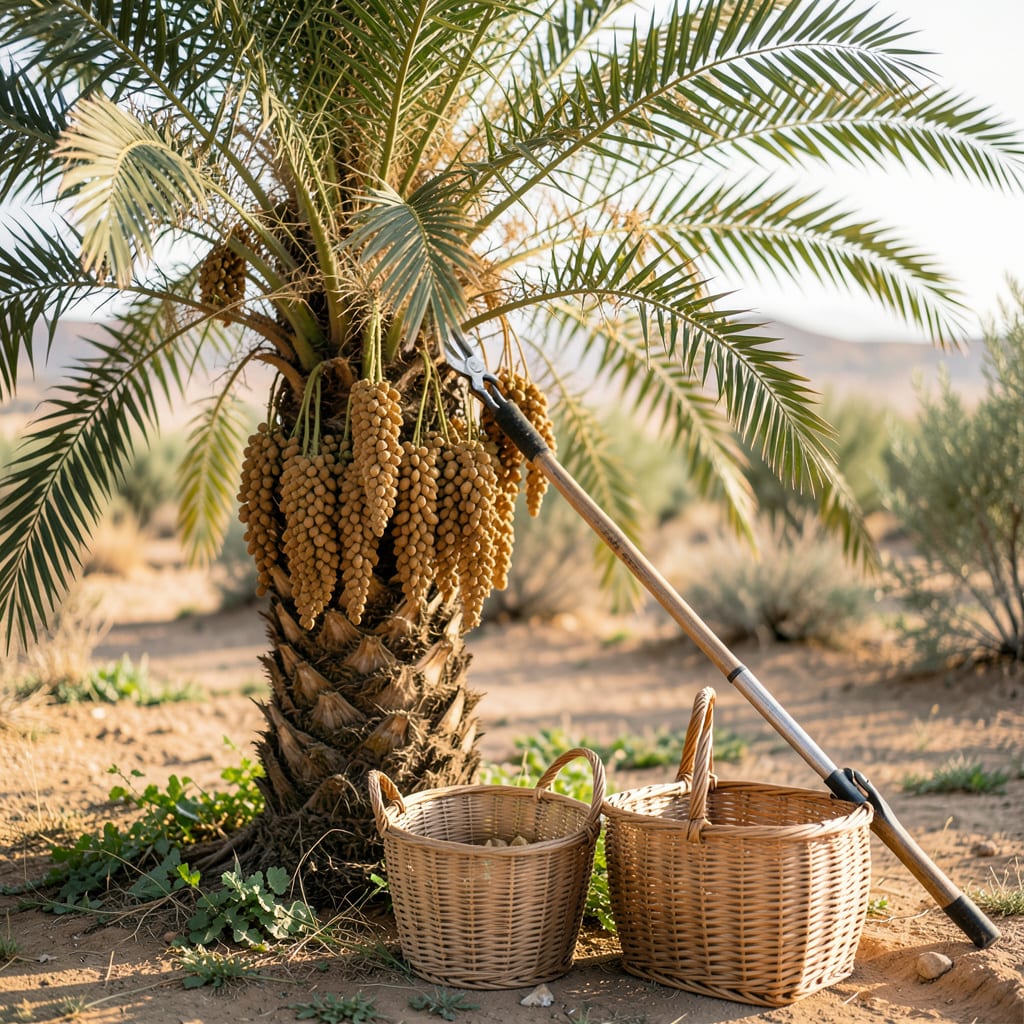
Knowing exactly when to pick dates can mean the difference between a mediocre harvest and perfectly sweet, ripe fruit from your 🌴 Date Palm. Timing is everything.
I’ll show you the key signs to watch for and the best seasonal window. With these tips, you’ll never miss the perfect moment again.


Timing your date harvest perfectly starts with knowing what to look for. I always watch for color changes first, as dates transition from green to brown during ripening. This is your first visual clue.
The ripening process has distinct stages: kimri (green), khalal (yellow), rutab (soft), and tamr (fully ripe). Most home growers harvest at the rutab stage for fresh eating.
For Medjool dates, I look for a deep amber-brown color and slight wrinkling. Deglet Noor varieties turn a lighter golden-brown when ready. The skin should look slightly dull, not shiny.
Texture is another key indicator. Gently squeeze a date – it should yield slightly under pressure. If it’s rock hard, it needs more time. A mushy texture means it’s overripe.
The cluster appearance also changes. Ripe dates will separate easily from the bunch with a gentle tug. If they resist, wait a few more days. I check the top of the cluster first, as it ripens before the bottom.
For commercial growers, the tamr stage is ideal for long-term storage. The dates will be fully brown and wrinkled, with sugar concentrations at their peak. This is when most store-bought dates are harvested.
Remember that variety matters. Some date palms, like Barhee, are best picked at the khalal stage when still slightly crisp. Know your specific date palm variety for the best results.
I always recommend taste testing a few dates from different parts of the cluster. This gives you the most accurate reading of ripeness. The flavor should be sweet and rich, not starchy or bitter.
With these visual cues and a little practice, you’ll develop an eye for the perfect harvest window every time 🌴
While visual signs are crucial, understanding the seasonal window for your region helps narrow down the timeline. Date palms thrive in USDA zones 8-11, with harvest times varying by climate and cultivar type.
In California and Arizona, most varieties ripen between late August and October. The hot, dry summers in these areas accelerate the ripening process, often producing the sweetest dates earlier in the season.
For Medjool dates in California, the peak is typically mid-September. In Arizona, the same variety may ripen 2-3 weeks later due to slightly cooler nights. I always recommend checking your local agricultural extension for precise dates.
In North Africa and the Middle East, harvests often begin earlier, sometimes as soon as July. The intense heat and low humidity in these regions create ideal conditions for early ripening and concentrated sweetness.
Remember that microclimates matter. A south-facing slope or urban heat island can accelerate ripening by 1-2 weeks. I always monitor my trees closely as the season progresses, adjusting my expectations based on daily weather and tree health.
For the most accurate timing, combine these regional guidelines with the visual cues we discussed earlier. This dual approach ensures you’ll catch your dates at their peak sweetness every time 🌴
Harvesting date palms at the wrong time can ruin your entire crop. I’ve seen many gardeners pick too early, resulting in starchy, inedible fruit. Patience is key with dates.
Another common error is waiting too long. Overripe dates can become fermented or mushy, attracting pests. The window between perfectly ripe and overripe is often just 1-2 weeks.
Warning: Avoid These Harvesting Pitfalls
Using dull tools can damage clusters. Always use sharp pruners and wear protective gloves to prevent injury from spiny fronds.
I always recommend checking multiple clusters before harvesting. Some may ripen faster than others, especially on larger trees. Don’t assume uniformity across your entire palm.
Improper handling is another frequent mistake. Never pull dates off by hand – this can damage the fruit and tree. Use clean, sharp shears to cut entire clusters.
For long-term storage, harvest at the tamr stage when dates are fully brown and wrinkled. This ensures maximum sugar content and shelf life. Store in a cool, dry place in breathable containers.
By avoiding these common mistakes, you’ll enjoy a bountiful harvest of perfectly ripe dates every season 🌴
Gently squeeze a date—it should yield slightly under pressure. If it feels rock hard, it needs more time. A mushy texture means it’s past its prime.
Yes! Medjool and Deglet Noor ripen at different rates. Some, like Barhee, are best picked when still slightly crisp. Always check your specific variety’s needs.
Underripe dates taste starchy and bitter. They lack sweetness and won’t soften properly off the tree. Patience ensures the best flavor and texture.
For fresh eating, enjoy them immediately. For storage, wait until they reach the tamr stage (fully brown and wrinkled). Store in a cool, dry place in breathable containers.
