
Beautiful Plants For Your Interior
Beautiful Plants For Your Interior
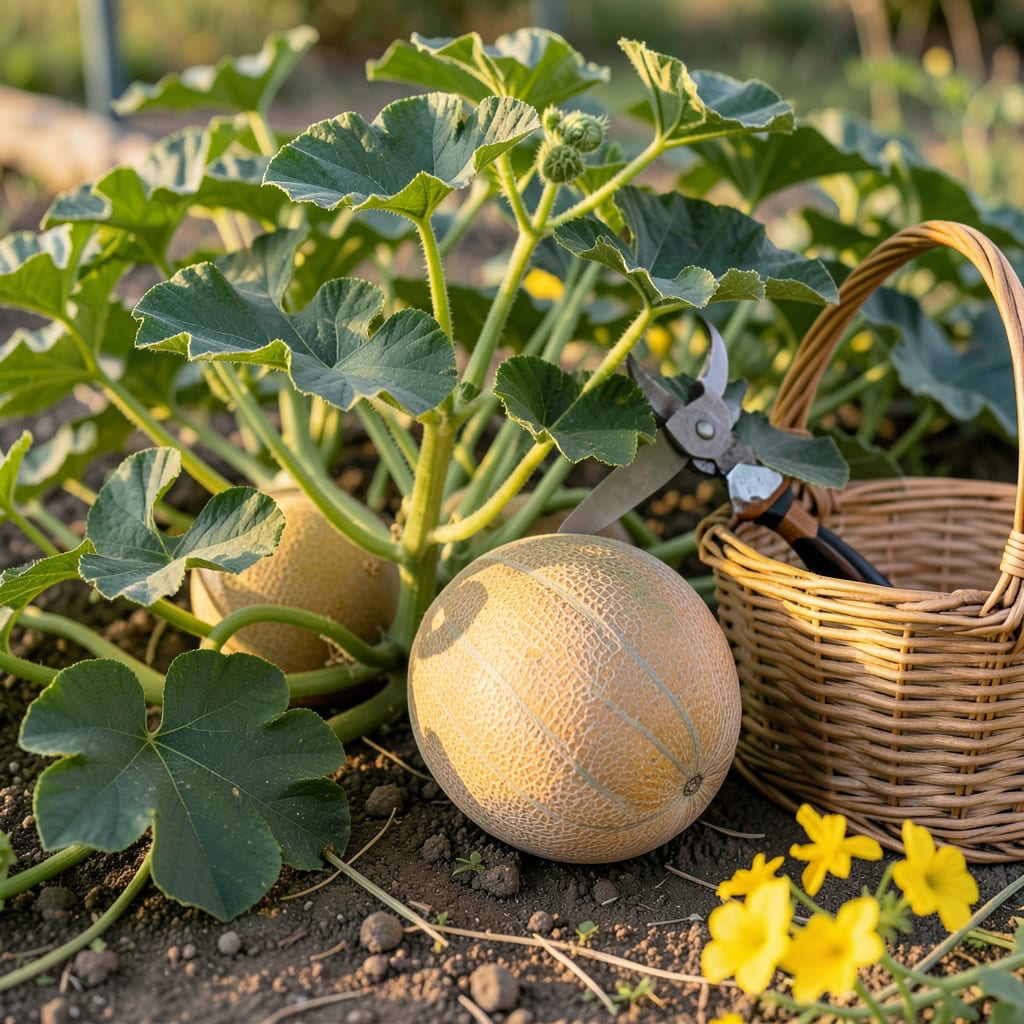
Nothing beats the taste of a perfectly ripe 🍈 Cantaloupe, but timing the harvest can be tricky. One day too early or late makes all the difference.
I’ll show you the key signs to watch for, from stem slip to netting patterns, so you can pick your Cantaloupe at its peak every time. Let’s get started.


The stem slip method is the gold standard for determining cantaloupe ripeness. When the melon is ready, the stem will detach from the vine with just a gentle tug. This happens naturally as the fruit matures.
I always check the stem slip first because it’s the most reliable indicator. If the stem doesn’t separate easily, the cantaloupe isn’t ready yet. Be patient—rushing this step can lead to underripe fruit.
Another thing I watch for is the stem scar left behind. A clean, smooth scar indicates a mature cantaloupe, while a jagged or green stem scar means it needs more time on the vine.
It’s important to handle the fruit carefully when checking for stem slip. Pull too hard, and you might damage the vine or the melon. A light touch is all it takes if the cantaloupe is truly ripe.
The stem slip test works best in the early morning when the plant is well-hydrated. I’ve found that checking later in the day, after the sun has been beating down, can sometimes give false results.
If you’re growing multiple cantaloupes, don’t assume they’ll all ripen at the same time. I always check each one individually, as ripening times can vary even on the same vine.
For the best flavor, I harvest my cantaloupes as soon as they show a full slip. Leaving them on the vine too long after this point can lead to overripeness, which affects both taste and texture.
Remember, the stem slip method is most accurate when combined with other indicators, like netting and color. But if you’re only going to use one test, this is the one I trust the most.
Finally, keep in mind that weather conditions can influence ripening. Hot, dry spells may speed up the process, while cooler, wetter weather can slow it down. Always adjust your expectations based on your local climate.
While the stem slip is the most reliable sign, I also look for netting texture and color changes to confirm ripeness. A mature cantaloupe develops a rough, raised netting pattern on its rind.
The background color shifts from green to beige or tan as it ripens. This change is most noticeable on the blossom end, opposite the stem. I check this area daily as harvest time nears.
| Ripeness Indicator | What to Look For |
|---|---|
| Netting Pattern | Rough, raised webbing |
| Rind Color | Beige or tan background |
| Blossom End | Slightly soft to touch |
I always combine these visual indicators with the stem slip test. A fully ripe cantaloupe will show all three signs simultaneously. Don’t rely on color alone, as some varieties stay green when ripe.
The aroma test is another helpful clue. A ripe cantaloupe emits a sweet, musky scent at the stem end. If I don’t smell anything, I know it needs more time on the vine.
For best results, I check my plants early in the morning when temperatures are cooler. Harvesting during hot afternoon hours can lead to premature spoilage.
Remember that weather conditions affect ripening. In my experience, hot, dry periods may speed up the process, while cool, wet weather can delay it by several days.
With practice, you’ll develop an eye for these subtle changes. I find that keeping a garden journal helps track patterns from year to year 🌱
Timing your cantaloupe harvest wrong can ruin weeks of hard work. One of the biggest mistakes I see is picking too early, which results in bland, underripe fruit that never sweetens properly.
Another common error is ignoring weather conditions. Hot, dry spells can speed up ripening, while cooler, wetter weather may delay it. Always check your local forecast and adjust your harvest timing accordingly.
I’ve also learned that mishandling the fruit after harvest can shorten its shelf life. Avoid dropping or stacking cantaloupes, as bruising leads to faster spoilage. Handle them like eggs!
Some gardeners assume all melons on a vine ripen simultaneously, but that’s rarely true. I always check each cantaloupe individually, as they often mature at different rates even on the same plant.
Finally, don’t overlook the aroma test. A ripe cantaloupe will have a sweet, musky scent at the stem end. If it smells like nothing, it’s likely not ready for picking yet. ☀️
Check for a full stem slip—the stem detaches easily with gentle pressure. The rind should also turn from green to beige or tan with a rough netting pattern.
Underripe cantaloupes won’t sweeten properly after picking. They’ll taste bland and have a firm texture. Always wait for the stem slip and color change.
Yes! A ripe cantaloupe emits a sweet, musky scent at the stem end. If there’s no aroma, it needs more time on the vine.
It’s best to pick in the early morning when temperatures are cooler. Afternoon harvesting can lead to premature spoilage.
