
Beautiful Plants For Your Interior
Beautiful Plants For Your Interior
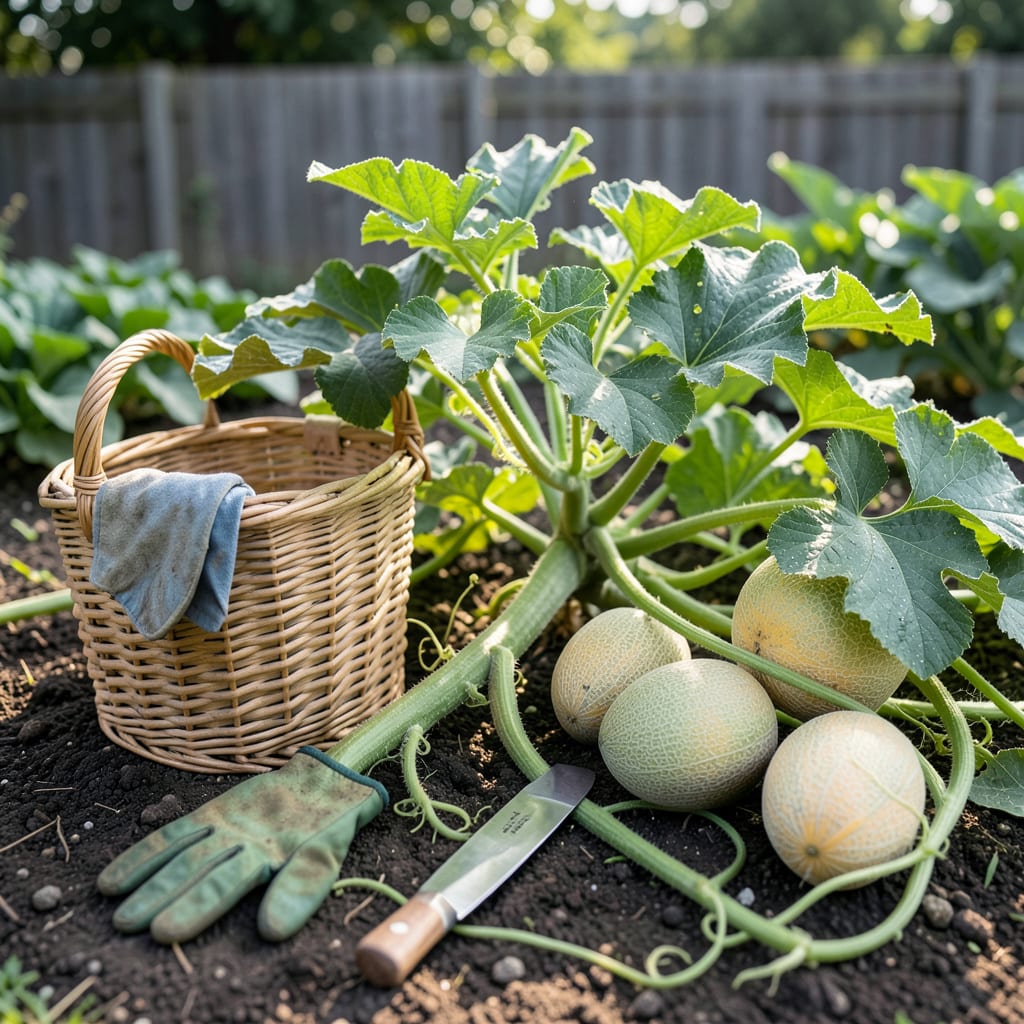
There’s nothing quite like the taste of a perfectly ripe cantaloupe straight from your garden—juicy, sweet, and bursting with flavor. But timing is everything: pick too soon, and you’ll get a bland, underwhelming bite; wait too long, and it turns mushy before you can enjoy it.
I’ve learned the hard way that guessing just doesn’t cut it. The good news? A few simple signs—like color shifts, stem slippage, and even the scent—can tell you exactly when your 🌱 cantaloupe is ready. Let’s make sure your next harvest is your best one yet.


After weeks of watching your cantaloupe vines sprawl and those round fruits swell, the big question arrives: Is it ready yet? Forget guessing—your melon actually tells you when it’s ripe. The trick is knowing where to look and what to feel for.
I’ve found that relying on just one sign (like color) can lead to disappointment. Instead, combine visual cues, tactile tests, and even your nose’s input for foolproof results. Here’s how to read your cantaloupe like a pro.
Gently press near the stem—if it separates easily with light pressure, it’s ready. No tugging needed!
The “webbing” on the rind shifts from green to cream or golden. More contrast = riper fruit.
Opposite the stem, the base should yield slightly to thumb pressure—like a ripe avocado’s give.
Hold the melon to your nose. A strong, sweet scent means peak sugar content. No smell? Wait longer.
Tap the cantaloupe with your knuckles. A deep, hollow echo signals ripeness; a dull thud means it’s not ready.
⚠️ Pro Tip: Check melons in the early morning—they’re firmer and easier to assess after cool nights.
One mistake I see gardeners make is focusing only on size or days on the vine. A cantaloupe might look big after 60 days, but if the stem won’t slip or the netting’s still green, it’s not ripe. Varieties like ‘Hale’s Best’ often need 75–90 days to fully sweeten.
The blossom end (the side that sat on the ground) is your secret weapon. Press it gently with your thumb—if it gives just a little, like pressing a marshmallow, it’s perfect. Too firm? Wait. Too soft? Harvest immediately (it’ll overripen fast).
Don’t ignore the scent test. A ripe cantaloupe smells like a mix of honey and flowers at the stem end. If you bury your nose in the netting and smell nothing, give it 2–3 more days of sun. Overripe melons smell fermented—harvest those ASAP.
Weather plays a role too. After a heatwave, melons ripen faster—check daily. Cool, cloudy spells slow things down; add 3–5 extra days to your estimate. I once lost a batch to sudden rain that caused splitting—now I harvest at the first sign of cracks.
If you’re still unsure, try the “thumbprint test” on the netting. Press lightly with your thumb—if the skin indents slightly but bounces back, it’s ready. No indent? Too early. Stays dented? Overripe. This works best on dry melons (wait until morning dew evaporates).
Remember, cantaloupes won’t ripen further once picked, so don’t rush. But if you accidentally harvest one early, place it in a paper bag with a banana for 24–48 hours. The ethylene gas might coax out a bit more sweetness. Still, nothing beats vine-ripened!
Finally, watch for pest activity. Bees and ants swarming the fruit? That’s nature’s way of saying, “Pick me now!” I’ve saved many melons by harvesting at the first sign of bug interest—better safe than shared with critters.
Timing your cantaloupe harvest isn’t just about flavor—it’s about texture, sugar content, and even how long your melon will last. I’ve ruined more than a few melons by being impatient or distracted. Let’s break down what happens when you pick at the wrong time.
An underripe cantaloupe is the ultimate disappointment: pale orange flesh, a hard, crunchy bite, and almost no sweetness. The seeds will be white and underdeveloped, and the aroma? Practically nonexistent. It’s like biting into a watery pumpkin.
⚠️ Quick Fix: For slightly underripe melons, store at room temp with a banana for 24-48 hours to boost sweetness.
An overripe cantaloupe is almost worse—it becomes a magnet for fruit flies and ants before you even cut into it. The flesh turns mealy, the rind may crack, and you might notice a sour, alcoholic odor. That’s fermentation kicking in.
I once left a batch too long during a heatwave, and by the time I harvested, the melons had split open on the vine. The seeds inside had even started sprouting! Now I check daily when temps climb above 85°F.
There’s a 3-5 day window for peak ripeness in most varieties. Miss it, and you’re either forcing yourself to eat a sad, starchy melon or racing to salvage what’s left before it rots. The ‘slip test’ is your best defense against both scenarios.
If you do end up with an underripe melon, all isn’t lost. Place it in a paper bag with an apple or banana at room temperature. The ethylene gas they release can soften the flesh and develop some sweetness over 24-48 hours.
For overripe melons, your best bet is immediate refrigeration. Cut away any soft spots or cracks, then store the flesh in an airtight container. Use it within 2-3 days before it turns to mush. I’ve had luck blending overripe cantaloupe into smoothies or freezing it for sorbet.
Remember: cantaloupes won’t improve after picking—they only degrade. That’s why I always err on the side of waiting an extra day when in doubt. Your patience will be rewarded with that perfect, dripping-down-your-chin sweetness we all garden for. 🌱
Not all cantaloupes ripen on the same schedule—some varieties race to sweetness while others take their sweet time. I learned this the hard way when my ‘Ambrosia’ melons were ready 2 weeks earlier than my heirloom ‘Minnesota Midget’ plants.
The key is knowing your variety’s personality. Some, like ‘Hale’s Best’, are reliable 75-day performers, while others (looking at you, ‘Charentais’) might need 90+ days to reach peak flavor. Let’s compare the most popular garden types so you don’t get caught off guard.
| Variety | Days to Maturity | Slip Stage | Flavor Profile | Best For |
|---|---|---|---|---|
| Hale’s Best | 75-85 days | Full slip | Classic sweet, orange flesh | Beginners, hot climates |
| Ambrosia | 70-75 days | Half slip | Extra sweet, salmon-pink flesh | Short seasons, containers |
| Minnesota Midget | 65-70 days | Early slip | Mild, creamy texture | Cool climates, small spaces |
| Charentais | 80-90 days | Late slip | Intense perfume, gray-green rind | Gourmet gardens, long seasons |
| Athena | 75-80 days | Full slip | Firm, high-sugar flesh | Disease resistance, humid areas |
⚠️ Note: Days to maturity count from transplanting (add 10-14 days if direct sowing).
‘Ambrosia’ melons fool many gardeners with their early ripening—they’re often ready when the netting is still slightly green. I mark my calendar for Day 65 and start testing daily. Their salmon-pink flesh is worth the vigilance!
Heirlooms like ‘Charentais’ demand patience. Their gray-green rinds don’t yellow like other varieties, so rely on the slip test and aroma. I’ve found they develop their famous perfume 2-3 days before full slip, so start sniffing early.
For cool-climate gardeners, ‘Minnesota Midget’ is a game-changer. These compact plants produce 4-5 melons in just 65 days. Watch for the netting to turn pale tan—they slip from the vine suddenly, so check twice daily as they near maturity.
If you’re growing ‘Athena’ for its disease resistance, note that its thick rind can make the slip test tricky. I use the tap method (hollow sound = ready) and look for the blossom end to soften slightly. Their high sugar content makes them perfect for hot, humid summers.
🌱Use the slip test—gently press near the stem. If it separates easily with light pressure, it’s ready. Also check for beige netting, a sweet aroma at the stem end, and a hollow sound when tapped.
Pick in the early morning when temperatures are cool. The fruit will be firmer and easier to handle, plus the sugars are most concentrated after a cool night. Avoid harvesting during peak heat to prevent stressing the plant.
Cantaloupes won’t ripen further once picked, but you can improve slightly underripe ones. Place them in a paper bag with a banana or apple for 24–48 hours at room temperature. This won’t match vine-ripened flavor, though.
At room temperature, a ripe cantaloupe lasts 2–3 days. Refrigerated, it stays fresh for 5–7 days. Cut melons should be stored in an airtight container and eaten within 3–4 days.
Splitting usually happens due to uneven watering or sudden rain after a dry spell. The fruit absorbs too much water too quickly. Keep soil consistently moist, especially as melons near maturity, to prevent this.
