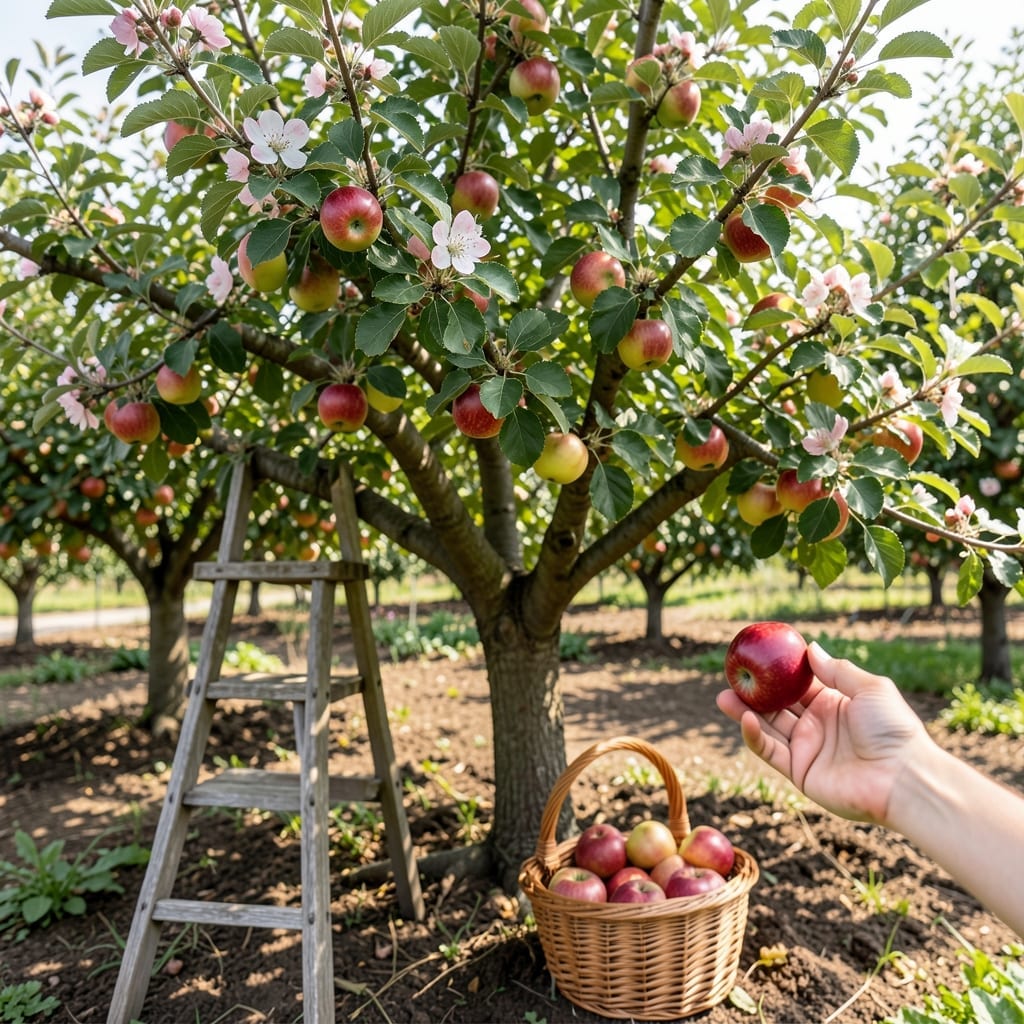
When to Pick Apples in Minnesota: Seasonal Timing and Variety Guide

When to Pick Apples in Minnesota: Seasonal Timing and Variety Guide

Timing your apple harvest in Minnesota can mean the difference between tart, underripe fruit and the perfect, juicy pick. With our state’s unique climate, nailing that optimal moment is everything.

The 🍎 Apple doesn’t follow a one-size-fits-all schedule here. From Late August to October, different varieties reach their peak at different times. Knowing your specific type is the first step.

I’ve seen too many gardeners miss their window because they relied on guesswork. There are clear signs to watch for that take the uncertainty out of the equation.

Let me walk you through the variety-specific timeline and ripeness tests that will ensure you’re picking at just the right time, every time.

Style 16: Quick Tips – General
🌅
Morning
Pick early for best flavor & crunch
✂️
Clean Cut
Use scissors, don’t pull or twist
🔄
Check Daily
Ripeness can change overnight!

Minnesota Apple Harvest Timeline by Variety

Minnesota’s cool climate and short growing season create unique conditions for apple ripening. Early varieties like Zestar! often ripen in late August, while late-season types such as Haralson may hold on until October. The key is to watch for variety-specific cues.☀️

Timing also depends on your specific microclimate. Southern Minnesota often sees earlier harvests than the cooler northern regions. Honeycrisp and Sweet Tango typically peak in mid-September, but local weather can shift this by a week or two.🌡️

Variety Harvest Window Key Traits
Zestar! Late August Crisp, sweet-tart flavor
Honeycrisp Mid-September Juicy, explosive crunch
Sweet Tango Mid-September Balanced sweet-tart taste
Haralson Late September-October Firm, long storage life

I always recommend checking local orchard reports for the most accurate timing. Frost warnings can accelerate ripening, so keep an eye on forecasts. A light frost often sweetens the fruit, but a hard freeze can damage it.🌬️

The color change is one of the first signs I look for. Zestar! develops a deep red blush, while Honeycrisp shifts from green to a golden-yellow base with red highlights. These visual cues are more reliable than calendar dates alone.

Another trick is the stem separation test. Lift an apple gently and twist—if it comes off cleanly with the stem intact, it’s ready. If it resists, give it a few more days. This method works well for Haralson and Sweet Tango varieties.

Seed color is a less obvious but reliable indicator. When the seeds inside turn dark brown, the apple is typically at peak ripeness. This is especially useful for late-season varieties when weather conditions vary.

Don’t forget to consider the tree’s location. Apples on the south side of the tree often ripen first due to increased sunlight exposure. I’ve noticed this is particularly true for Honeycrisp in my own garden.☀️

For storage apples like Haralson, I pick them slightly underripe to extend their shelf life. These can last 4-6 months in a cool, dark place. Early varieties like Zestar! are best enjoyed fresh within a few weeks.

Finally, trust your taste test. Sample one or two apples from different parts of the tree. If they’re sweet and crisp, it’s time to harvest the rest. This simple step ensures you’ll get the best flavor from your hard work.🌱

How to Test Apple Ripeness Before Picking

I always tell Minnesota gardeners that color is your first clue when checking apple ripeness. Each variety has its own signature hue at peak maturity, from deep reds to golden yellows. Don’t rely on size alone—some apples stay small but are perfectly ripe.

For me, the stem separation test never fails. Gently lift an apple and twist it slightly—if it comes off cleanly with the stem, it’s likely ready. This works best for varieties like Honeycrisp and Haralson in our state.

🌱 5 Ripeness Tests for Minnesota Apples

  1. Color check: Compare apple color to variety standard
  2. Seed inspection: Cut open—brown seeds mean ripe
  3. Stem twist: Lift and twist—clean separation = ready
  4. Taste test: Sample one—sweetness indicates maturity
  5. Aroma sniff: Ripe apples have a sweet, strong scent

The seed color method is my go-to for absolute certainty. Slice an apple open and check the seeds—when they turn dark brown, the fruit is at its peak. This works for all Minnesota varieties from Zestar! to Sweet Tango.

I’ve found that taste testing is the most reliable final check. Pick one apple from different parts of the tree. If they’re consistently sweet and juicy, it’s time to harvest the rest. Remember, apples won’t ripen further once picked.

Don’t forget the aroma test—ripe apples have a distinct, sweet smell at the stem end. This is especially helpful for varieties like Haralson that might not show obvious color changes. Trust your nose as much as your eyes.

In Minnesota’s variable climate, these tests are more reliable than calendar dates. I check my trees weekly starting in late August to catch that perfect picking window before the first frost. ✂️

★★★★★4.6(13 reviews)