
Beautiful Plants For Your Interior
Beautiful Plants For Your Interior
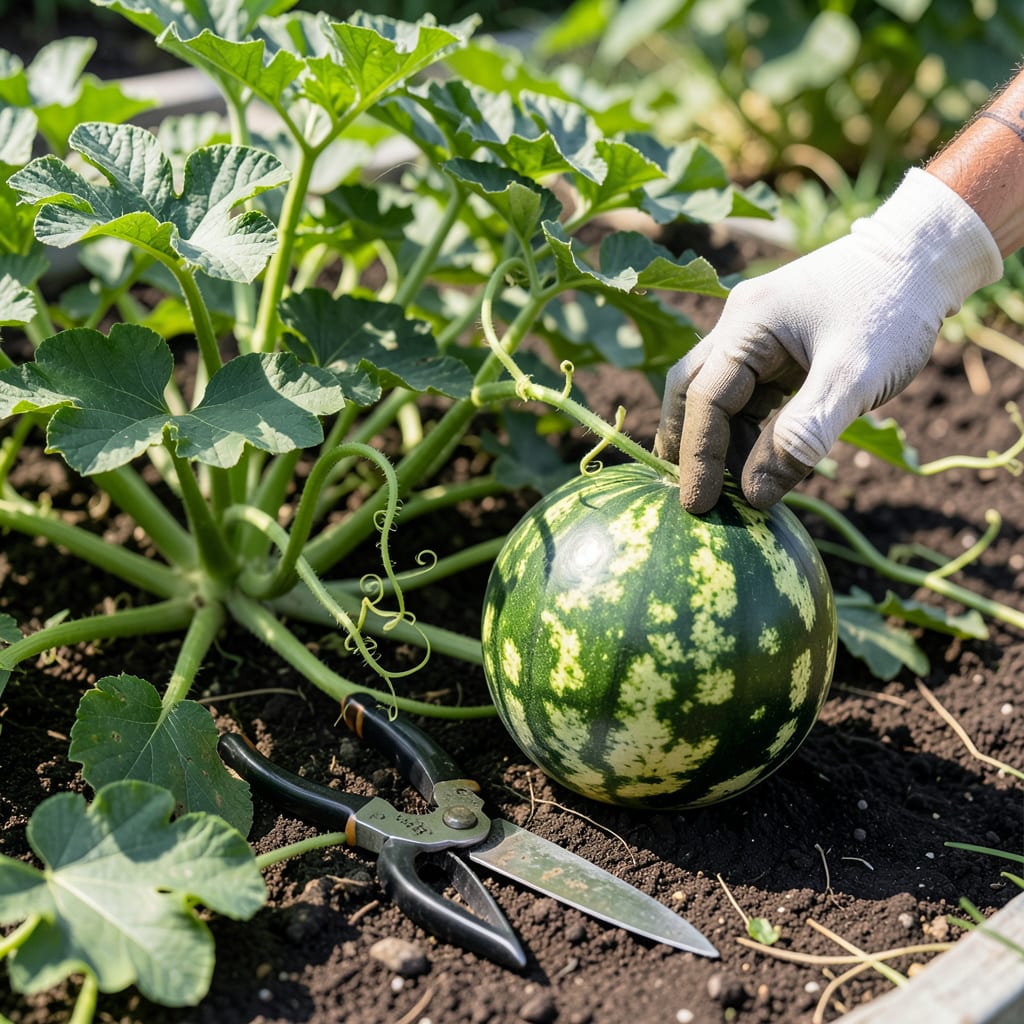
There’s nothing worse than cutting into a watermelon that isn’t quite ripe. With the 🍉 Watermelon, timing is everything for that perfect sweetness.
I’ll show you the key signs to look for, from the tendril’s color to that telltale hollow sound. Get ready to pick with confidence.


Knowing when to pick a watermelon can be tricky, but the vine gives clear signals if you know where to look. I always start by examining the curly tendril nearest to the stem—it should be brown and dry for peak ripeness.
The ground spot is another telltale sign. When the part of the watermelon touching the soil turns from white to creamy yellow, it’s a strong indicator that the fruit is ready to harvest.
| Ripeness Sign | What to Look For |
|---|---|
| Tendril Condition | Brown and dry |
| Ground Spot Color | Creamy yellow |
| Rind Appearance | Dull green or yellowish |
| Sound When Tapped | Deep hollow thump |
| Stem Condition | Starts to crack near vine |
The rind’s appearance also changes as the watermelon matures. A ripe watermelon will have a dull finish rather than a shiny one, and the color may shift slightly to a yellowish-green hue.
I also pay attention to the stem condition. When the stem begins to crack near the vine, it’s another sign that the fruit is ready to be picked. This usually happens as the watermelon reaches its full size.
Timing matters too. Most watermelons take 70 to 100 days to mature, depending on the variety. If you planted in early spring, you can expect to harvest in late summer. Check your seed packet for the exact days to maturity.
For the best flavor, I recommend picking watermelons in the early morning when temperatures are cooler. This helps preserve the fruit’s sweetness and crispness during storage.
If you’re still unsure, the thump test can be a great backup. A ripe watermelon will produce a deep, hollow sound when tapped, while an unripe one will sound more solid or metallic.
Don’t rely solely on size or color, as these can be misleading. A small watermelon might be ripe if it shows all the other signs, while a large one could still be underripe if the tendril is green.
Finally, always use clean, sharp pruners or a knife to cut the watermelon from the vine. Leave a few inches of stem attached to help prevent rot during storage. 🌱
The thump test is one of the most reliable ways to check watermelon ripeness. I use my knuckles to tap the fruit and listen for a deep, hollow sound, which signals it’s ready to pick.
If the sound is metallic or solid, the watermelon isn’t ripe yet. A dull thud often means it’s overripe. This method takes practice, but it’s worth mastering for perfect harvests.
I’ve found that early morning is the best time to perform the thump test. The fruit is cooler, and the sound carries more clearly, making it easier to distinguish ripeness.
Don’t tap too hard—just a firm but gentle knock is enough. Also, avoid testing watermelons right after watering, as excess moisture can affect the sound.
Combining the thump test with other signs, like the tendril condition or ground spot color, gives the most accurate results. This way, I rarely pick an unripe melon.
With practice, you’ll start to recognize the subtle differences in sound. Soon, you’ll be harvesting sweet, juicy watermelons every time. 🌱
Even experienced gardeners sometimes harvest watermelons before they’re truly ready. One of the most common mistakes is relying solely on size or color, which can be misleading depending on the variety.
Another frequent error is ignoring the tendril test. If the curly tendril near the stem is still green and flexible, the fruit isn’t ready, no matter how big or colorful it looks.
⚠️ Warning: Harvesting after heavy rain can lead to watery, less sweet fruit. Always check for ripeness 2-3 days after rain for best results.
I’ve also seen gardeners make the mistake of harvesting watermelons in the heat of the day. Picking in the early morning ensures the fruit retains its sweetness and crispness longer.
Another pitfall is not using the thump test correctly. A metallic sound means the watermelon needs more time, while a dull thud suggests it may be past its prime.
Finally, avoid cutting the stem too short. Leaving 2-3 inches of stem attached helps prevent rot and extends storage life. With these tips, you’ll avoid the disappointment of an underripe harvest. 🌱
The curly tendril near the stem should be brown and dry. If it’s still green and flexible, the watermelon isn’t ripe yet. This is one of the most reliable indicators of ripeness.
A ripe watermelon produces a deep, hollow thump when tapped. A metallic or solid sound means it’s not ready, while a dull thud may indicate it’s overripe.
Avoid harvesting immediately after rain, as this can result in watery, less sweet fruit. Wait 2-3 days after rainfall to check for ripeness for the best flavor.
The ground spot (where the fruit touches the soil) turns from white to creamy yellow when ripe. This color change is a key visual cue that the watermelon is ready to pick.
