
Beautiful Plants For Your Interior
Beautiful Plants For Your Interior
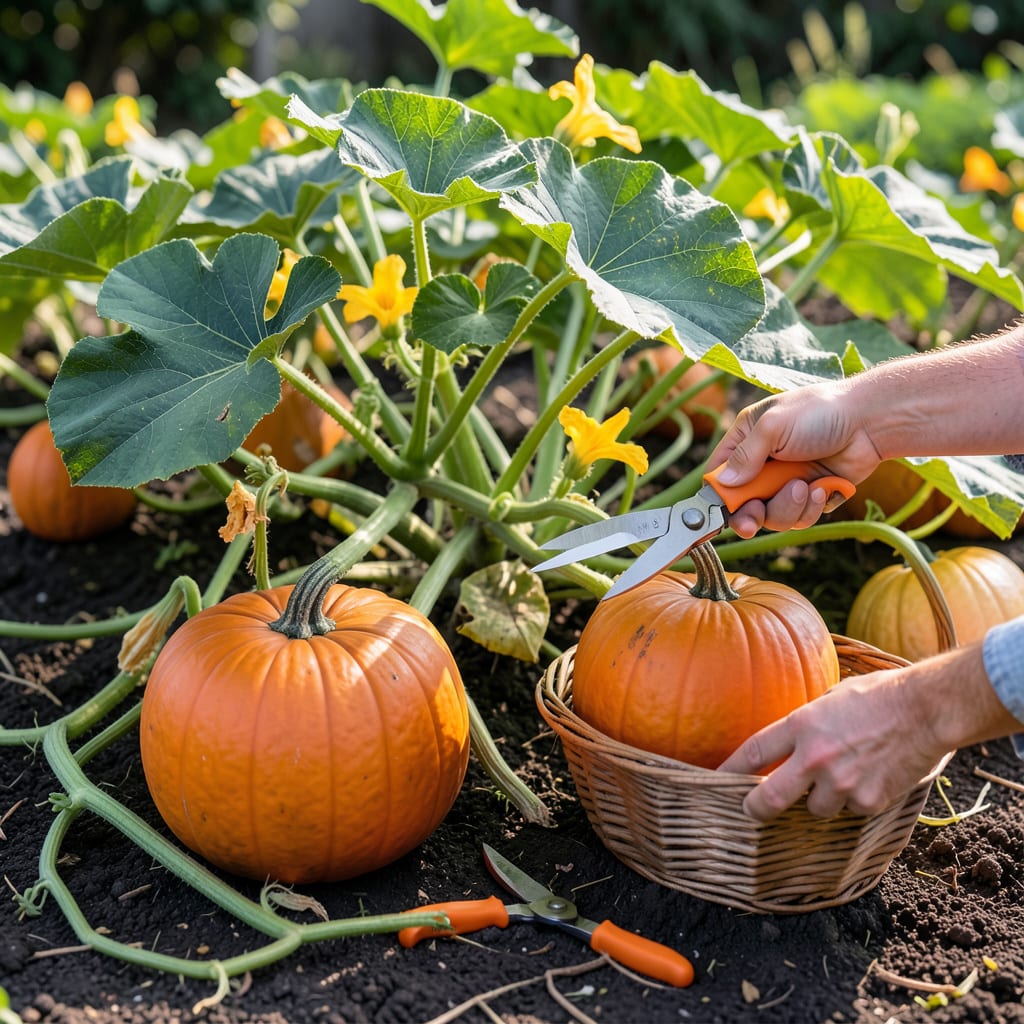
That moment when you realize your 🎃 Pumpkin might be ready is exciting, but timing is everything. Pick too soon and it won’t last; wait too long and it could split or rot.
I’ll show you the most reliable signs to watch for—like rind hardness and vine dryness—so you harvest at the perfect moment. Let’s get it right the first time.


The fingernail test is my go-to method for checking pumpkin readiness. Press your thumbnail into the rind—if it resists and doesn’t leave a mark, it’s ready. This test works because a hard rind means the pumpkin will store well and last longer.
Another reliable method is the thumping test. Tap the pumpkin lightly—if it sounds hollow, the rind is hard enough. A dull thud means it needs more time. I always combine these tests for the most accurate results.
I’ve found that visual cues also play a big role. A mature pumpkin will have a deep, solid orange color, though some varieties like white or green pumpkins have their own mature hues. Avoid pumpkins with any green streaks, as they’re not fully ripe.
Don’t forget to check the stem condition. A hard rind often goes hand-in-hand with a dry, woody stem. If the stem is still green and flexible, the pumpkin isn’t ready yet. I always double-check this before harvesting.
The thumping method is especially useful for larger pumpkins. A mature pumpkin will produce a deep, hollow sound when tapped. If it sounds dull or solid, it’s not ready. This test is quick and doesn’t damage the rind.
For storage longevity, rind hardness is non-negotiable. A soft rind can lead to early rot, while a hard one ensures your pumpkin stays fresh for weeks. I make sure every pumpkin I pick passes this test.
If you’re unsure, leave the pumpkin on the vine a little longer. Harvesting too early can result in a pumpkin that’s soft and prone to spoilage. Patience pays off when it comes to perfect harvest timing.
Remember, these tests work best when combined. I use the fingernail test first, then confirm with the thumping method and visual inspection. This triple-check ensures I never pick a pumpkin too soon.
Finally, always harvest pumpkins before the first frost. A hard rind protects against light frosts, but prolonged exposure can damage even the toughest pumpkins. I keep an eye on the weather forecast as harvest time approaches.
✂️While the rind hardness test is helpful, I’ve found that checking the vine condition is the most reliable way to determine pumpkin maturity. As pumpkins ripen, their vines naturally dry out and turn brown, signaling that the fruit is ready for harvest.
A fully mature pumpkin will have a dry, woody stem that’s difficult to bend. If the vine is still green and supple, the pumpkin needs more time. This method works for all varieties, from small sugar pumpkins to giant field types.
| Vine Condition | Pumpkin Status |
|---|---|
| Green and flexible | Not ready |
| Partially brown | Almost mature |
| Completely dry | Ready to harvest ✅ |
I always check the vine connection first. A pumpkin with a dry vine will often have a hardened stem where it attaches to the fruit. This is a clear sign that the pumpkin has stopped drawing nutrients and is ready for picking.
For varieties like Jack-O’-Lanterns, the vine may dry out completely, while heirloom types might retain some green. I adapt my approach based on the specific pumpkin type I’m growing in my garden.
Remember, a dry vine doesn’t always mean the pumpkin is overripe. It’s nature’s way of telling you the fruit has reached its full potential. I trust this sign more than color alone, as some pumpkins develop their mature hue before the vine dries.
If you’re growing multiple pumpkins, check each vine individually. I’ve seen cases where one pumpkin on a vine is ready while others need more time. This method ensures I harvest every pumpkin at its peak maturity. ☀️
Harvesting pumpkins at the wrong time can ruin weeks of hard work. Picking too early often results in a soft rind that won’t store well, while waiting too long can lead to frost damage or splitting. I’ve seen both scenarios, and neither is ideal.
One of the biggest mistakes is ignoring the vine condition. If the vine is still green and healthy, the pumpkin isn’t ready, even if it looks mature. I always double-check the vine before making the final call.
Picking too early: Soft rind, poor color, won’t store well.
Waiting too long: Risk of frost damage or split skin.
Ignoring vine dryness: A green vine means the pumpkin isn’t ready.
Another common error is relying solely on color. Some pumpkins develop their mature hue before they’re fully ripe. I always combine color checks with the fingernail test and vine inspection for accuracy.
Late harvesting can be just as problematic. A pumpkin left too long may suffer from frost exposure, which can cause the rind to soften and rot to set in. I keep an eye on the weather and harvest before the first frost hits.
Finally, avoid harvesting pumpkins with wet foliage. Morning dew or rain can make the rind more susceptible to disease. I wait for dry conditions to ensure my pumpkins stay healthy after picking. ✂️
Use the fingernail test: press your thumbnail into the rind. If it resists and leaves no mark, it’s ready. Also check for a deep color and dry stem.
A dry, woody vine signals the pumpkin has stopped growing and is fully mature. This is the most reliable indicator, even more than color or size.
Yes, waiting too long risks frost damage or splitting. Harvest before the first frost, even if the vine is still slightly green.
Harvest in the morning after dew has dried. Avoid picking when foliage is wet to prevent disease.
