
Beautiful Plants For Your Interior
Beautiful Plants For Your Interior
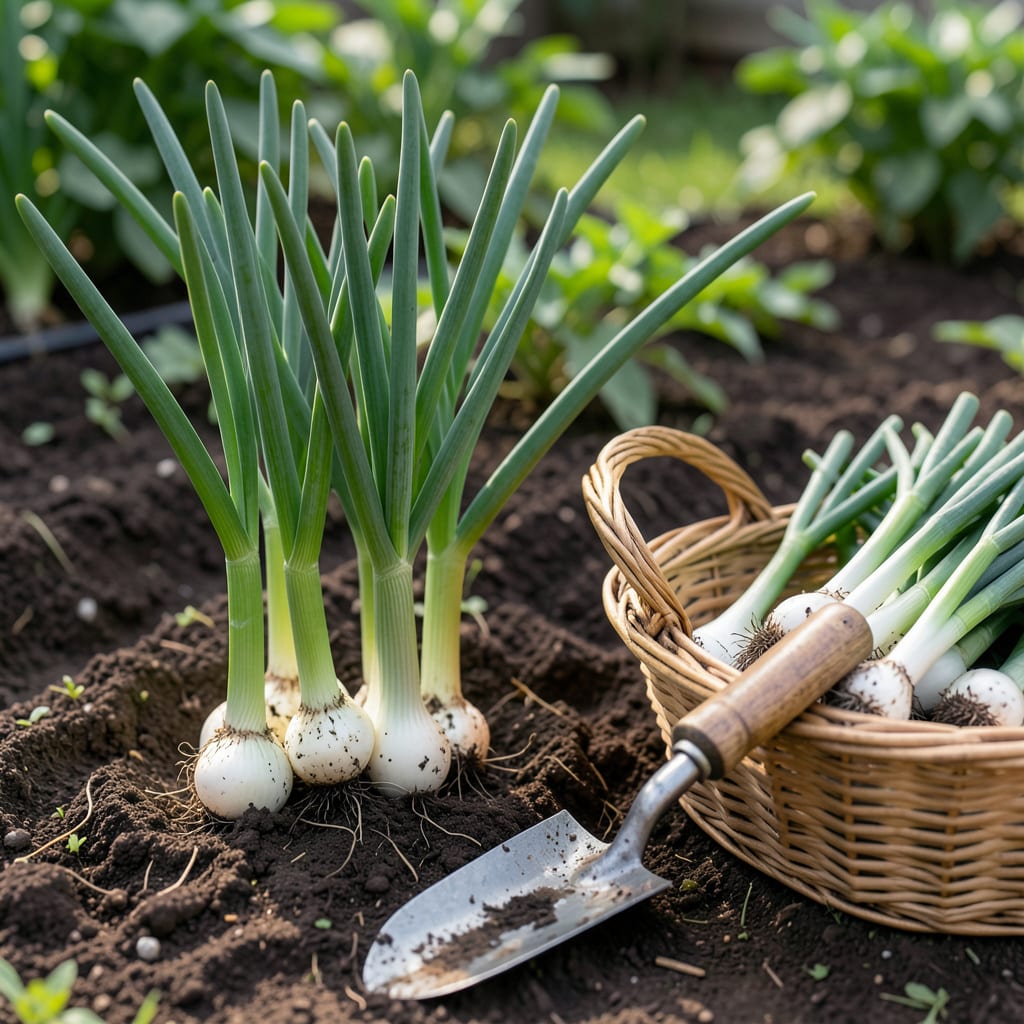
Timing your Spring Onion harvest perfectly means the difference between crisp, flavorful stems and tough, fibrous ones. I’ve learned the hard way that missing the window by just a week can ruin months of work.
Watch for 6-8 inch tops and pencil-thick stems—those are your clues. With these simple signs, you’ll discover the exact moment to pull them for the best taste and texture.


I always check for 6-8 inch green tops first—this is your first clue. The stems should feel pencil-thick and firm when gently squeezed between your fingers.
Another telltale sign is the bulb base becoming visible just above the soil line. When it reaches about 1 inch in diameter, your spring onions are likely ready for picking.
| Visual Sign | What to Look For |
|---|---|
| Stem Thickness | Pencil-thick or about 0.5 inches |
| Leaf Height | 6-8 inches tall |
| Bulb Formation | 1-inch diameter visible above soil |
| Leaf Color | Vibrant green and upright |
Don’t wait until the tops start yellowing or flopping over—that’s a sign you’ve missed the optimal window. The leaves should remain firm and upright at harvest time.
I’ve found that checking the stem texture is crucial. If it feels hollow or woody, you’ve waited too long. The ideal stem should snap cleanly when bent, not feel tough or stringy.
The bulb shape matters too. For spring onions, you want a slightly elongated bulb rather than a perfectly round one. This indicates it’s mature but not overgrown.
Another pro tip: Gently brush away soil at the base to inspect the bulb. If it’s firm and white with no green streaks, it’s ready. Green streaks mean it needs more time.
Remember that growth conditions affect timing. In cooler springs, your onions might take closer to 90 days, while warm weather can speed this up to 60 days.
For the best flavor, I recommend harvesting in the early morning after the dew has dried. This is when the plants are most hydrated and the flavor is at its peak.
Finally, don’t forget to rotate your crops. If you’re planting successive batches, mark your calendar for 75-day intervals to ensure a continuous supply of fresh spring onions.
With these visual cues, you’ll never question when to harvest spring onions again. Trust your eyes and fingers—they’re the best tools for the job! 🌱
I’ve found that timing varies whether you want young scallions or mature bulbs. For tender green tops, harvest when plants are 6-8 inches tall and stems are slender.
If you prefer bulb onions, wait until the base swells to 1-1.5 inches in diameter. The leaves will still be firm but the bulb formation becomes obvious above soil.
| Stage | Timing | What You Get |
|---|---|---|
| Early | 60 days | Tender scallions |
| Mid | 75 days | Firm stems |
| Late | 90 days | Mature bulbs |
For scallion harvests, I use clean shears to cut 1-2 inches above soil. This lets the plant regrow for a second harvest in many cases.
When going for full bulbs, gently pull the entire plant from the soil. The tops may still be green, but the bulb base will have developed its characteristic shape.
Remember that cooler temperatures slow growth, so your onions might need the full 90 days. In warmer climates, check at 60 days for early harvests.
I always mark my calendar for 75 days after planting as my first check point. This gives me the best chance of catching them at the ideal stage for both stems and bulbs.
With practice, you’ll recognize the perfect moment for each growth stage without hesitation. 🌱
I’ve seen many gardeners ruin their spring onion crop by making simple mistakes. Waiting too long is the most common error, leading to woody stems and bitter flavors.
Another frequent misstep is harvesting during wet conditions. This can spread disease and make the onions more prone to rot during storage.
⚠️ Warning
Avoid cutting too close to the base—this prevents regrowth. Always leave 1-2 inches of stem for potential second harvests.
Using dull tools can crush the stems rather than cutting cleanly. I always keep my shears sharp to ensure a clean harvest that heals quickly.
Harvesting at the wrong time of day affects flavor. I’ve learned that early morning after dew dries gives the best results, as the plants are most hydrated.
Finally, don’t pull the entire plant if you only need the green tops. For scallions, cut what you need and leave the rest to continue growing. This extends your harvest window significantly.
With these precautions, you’ll maximize both yield and quality from your spring onion crop. 🌱
Aim for 6-8 inches tall with firm, upright leaves. This height indicates the stems have developed enough for harvesting while maintaining tenderness.
Stems become woody and bitter as they overmature. The bulb may also split or bolt, ruining both texture and flavor. Check plants at 75 days to avoid this.
Yes! Cut 1-2 inches above the soil to allow regrowth. This method often yields a second harvest from the same plant.
Cooler springs may require the full 90 days, while warm weather can speed growth to 60 days. Monitor visual cues rather than just the calendar.
