
Beautiful Plants For Your Interior
Beautiful Plants For Your Interior
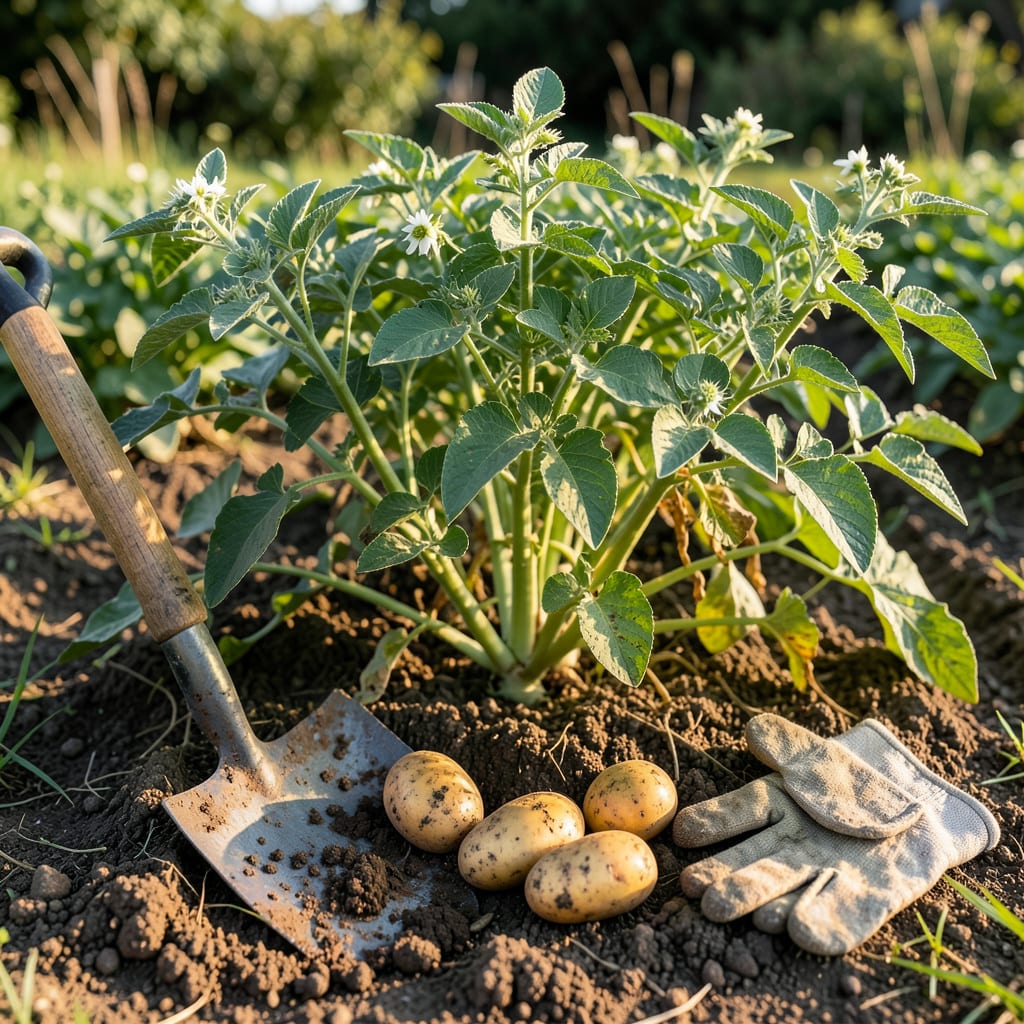
Timing your potato harvest in Idaho can make or break your crop. The difference between perfect spuds and a disappointing yield often comes down to just a few days.
I’ve learned that watching for visual cues from your 🥔 plants is the key to knowing they’re ready. Let me show you exactly what to look for in your garden.


In Idaho, knowing when to harvest potatoes starts with watching your plants for visual cues. The most reliable sign is when the foliage turns yellow and begins to die back naturally.
Another key indicator is the skin set. When the skin doesn’t rub off easily with your thumbnail, your potatoes are likely ready for harvest.
| What to Look For | |
|---|---|
| Foliage Color | Yellowed and wilting leaves |
| Thick skin that resists scraping | |
| Tuber Size | 2-5 inches depending on variety |
| Stem Condition | Stems fall over naturally |
Idaho’s cool climate can sometimes delay these signs, so I always check both the calendar and the plant condition. Early varieties may show these signs in 70-90 days after planting.
For mid-season potatoes like Yukon Gold, you’ll typically see these signs around 90-110 days. The skin set is especially important for these as it affects storage life.
Late varieties such as Russet often take the full 120 days. In Idaho’s shorter growing season, I’ve found these do best when planted as early as the soil temperature allows.
Remember that weather fluctuations can affect these timelines. A late frost in spring might delay planting, which in turn pushes back your harvest window.
I always recommend testing a few tubers before harvesting the entire crop. Gently dig around the base of a plant and check the size and skin condition of a few potatoes.
If the skin rubs off easily, they need more time. But if they’re firm with intact skin, it’s time to harvest. This simple test can save you from harvesting too early.
In my experience, potatoes harvested at the right time store better and have superior flavor. The difference is noticeable whether you’re storing them for winter or using them fresh from the garden ☀️
Idaho’s diverse climate zones mean harvest times vary significantly. In southern Idaho, warmer temperatures may allow for earlier planting and thus earlier harvests.
For northern regions, the shorter growing season requires careful variety selection. I always recommend early maturing types for these cooler areas.
| Days to Maturity | Best Harvest Window | |
|---|---|---|
| Early (Red Pontiac) | 70-90 days | Late July to August |
| 90-110 days | August to September | |
| Late (Russet) | 110-120 days | September to early October |
I’ve found that planting dates directly impact your harvest window. Early April plantings in southern Idaho often yield harvests by late July for early varieties.
In cooler northern areas, I wait until mid-May to plant, which pushes harvests to late August or September for the same varieties.
Remember that soil temperature is crucial. I never plant until the soil reaches at least 45°F, as colder temperatures can delay emergence and growth.
For the best results, I recommend staggering plantings of different varieties. This extends your harvest season and ensures a continuous supply of fresh potatoes 🌱
Harvesting potatoes in Idaho at the wrong time can ruin your crop. I’ve seen many gardeners make the mistake of pulling tubers too early, before the skin has properly set.
Another common error is waiting too long, which can lead to oversized potatoes prone to disease or frost damage in Idaho’s early fall conditions.
Harvesting too early = thin skins, poor storage
Waiting too late = oversized, disease-prone tubers
Ignoring frost warnings = ruined crop in cold snaps
I always check the weather forecast before harvesting. In Idaho, an early frost can catch you off guard, especially in higher elevations where temperatures drop quickly.
Improper curing is another mistake I see often. Potatoes need a dark, humid environment for 1-2 weeks after harvest to properly cure their skins for storage.
Lastly, many gardeners damage tubers during digging. I recommend using a garden fork and working carefully to avoid piercing the potatoes. This prevents rot during storage 🌱
Early harvesting results in thin-skinned potatoes that won’t store well. The tubers may also be undersized. Always check the skin set with your thumbnail first.
In cooler regions, watch for yellowing foliage and firm skin around 90-110 days after planting. Northern areas often need early-maturing varieties due to the shorter season.
No, frost can damage tubers. Harvest before the first frost, typically by October 1 in most of Idaho. Use a garden fork to gently lift them without piercing.
Store in a dark, humid place for 1-2 weeks to properly cure the skins. This step is crucial for long-term storage and prevents early spoilage.
