
Beautiful Plants For Your Interior
Beautiful Plants For Your Interior
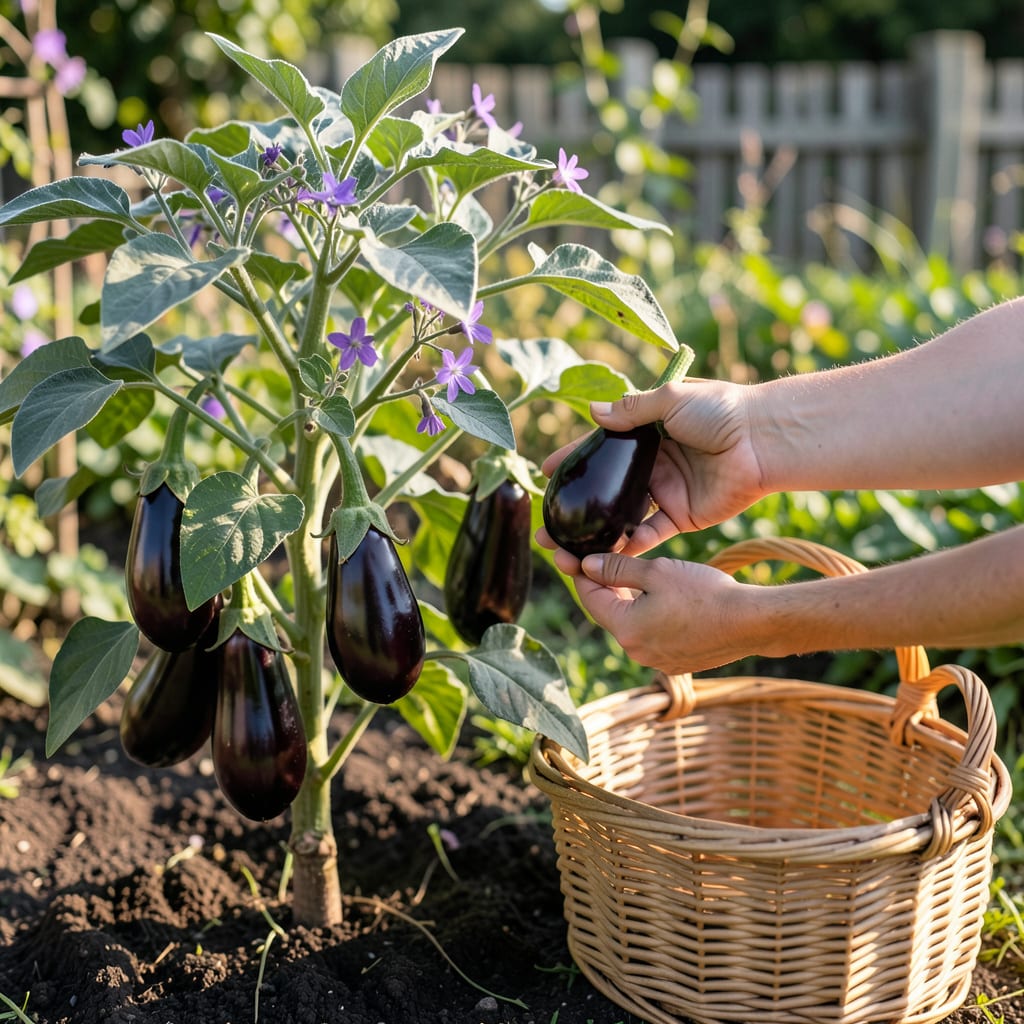
Nothing beats the frustration of cutting into an Eggplant 🍆 only to find it bitter or seedy. The difference between a perfect harvest and a disappointing one often comes down to timing.
I’ll show you the most reliable visual and tactile cues to look for. From glossy skin to firm texture, these signs guarantee your Eggplant is ready for picking.


I’ve learned that timing is everything with purple eggplant harvesting. The first sign I look for is glossy skin, which indicates peak ripeness and optimal moisture content inside the fruit.
Another key indicator is deep purple color that’s uniform across the entire fruit. If you see green or white streaks, it’s not quite ready. The color should be rich and vibrant, not dull or faded.☀️
| Sign | Description |
|---|---|
| Glossy skin | Shiny surface indicates freshness and ripeness |
| Deep purple color | Uniform, rich color with no green streaks |
| Firm texture | Feels solid when gently pressed |
| 4-6 inches long | Ideal size for most purple varieties |
| Green stem | Stem should be fresh and green, not brown |
The size of the eggplant matters too. Most purple varieties are ready when they reach 4 to 6 inches in length. Smaller fruits may still be developing, while oversized ones can become bitter and seedy.
I also check the stem condition. A healthy, green stem means the fruit is still actively growing. If the stem starts turning brown or drying out, it’s a sign the eggplant might be past its prime.
One thing I’ve noticed is that eggplants on the same plant can mature at different rates. Don’t assume all fruits are ready just because one is. Check each individually for the visual signs we’ve discussed.
The skin texture is another giveaway. Ripe eggplants have smooth, taut skin. If it feels wrinkled or soft to the touch, it’s likely overripe. This is when the seeds start turning brown and the flavor becomes bitter.
For best results, I recommend checking your plants every 2-3 days once they start showing color. Eggplants can go from perfectly ripe to overripe surprisingly quickly, especially in warm weather.
Remember that harvesting at the right time ensures the best flavor and texture. An eggplant picked too early will be tough and seedy, while one picked too late will be mushy and bitter.🌱
Finally, always use clean pruning shears or a sharp knife to harvest. Cut the stem about an inch above the fruit to avoid damaging the plant. Never pull the eggplant off by hand, as this can harm the plant and the fruit.
I always rely on my hands to confirm what my eyes suspect about purple eggplant readiness. The touch test is simple: gently press your thumb against the fruit’s skin. It should give slightly but bounce back immediately.
Another trick I use is the bounce check. Hold the eggplant and give it a light squeeze. A ripe one will feel firm and springy, not rock-hard or mushy. This confirms the visual cues like glossy skin and deep purple color.☀️
One mistake I see often is testing with too much force. Pressing too hard can bruise the eggplant, ruining its texture. Always use a light touch to preserve the fruit’s quality.
Another tip: check the stem area. If it’s green and firm, the eggplant is likely ready. A brown or dry stem might mean it’s past its prime, even if the skin looks good.
I also recommend testing a few fruits if you have multiple. Size variations can occur even on the same plant, so don’t assume uniformity. The 80-day mark from planting is a good time to start checking.
Finally, harvest in the morning when temperatures are cooler. This helps the eggplants retain their firmness and flavor longer after picking. Always use pruning shears to avoid damaging the plant.🌱
I’ve seen many gardeners struggle with eggplant harvesting timing. One common mistake is picking when the fruit is still small or light-colored. These underripe eggplants often have tough skin and underdeveloped seeds.
Another frequent error is waiting too long until the skin turns dull or the fruit feels soft. Overripe eggplants develop bitter flavors and seedy textures that are unpleasant for most gardeners.
⚠️ Warning: Environmental factors like high temperatures can speed up ripening. Check plants daily in hot weather to avoid missing the perfect harvest window.
I also notice gardeners ignoring the stem condition. A browning stem often signals overripeness, even if the skin still looks good. Always check both the fruit and its connection to the plant.
The size trap is another pitfall. Not all varieties reach the same size, so don’t rely solely on dimensions. A 4-inch eggplant might be perfect for one variety but underripe for another.
Finally, remember that eggplants don’t ripen off the vine like tomatoes. Once picked, they won’t continue to mature. This makes proper timing even more crucial for the best flavor and texture.🌱
Look for light or uneven color, dull skin, or a size smaller than 4 inches. Underripe eggplants often feel hard and lack the characteristic glossy sheen.
No, eggplants don’t ripen off the vine like tomatoes. Once picked, they won’t improve in flavor or texture. Harvest when they show ripe signs for best results.
Overripe eggplants develop bitter flavors, seedy textures, and dull skin. The seeds turn brown, and the flesh becomes mushy. Check daily in hot weather to avoid this.
Environmental factors like temperature and sunlight affect ripening speed. Even on the same plant, fruits can mature at different rates. Always check each one individually.
