
Beautiful Plants For Your Interior
Beautiful Plants For Your Interior
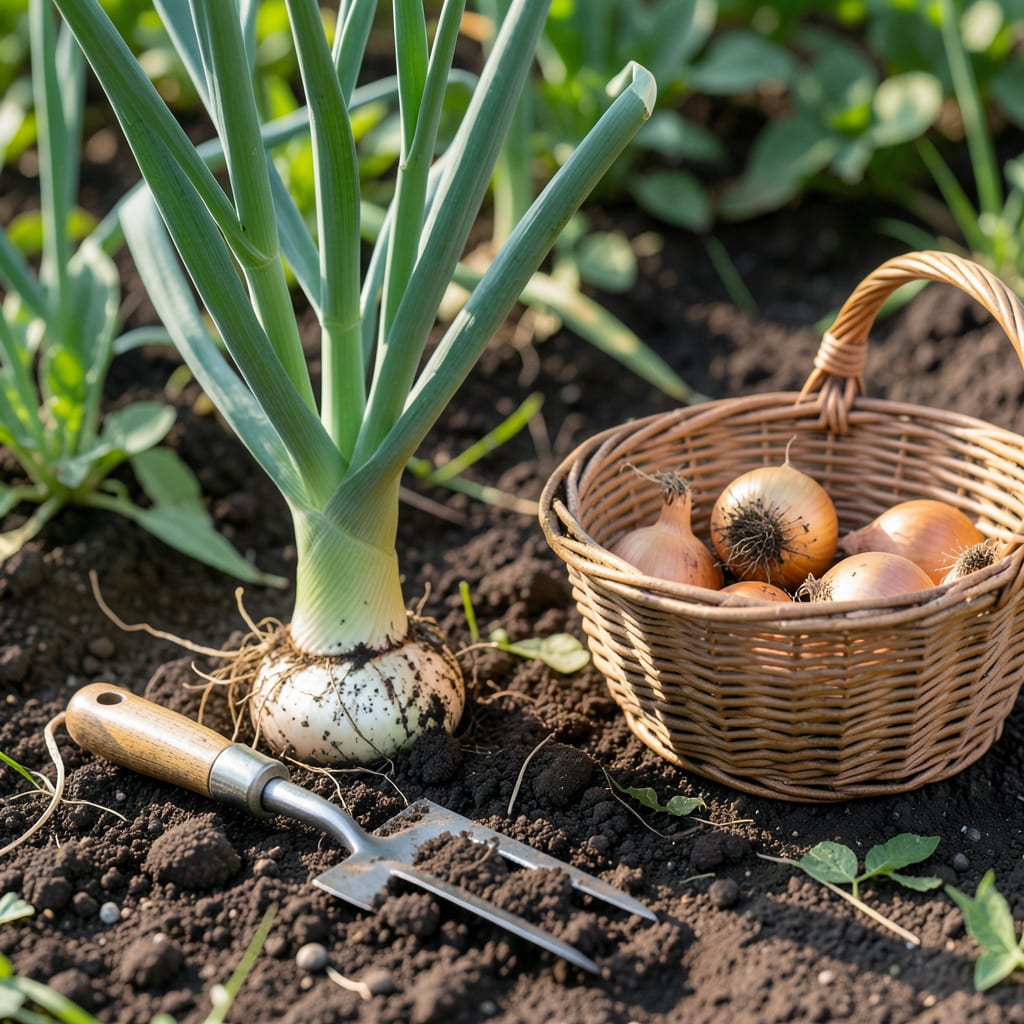
Timing your onion harvest can make or break your storage success. Nothing beats the satisfaction of pulling perfect bulbs at just the right moment.
For the 🧅 Onion in Zone 6, watching for those telltale signs means you’ll know exactly when to act. Let me show you what to look for so you don’t miss that ideal window.


Timing your onion harvest depends heavily on the variety you’ve planted. Each type has a unique maturity window influenced by daylight hours. I’ll help you decode these differences so you can plan accordingly.
Short-day onions typically mature in 70-100 days and are best for southern regions with mild winters. They form bulbs with 10-12 hours of daylight, making them ideal for early planting.
| Variety | Days to Maturity | Ideal Climate | Daylight Requirement |
|---|---|---|---|
| Short-Day | 70-100 days | Southern regions | 10-12 hours |
| Long-Day | 100-120 days | Northern regions | 14-16 hours |
| Day-Neutral | 75-90 days | Any region | Any daylight |
Long-day onions need 14-16 hours of sunlight and are perfect for northern gardeners. They take longer to mature, usually 100-120 days, but produce larger bulbs when given enough light.
Day-neutral varieties are the most versatile, thriving in almost any daylight condition. They mature in 75-90 days, offering a reliable option for gardeners in transitional zones.
In my experience, short-day onions are the go-to for early harvests in warmer climates. Their quick growth cycle means you can enjoy fresh onions sooner, but they may not store as long as other types.
For northern gardeners, long-day onions are worth the wait. Their extended maturity period allows for bigger, sweeter bulbs, especially when planted in early spring as soon as the soil is workable.
If you’re unsure about your region’s daylight hours, day-neutral onions offer a foolproof solution. They adapt well to varying conditions and are forgiving for beginners still learning their local growing patterns.
Remember, these timeframes are guidelines. Always watch for visual cues like yellowing foliage and softening necks to confirm your onions are truly ready for harvest.
I’ve found that keeping a gardening journal helps track these patterns year to year, ensuring you refine your timing with each growing season. 🌱
Spotting the right moment to harvest your onions is easier than you think. I always look for 5 key visual cues that nature provides. These signs will help you determine when your bulbs have reached their peak.
First, observe the foliage as it begins to yellow and fall over naturally. This is the most obvious signal that your onions are nearing maturity. Don’t rush to pull them yet, though—patience is key.
The neck of the onion will begin to soften and thin as the bulb matures. This is a sure sign that the plant is redirecting its energy from the leaves to the bulb below the soil.
Another critical indicator is the outer skin becoming dry and papery. This protective layer forms as the onion prepares for storage, signaling that it’s time to harvest soon.
Size matters too—your onions should reach the mature size typical for their variety. Short-day varieties may be smaller, while long-day types often grow larger with more daylight exposure.
Finally, watch for the color to deepen to its full potential. Whether it’s white, yellow, or red, the true hue will emerge as the onion ripens. This is your final confirmation.
I’ve learned that checking these signs weekly as harvest time approaches keeps me from missing that perfect window. ✂️
Avoiding common pitfalls is just as important as spotting the right harvest signs. I’ve seen gardeners lose their entire crop by pulling onions too early or waiting too long. Let’s look at the mistakes I’ve learned to steer clear of.
One of the biggest errors is harvesting prematurely. If you pull onions before the tops yellow and fall over, the bulbs won’t have reached their full size or developed their storage potential.
Premature pulling results in undersized bulbs that won’t store well.
Waiting too long can lead to splitting or bolting, ruining storage quality.
Ignoring weather conditions can cause rot if onions sit in wet soil.
Another critical mistake is waiting too long to harvest. Onions left in the ground past maturity can split or begin to sprout, which makes them unsuitable for storage. I always check daily once the tops start yellowing.
Ignoring weather conditions is a common oversight. If heavy rain is forecasted, it’s best to harvest mature onions early to prevent them from sitting in soggy soil, which can lead to rot.
Finally, improper curing preparation can ruin your harvest. Onions need to be dried properly before storage, so avoid washing them or leaving them in damp conditions after pulling.
I’ve found that keeping a close eye on weather forecasts and checking plants daily during the harvest window helps avoid these costly mistakes. 🌱
Watch for tops that turn yellow and fall over naturally. The necks should feel soft, and the outer skin will become dry and papery. These are the clearest signs your bulbs have matured.
You can pull them early for fresh use, but they won’t store well. Immature bulbs lack the protective skin and full flavor development. For storage, always wait for the full 90-120 days maturity period.
Overmature onions may split, bolt, or begin sprouting. This ruins their storage potential and can lead to rot. Harvest within 1-2 weeks after tops fall over to avoid these issues.
Heavy rain can cause rot if mature onions sit in wet soil. If forecasts predict prolonged wet weather, harvest early—even if tops are just starting to yellow.
