
Beautiful Plants For Your Interior
Beautiful Plants For Your Interior
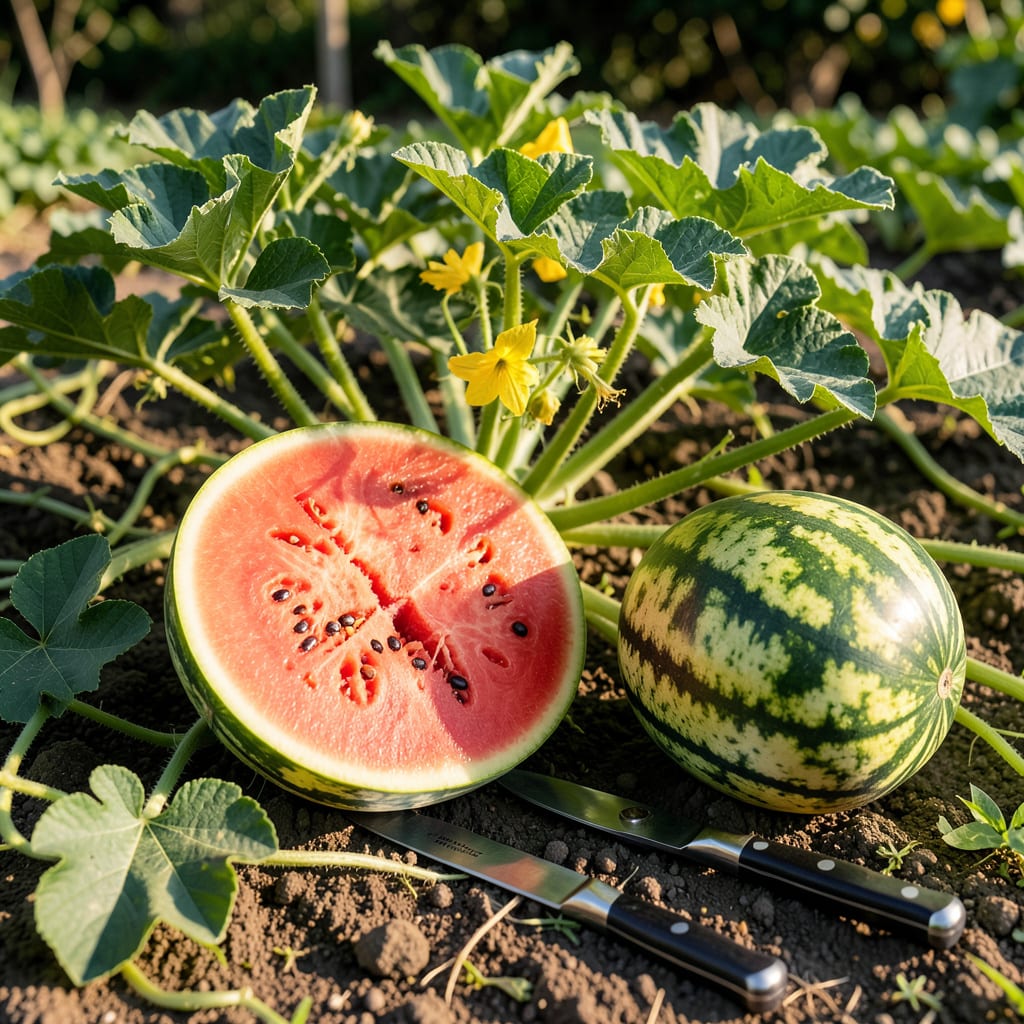
Nothing beats the taste of a perfectly ripe 🍉 Watermelon straight from your garden. But knowing the exact moment to pick can be tricky.
I’ll show you the 3 telltale signs to check so you can harvest at peak sweetness every time. No more guessing games.


I’ve found that the tendril method is the most reliable sign. The curly tendril nearest the fruit stem turns brown and dry when ripe. If it’s still green and flexible, your melon needs more time on the vine. ☀️
Another foolproof indicator is the ground spot. When the underside of the watermelon shifts from white to creamy yellow, it’s ready. This color change happens because the chlorophyll breaks down as the fruit matures. 🌱
The rind appearance is my third go-to check. An unripe watermelon has a shiny, smooth surface. As it ripens, the rind becomes dull and slightly rough to the touch. This change is subtle but very telling. ✂️
I always recommend checking these three signs together for the most accurate results. A single indicator might be misleading, but when all three align, you can be confident your watermelon is ripe. Don’t rush the process—patience pays off!
For seedless varieties, I’ve noticed the tendril method works just as well. However, the ground spot might develop a bit slower. Give it an extra day or two if you’re unsure. Consistency is key with these types.
In my experience, morning harvesting is ideal. The fruit is firmer and the sugar content is at its peak after a cool night. Avoid picking in the heat of the day, as this can affect the texture.
The thumping test is popular but tricky. A ripe watermelon produces a deep, hollow sound when tapped. An immature melon sounds more metallic or high-pitched. I suggest practicing on a few fruits to train your ear.
Weather plays a role too. In hot, dry climates, watermelons may ripen faster than expected. Conversely, cool, wet conditions can slow the process. Always cross-check with the visual signs I mentioned earlier.
Finally, remember that size isn’t everything. A large watermelon isn’t necessarily ripe, and a smaller one might be perfectly ready. Focus on the ripeness indicators, not just the dimensions. Your taste buds will thank you! 🌿
I see many gardeners make the same mistakes when checking for ripeness. The most common is relying solely on size. A big watermelon doesn’t guarantee it’s ready to pick. Size varies by variety and growing conditions. 🌱
Another frequent error is misusing the thumping test. It takes practice to hear the deep, hollow sound of a ripe melon. Many mistake a metallic ping for readiness, which actually indicates immaturity.
Don’t rely on size alone or thumping inaccurately. Always check the tendril, ground spot, and rind appearance together for best results.
Ignoring the weather impact is another misstep. In hot, dry spells, watermelons may appear ripe sooner but need verification. Cool, wet weather can delay ripening signs, tricking you into picking too early.
The ground spot is often overlooked. Some gardeners forget to lift the melon to check its underside. Without this, you’re missing one of the most reliable indicators of ripeness.
I’ve also noticed folks picking in the afternoon. For the best flavor and texture, harvest in the early morning when sugars are most concentrated after the cool night.
Lastly, don’t assume all varieties ripen the same. Seedless types often need an extra day or two. Always cross-check multiple signs to be sure. Patience and observation are your best tools. 🌿
Not all watermelon varieties ripen the same way. I’ve learned that seedless types often need an extra day or two to fully mature. The tendril method works well, but the ground spot may develop more slowly. 🌱
Crimson Sweet watermelons are classic and reliable. They typically show a deep yellow ground spot and a dull rind when ready. The tendril near the stem will turn brown and dry, making it easy to confirm ripeness.
| Variety | Key Ripeness Sign |
|---|---|
| Seedless | Extra day for ground spot |
| Crimson Sweet | Deep yellow ground spot |
| Sugar Baby | Rind turns dull early |
Sugar Baby varieties are my go-to for quick ripening. Their rind loses its shine earlier than others, so I focus on the ground spot color and tendril dryness to avoid picking too soon. They’re perfect for shorter growing seasons. ☀️
For heirloom varieties, I recommend checking all three signs. These can be less predictable, so the thumping test might help. A deep, hollow sound combined with the visual cues ensures you won’t be disappointed.
Always remember that local climate affects ripening. In hotter regions, watermelons may mature faster, while cooler areas might need more time. Adjust your checks based on your growing conditions. ✂️
Check the tendril near the stem—it should be brown and dry. Also look for a creamy yellow ground spot and a dull rind instead of shiny.
A ripe one produces a deep, hollow sound when tapped. An immature melon sounds more metallic or high-pitched. Practice helps train your ear.
The underside turns from white to yellow as chlorophyll breaks down. This is one of the most reliable visual signs of ripeness.
Yes! In hot, dry climates, melons may appear ripe sooner. In cool, wet weather, signs may develop slower than expected.
