
Beautiful Plants For Your Interior
Beautiful Plants For Your Interior
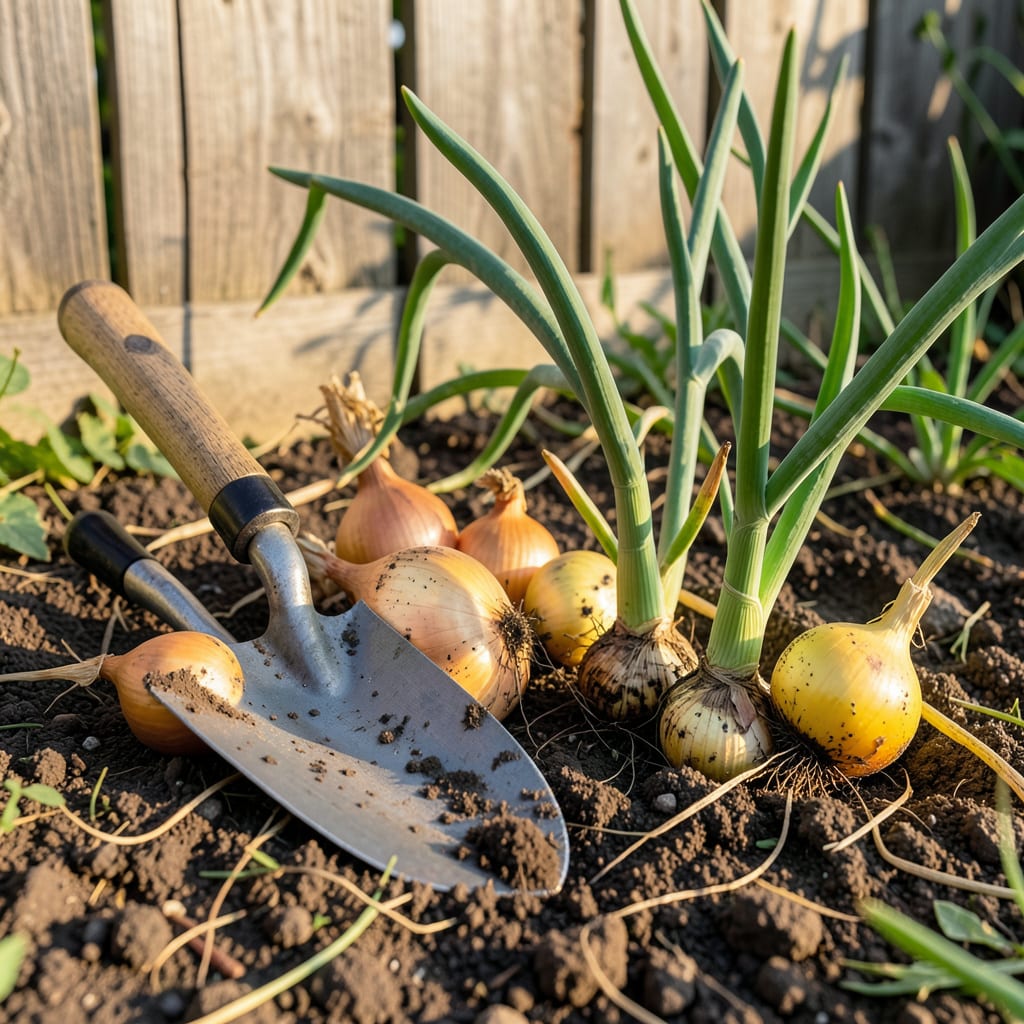
There’s a simple trick to knowing your 🧅 Yellow Onion crop is ready. I used to guess and often harvested too early or too late.
Now I watch for two sure signs that mean it’s time. These visual cues take the guesswork out of harvesting at peak maturity.


I’ve learned that yellow onions give clear signals when they’re ready. The first sign is when the tops turn yellow and begin to weaken. This color change indicates the plant is shifting energy from leaf growth to bulb maturation.
Another unmistakable cue is when the tops fall over naturally. Don’t force them down—wait for the plant to do this on its own. This usually happens about 90 to 130 days after planting, depending on the variety and conditions.
✅ Ready for Harvest
| Sign | Description |
| Tops yellow | Leaves lose green color |
| Tops fall over | Stems collapse naturally |
| Necks soften | Stem just above bulb feels limp |
| Skins papery | Outer layers dry and crisp |
The neck softening is another critical indicator. Gently squeeze the stem about 1 inch above the bulb. If it feels soft and spongy, your onions are nearly ready. This happens as the plant redirects nutrients to the bulb.
Don’t overlook the skin texture either. When onions are ready, their outer skins become dry and papery. This protective layer forms as the bulb matures, preparing for storage. Moist or thick skins mean they need more time.
I always check for multiple signals to confirm readiness. If only one sign appears, wait a few days and observe. True maturity shows through combined cues, not just a single change.
In my experience, weather conditions can affect timing. A warm, dry spell may speed up maturity, while cool, wet weather can delay it. Adjust your observations based on your local growing season and climate patterns.
For early varieties, you might see these signs around 90 days. Main crop onions often take 110 to 130 days. Mark your planting date to help track progress, but always rely on visual cues over calendar days.
If you harvest too early, the bulbs won’t store well. They’ll be more prone to rot and won’t develop that sweet, pungent flavor yellow onions are known for. Patience here really pays off.
Once most of your plants show these signs, it’s time to harvest. Use a garden fork to gently lift the bulbs from the soil. Be careful not to bruise them, as damaged onions won’t store as long.
After digging, let them cure in a well-ventilated area for about 1 to 2 weeks. This process helps the outer skins dry completely, preparing them for storage. Proper curing is just as important as perfect timing for harvesting 🌱
I always start by confirming the visual signs are present. When 60-80% of tops have fallen over and yellowed, it’s harvest time. This ensures most bulbs have reached full maturity.
Before digging, I stop watering for 2-3 days. This helps the outer skins dry and tighten, which makes curing easier and prevents rot during storage.
🌱 Harvesting Steps
Using a garden fork is my preferred method. I insert it about 4-6 inches from the bulb and gently lift. This prevents piercing the onions, which could lead to spoilage.
After lifting, I let the onions sit in the garden for a few hours if the weather is dry. This starts the drying process before I move them to their curing location.
For curing, I spread them in a single layer in a well-ventilated area. A garage or covered porch works well. Avoid direct sunlight, which can scorch the bulbs.
The curing process is complete when the outer skins are completely dry and the necks are shriveled. This usually takes 1-2 weeks, depending on humidity levels.
Once cured, I trim the tops to 1 inch and store in a cool, dry place. Properly harvested and cured yellow onions can last several months in storage 🌱
I’ve seen many gardeners make the mistake of harvesting too early. Pulling onions when tops are still green means the bulbs haven’t matured fully. These won’t store well and often rot quickly.
Another common error is forcing tops down to speed up harvest. This can damage the neck and lead to poor storage quality. Always let nature take its course.
⚠️ Avoid These Harvesting Mistakes
Pulling onions before tops yellow or fall over will result in immature bulbs that don’t store well.
Improper curing is another pitfall. Leaving onions in damp conditions or piles can cause mold growth. Always cure in a dry, ventilated space for best results.
Don’t wash your onions after harvest. Moisture on bulbs invites rot during storage. Simply brush off excess dirt and let them dry naturally.
Storing onions in plastic bags traps moisture. Use mesh bags or open containers instead. This allows for air circulation, extending shelf life significantly.
Finally, don’t trim the tops before curing. The green leaves help feed the bulb during this critical drying period. Wait until curing is complete before trimming ✂️
Gently squeeze the stem about 1 inch above the bulb. If it feels limp and spongy, it’s ready. This softening indicates the plant has stopped sending nutrients to the leaves.
Wait until 60-80% of tops have yellowed and collapsed. Harvesting too early means bulbs won’t mature properly. Patience ensures better storage potential.
Never force tops down manually. This can damage necks and reduce storage quality. Let the process happen naturally for best results. Warm, dry weather may naturally accelerate maturity.
Overmature onions may start sprouting new growth or become susceptible to rot. Once most plants show readiness signs, begin harvesting within 1-2 weeks.
