
Beautiful Plants For Your Interior
Beautiful Plants For Your Interior
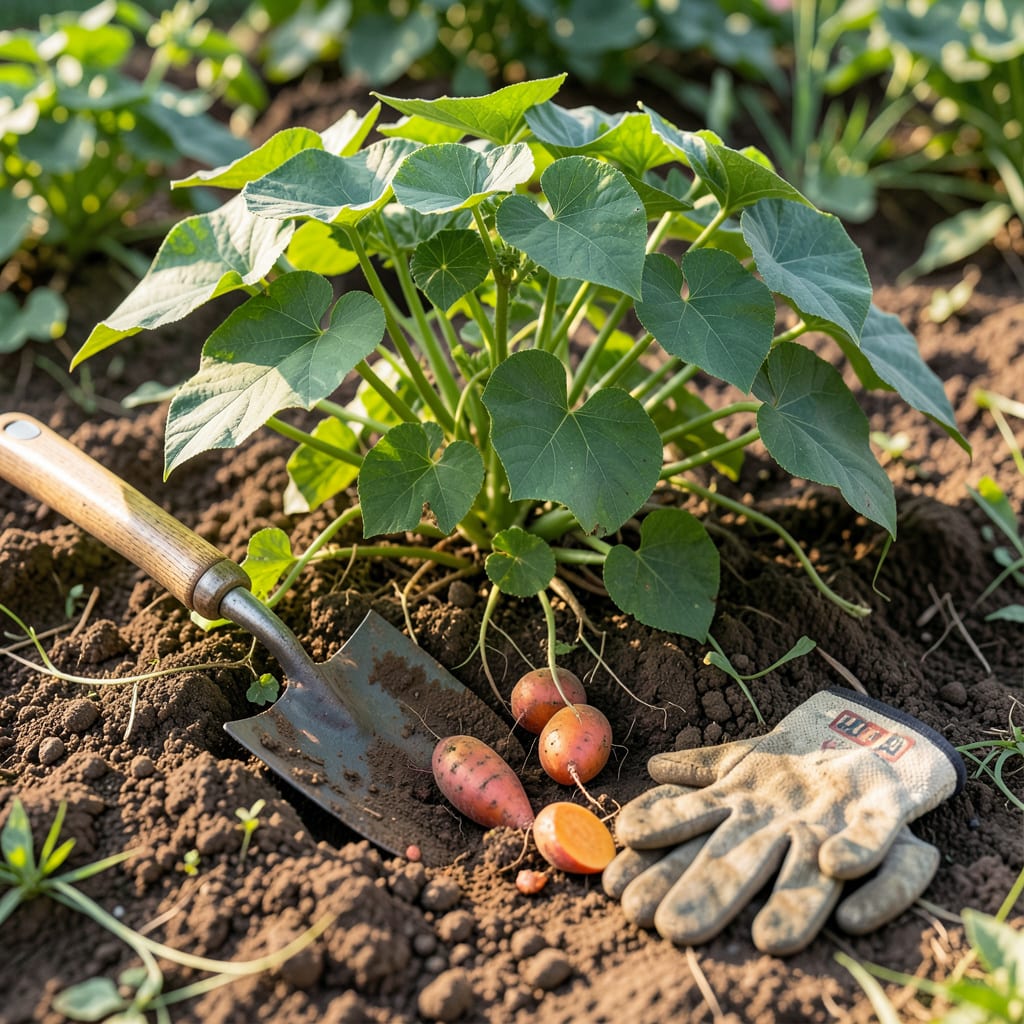
Timing your Sweet Potato 🍠 harvest perfectly can mean the difference between a bland crop and a bountiful yield of rich, flavorful tubers.
Knowing the right moment to dig them up ensures maximum sweetness and storage life. I’ll show you exactly when and how to get it right.
Knowing when to harvest sweet potatoes starts with observing the vines and leaves. As the tubers mature, the vines slow their growth and the leaves begin to yellow. This visual cue is nature’s way of signaling the crop is nearing readiness.
Another key indicator is the size and skin of the potatoes. Mature tubers typically reach 3-5 inches in length with a firm, smooth skin that resists pressure. If the skin feels soft or bruises easily, they need more time in the ground.
| Sign | Description |
|---|---|
| Leaves yellowing | Vines start to decline in color |
| Vine growth slows | New growth stops or reduces |
| Firm skin | Resists thumbnail pressure |
| Size 3-5 inches | Optimal tuber length achieved |
I always check the days to maturity for my specific variety. Most sweet potatoes take 90-120 days from planting to harvest. If you planted in May or June, you can expect to dig them up in September or October, just before the first frost.
The first frost is a critical deadline. Sweet potatoes cannot tolerate frost, so I make it a priority to harvest them 1-2 weeks before the first expected frost in my area. This gives the tubers time to cure properly.
For a more hands-on test, I gently brush away soil near the base of the plant to check tuber size. If they’re still small, I wait another week or two. Patience here pays off with larger, sweeter potatoes at harvest time.
Another trick I use is watching the weather forecast. If a cold snap is approaching, I’ll harvest early rather than risk losing the crop. Sweet potatoes can handle a light frost on the vines, but the tubers themselves can be damaged if the soil gets too cold.
It’s also important to consider soil temperature. Sweet potatoes prefer soil temps above 55°F. If the soil cools below this, the tubers may stop growing, signaling it’s time to harvest regardless of other factors.
Finally, remember that over-mature sweet potatoes can become tough or stringy. If you notice the vines dying back completely, it’s a sign they’ve reached peak maturity and should be harvested soon to maintain the best flavor and texture.
By combining these visual cues, timing guidelines, and environmental factors, you’ll be able to determine the perfect moment to harvest your sweet potatoes for the best possible yield 🌱
Harvest timing for sweet potatoes varies significantly by region and climate. In southern zones (7-11), the long, warm growing season allows harvests from late August through October. The tubers can stay in the ground longer without frost risk.
For northern gardeners (zones 3-6), the window is tighter. I aim to harvest all sweet potatoes by mid-September at the latest, as the first frost typically arrives in October. Waiting too long risks cold soil damaging the crop.
I always monitor soil temperature as harvest time approaches. When the soil drops below 55°F, it’s a clear signal to start digging, regardless of the calendar date. This is especially important in cooler climates where autumn arrives early.
In drought-prone regions, I’ve found that watering deeply a week before harvest helps. It softens the soil for easier digging and prevents tuber cracking during extraction. Just avoid watering the day before to prevent muddy conditions.
For container-grown sweet potatoes, the rules are slightly different. Since the roots are more exposed, I begin checking for readiness 2 weeks earlier than in-ground plants. The confined space can accelerate maturity.
Remember that early varieties like Georgia Jet may be ready in 90 days, while Beauregard often needs the full 100-120 days. Always check your seed packet for specific maturity times and adjust accordingly.
By aligning your harvest with these regional guidelines and microclimate factors, you’ll maximize both yield and flavor for your sweet potatoes 🌱
Harvesting sweet potatoes too early is a common mistake that results in small, underdeveloped tubers. I always wait until the vines show signs of maturity, like yellowing leaves or slowed growth.
Another error is harvesting after frost has already damaged the tubers. Sweet potatoes can’t handle frost, so I
⚠️ Warning: Harvesting too early or too late can ruin your crop. Always check the weather forecast and plant maturity signs before digging.
I’ve learned that rough handling during harvest can bruise the tubers, leading to rot during storage. I use a garden fork to carefully lift the soil, avoiding direct contact with the potatoes.
Improper curing is another misstep. After harvesting, I cure my sweet potatoes in a warm, humid place for about 10 days to enhance their sweetness and storage life.
Finally, storing in cold temperatures can cause a hard core and off-flavors. I keep my cured sweet potatoes in a cool, dry place around 55-60°F to maintain quality 🌱
Most varieties need 90-120 days from planting to harvest. Early types like Georgia Jet may be ready in 90 days, while Beauregard often needs the full 120 days for best flavor.
Picking before maturity results in small, underdeveloped tubers with less sweetness. Wait until vines show yellowing leaves or slowed growth for best results. Patience pays off with better yield.
No, they cannot tolerate frost. Harvest 1-2 weeks before the first expected frost to prevent damage. Cold soil can harm tubers, so timing is critical in cooler climates.
Check 2 weeks earlier than in-ground plants. The confined space accelerates maturity. Look for firm skin and 3-5 inch size as key indicators.
