
Beautiful Plants For Your Interior
Beautiful Plants For Your Interior
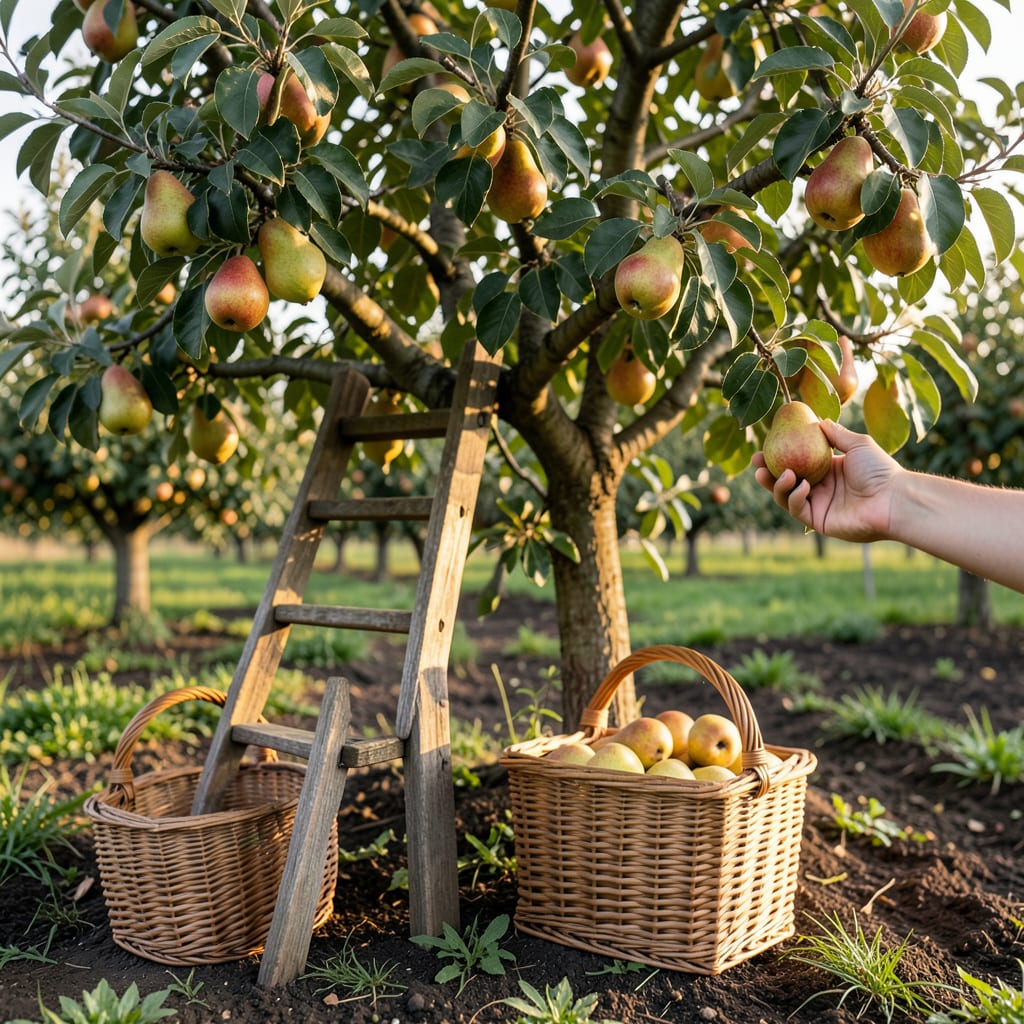
Timing your pear harvest perfectly can make the difference between a perfect bite and a disappointing one. The 🍐 Pear doesn’t ripen well on the tree, so knowing when to pick is crucial.
From July to September, watch for color changes and a slight give when gently pressed. I’ll show you exactly how to spot the right moment for the sweetest, juiciest fruit.
Timing your pear harvest depends on the variety. Early types like Bartlett ripen in late July to August, while mid-season varieties such as Anjou are ready in August to September. Late types like Bosc often extend into September or October. I always check the color and firmness first. 🌿
Regional climate plays a big role too. In warmer zones (USDA 7-9), pears may ripen 2-3 weeks earlier than in cooler areas (USDA 5-6). Watch for color changes and a slight softening near the stem as key indicators.
| Variety | Harvest Window | Ripeness Signs |
|---|---|---|
| Bartlett | Late July – August | Yellow color, sweet aroma |
| Anjou | August – September | Red-green blush, slight give |
| Bosc | September – October | Russeted skin, firm texture |
| Comice | Late August – September | Pale green, buttery feel |
Bartlett pears are my go-to for early picking. They transition from green to yellow and emit a sweet fragrance when ready. I start checking them in late July and harvest in batches as they ripen unevenly. 🪴
Anjou pears hold their shape well and ripen in mid-season. Look for a red blush on the skin and a subtle softening. These are great for storage, lasting up to 3 weeks in cool conditions.
Bosc pears are late bloomers with a russeted skin and elongated neck. They’re best picked in September or October when the skin turns brownish-yellow. Their firm texture makes them ideal for baking or canning.
Comice pears are a delicacy with their buttery texture. They ripen in late August to September. I wait until they develop a pale green hue and feel slightly soft at the stem.
For all varieties, the “tilt test” works wonders. Gently lift the pear and tilt it horizontally. If it detaches easily, it’s ready. If it resists, give it a few more days.
In hotter climates, pears may ripen faster, so monitor them closely. In cooler regions, they might need the full season to mature. Always taste-test one or two to confirm sweetness before harvesting the entire crop.
Remember, pears don’t ripen well on the tree. Once picked, they continue to ripen indoors. Store them at room temperature to speed up the process or in the fridge to slow it down. ✂️
Testing pear ripeness is simple with the right techniques. The tilt test is my favorite—gently lift the pear and tilt it. If it detaches easily, it’s ready to pick. This works for most varieties like Bartlett and Anjou. 🌿
Another reliable method is the gentle squeeze check. Press near the stem with your thumb. If it gives slightly, the pear is ripe. Avoid squeezing too hard, as this can bruise the fruit.
The seed color inspection is foolproof. Cut open a pear and check the seeds. If they’re dark brown, the fruit is ripe. Light-colored seeds mean it needs more time on the tree. 🪴
Tracking days from bloom helps predict harvest time. Most pears take 90 to 150 days to mature. Count forward from your tree’s bloom date to estimate when to start checking for ripeness.
For Bartlett pears, I also use the color change as a cue. They shift from green to yellow when ready. Anjou pears develop a red blush, while Bosc pears turn a russeted brown.
Finally, the stem separation test is key. If the stem pulls away from the branch with a gentle twist, the pear is at peak ripeness. This method is especially useful for Comice pears, which are delicate. ✂️
Even experienced gardeners can make harvest mistakes that spoil their pears. The biggest error I see is picking based on size alone. A large pear isn’t necessarily ripe, and harvesting too early results in hard, sour fruit. 🌿
Another common pitfall is ignoring weather impacts. Heavy rain or extreme heat can accelerate ripening, while cool spells may delay it. Always adjust your harvest timing based on recent weather patterns in your area.
⚠️ Warning: Don’t let these mistakes ruin your pear harvest!
Harvest by size only: Big doesn’t mean ripe—test with tilt and squeeze methods first.
Ignore weather: Heat speeds up ripening; rain can cause splitting if left too long.
Store unripe pears warm: They’ll turn mushy. Refrigerate unripe pears to slow ripening.
Improper storage conditions can also ruin a good harvest. Never store unripe pears at room temperature if you’re not ready to ripen them. Instead, keep them in the refrigerator to slow the process until you’re ready to enjoy them. 🪴
Many gardeners also overlook the stem’s role in ripeness. If the stem doesn’t separate easily, the pear isn’t ready. Forcing it off can damage the fruit and the tree. Always use the gentle twist method to check.
Finally, don’t harvest all your pears at once. Different fruits on the same tree ripen at different rates. I pick in batches, checking a few every few days to ensure I catch each at its peak ripeness. ✂️
Use the tilt test: gently lift the pear and tilt it. If it detaches easily, it’s ready. Also check for color change and a slight give near the stem.
Yes! Pears ripen best off the tree. Store them at room temperature to speed up ripening or in the fridge to slow it down. Never store unripe pears warm if you’re not ready to ripen them.
This often happens due to weather stress like heavy rain or wind. It can also indicate overcrowding—thin fruits early to prevent this.
No, varieties have different harvest windows. Bartlett ripens in July-August, while Bosc may not be ready until September-October. Always check variety-specific timelines.
