
Beautiful Plants For Your Interior
Beautiful Plants For Your Interior
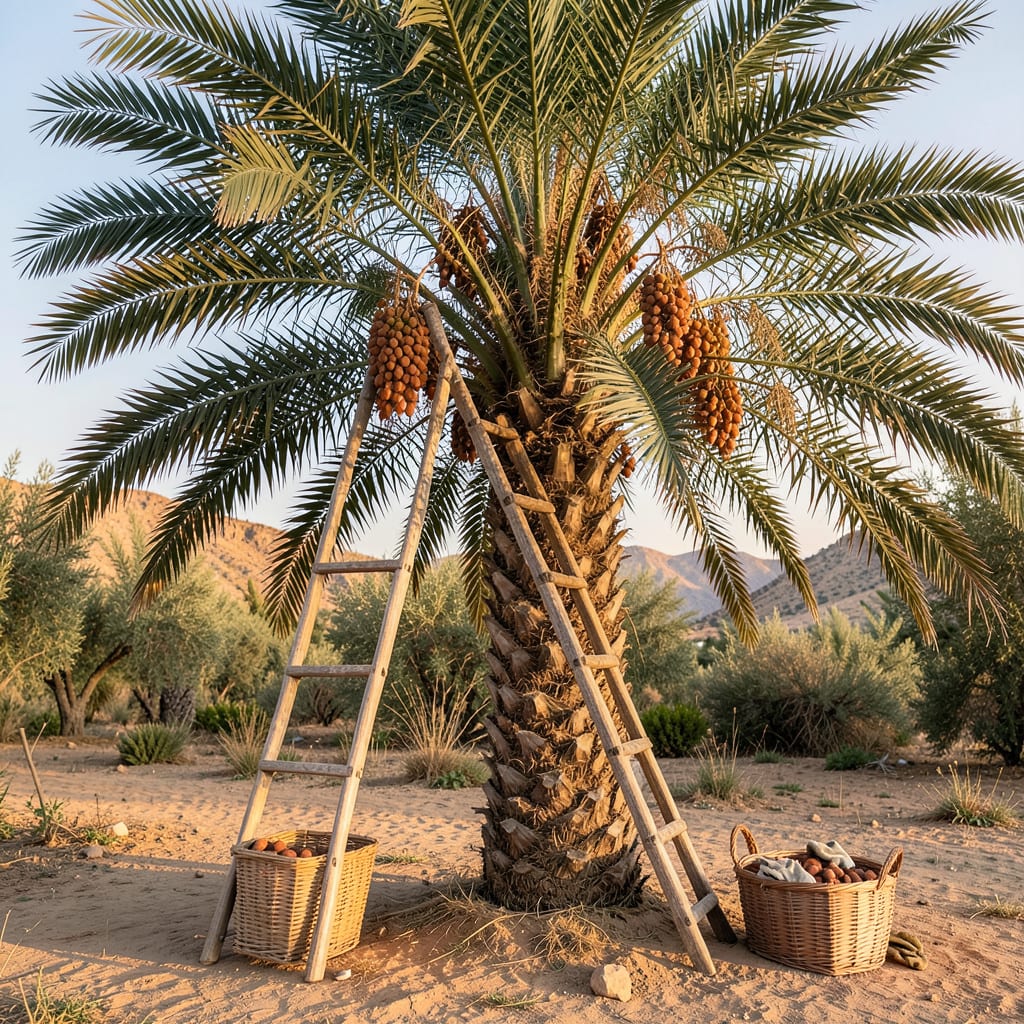
There’s nothing quite like biting into a perfectly ripe date from your own 🌴 Date Palm. Timing the harvest right makes all the difference between a mediocre snack and a transcendent experience.
I’ll show you the subtle signs that signal your dates are at their peak. From color changes to texture, you’ll learn how to pick them at just the right moment for maximum sweetness.


Harvesting date palm fruit at the perfect moment is an art. I’ve learned that watching for visual cues is the most reliable way to ensure sweetness. The first sign is a color shift from green to golden or deep brown.
As the dates mature, their skin texture changes from smooth to slightly wrinkled. This wrinkling is a natural part of the ripening process and indicates sugar concentration is peaking.
| Stage | Visual Sign | Ripeness Status |
|---|---|---|
| Kimri | Green color | Not ready |
| Khalal | Yellow/red hue | Crunchy, not sweet |
| Biser | Brown, slight wrinkle | Firm, mild sweetness |
| Tamar | Deep brown, fully wrinkled | Peak sweetness |
The Tamar stage is what we’re aiming for. At this point, the dates separate easily from the bunch with a gentle tug. Their sugar content is highest, and the texture is soft and chewy.
Another key indicator is the aroma. Ripe dates emit a rich, sweet fragrance that’s hard to miss. If you don’t smell that characteristic sweetness, they’re likely not ready yet.
I always check the fruit’s firmness too. Underripe dates feel hard, while overripe ones may be mushy. The perfect harvest window is when they’re soft but still hold their shape.
For Medjool dates, this stage typically arrives in late summer to early fall. But climate plays a role—hotter regions may see ripening 2-4 weeks earlier than cooler areas.
Don’t forget to observe the date cluster as a whole. When about 80% of the dates on a bunch show these signs, it’s time to harvest the entire cluster.
If you’re growing Deglet Noor, look for a drier texture compared to Medjools. Their skin becomes more translucent as they ripen, which is a unique trait of this variety.
Remember, taste-testing is your best tool. Sample a few dates from different parts of the tree to confirm they’ve reached your desired sweetness level. 🌴
Not all date palm varieties ripen at the same time. I’ve found that Medjool dates typically reach peak sweetness in late summer, while others may need more time. Climate and growing conditions play a big role too.
Deglet Noor dates often ripen a bit later, with their harvest window extending into early fall. Their skin becomes more translucent, signaling they’re ready to pick.
| Variety | Ripening Time | Key Traits |
|---|---|---|
| Medjool | Late Summer | Soft, very sweet |
| Deglet Noor | Early Fall | Firm, semi-dry |
| Barhi | Mid Summer | Crisp when fresh |
| Halawi | Late Summer | Caramel-like flavor |
Barhi dates are unique because they can be eaten fresh off the tree in mid-summer. Their crisp texture is a favorite among many gardeners.
For Halawi dates, the late summer harvest brings out their signature caramel-like flavor. They’re smaller but pack a sweet punch.
I always recommend checking your local climate for adjustments. In hotter regions, dates may ripen 2-4 weeks earlier than average.
Monitoring the color and texture of each variety ensures you harvest at the optimal moment for the best flavor and texture. 🌴
Even experienced gardeners can make harvest mistakes with dates. I’ve seen underripe fruit picked too early, which results in hard, starchy dates that lack sweetness. This is a common error when growers focus only on size.
Another critical mistake is harvesting during rain. Moisture can cause fruit splitting and promote mold growth, ruining your entire crop. Always check the weather forecast before picking. 🌧️
⚠️ Warning: Avoid These Harvest Pitfalls
Picking underripe dates leads to poor flavor and texture. Always wait for the Tamar stage.
Harvesting in wet conditions risks mold. Choose a dry, sunny day for best results.
Storing unwashed dates can introduce contaminants. Clean and dry them before storage.
I’ve also seen timing errors where gardeners wait too long to harvest. Overripe dates can become too soft or even ferment on the tree. The window for perfect ripeness is narrower than many realize.
Improper storage preparation is another issue. Failing to clean and dry dates properly before storage can lead to spoilage. Always remove any debris or moisture first.
Lastly, ignoring variety-specific cues can lead to disappointment. Each date palm type has its own ripening signs. What works for Medjool won’t necessarily apply to Barhi or Deglet Noor. 🌴
Medjool dates are ready when they turn deep brown and develop wrinkled skin. They should feel soft and emit a sweet aroma. This typically occurs in late summer.
No, avoid harvesting during rain. Moisture can cause fruit splitting and promote mold growth. Always pick on a dry, sunny day for the best results.
Underripe dates will be hard and starchy, lacking sweetness. They won’t ripen properly off the tree. Always wait for the Tamar stage for peak flavor.
Dates typically take 180-270 days from pollination to harvest. The exact timing depends on the variety and climate. Hotter regions may see ripening 2-4 weeks earlier.
