
Beautiful Plants For Your Interior
Beautiful Plants For Your Interior
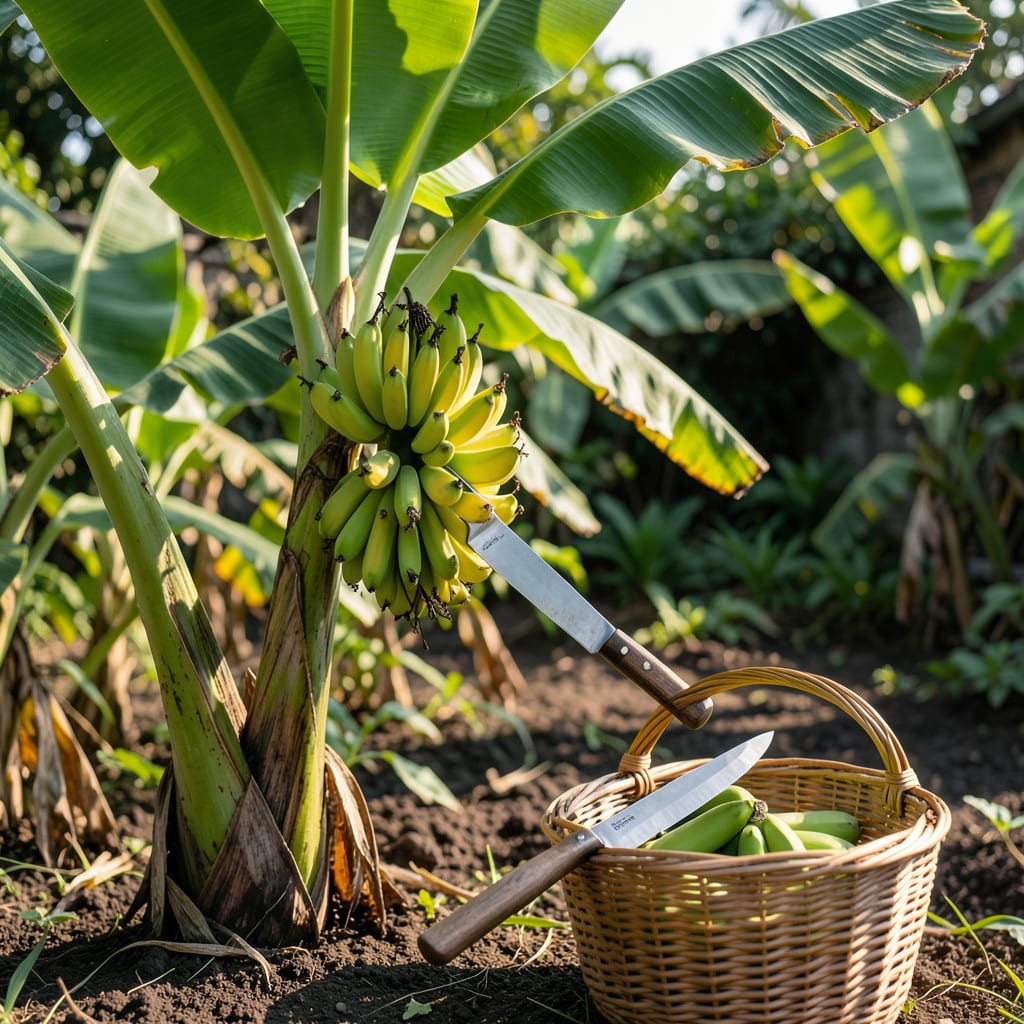
Picking bananas 🍌 at the perfect moment ensures the sweetest flavor and longest shelf life. Timing it wrong can leave you with starchy, underripe fruit.
I’ll show you the foolproof stem trick and color cues that even commercial growers rely on. Discover how to tell when your bunch is ready to come down from the plant.


Knowing the exact moment to harvest bananas ensures optimal sweetness and texture. I always look for color changes first, as the peel transitions from deep green to a lighter shade.
The fruit shape also matters—ripe bananas develop rounded edges and distinct ribs. These visual cues are especially reliable in tropical climates where bananas thrive year-round.
| Stage | Color | Shape | Flower End |
|---|---|---|---|
| Not Ready | Deep Green | Angular | Fresh Green |
| Almost Ready | Light Green | Plumping | Drying |
| Ready to Pick | Pale Green/Yellow | Full & Rounded | Dry & Wrinkled |
In cooler climates, like USDA Zone 6, bananas may take longer to show these signs. I recommend checking the flower end daily as it begins to dry, which is a key indicator of readiness.
The bunch size also provides clues. Mature bananas typically reach 7-9 inches in length, though dwarf varieties may be smaller. I’ve found that consistent size across the bunch signals uniform ripeness.
Another reliable sign is the skin texture. As bananas near harvest, the peel becomes smoother and less waxy. This change is subtle but noticeable if you inspect the fruit closely each day.
For commercial growers, timing is critical to prevent bruising during transport. At home, I pick bananas just as the first yellow hints appear, ensuring they ripen perfectly indoors.
Remember, environmental factors like humidity and temperature affect ripening speed. In high humidity, bananas may mature faster, so adjust your checks accordingly.
I also watch for bunch weight. A heavy bunch often means the fruit is plump and ready. Lift the bunch gently—if it feels substantial, it’s likely time to harvest.
Finally, trust your daily observations. Bananas won’t ripen uniformly, so I focus on the majority of the bunch showing readiness signs before picking. This approach minimizes waste and maximizes flavor. 🌿
I always rely on the stem trick for the most accurate harvest timing. The flower end (opposite the stem) is the key indicator—it dries and blackens as bananas ripen.
This method is more reliable than skin color alone, especially in variable climates. Even commercial growers use this to avoid picking starchy bananas too early.
I start checking the flower end when bananas reach 70% maturity. A dry, wrinkled appearance means the starches are converting to sugars.
In humid conditions, the drying process may take longer. I adjust my checks to every 2 days in these cases to catch the perfect moment.
The stem itself should still be green when you harvest. If it’s drying, you’ve waited too long, and the fruit may split.
I’ve found that morning harvests work best. The fruit is firmer, reducing bruising during handling. Always use sharp pruners to cut the bunch cleanly.
This method ensures sweet, firm bananas every time. Trust the stem trick—it’s the professional standard for a reason. 🌿
Harvesting bananas too early is a common mistake that results in starchy, flavorless fruit. I see this often when gardeners rely solely on skin color without checking the flower end.
Another frequent error is waiting too long. Overripe bananas on the plant can split or drop, wasting your hard-earned harvest. The flower end should be dry but the stem still green when you pick.
Picking too early yields starchy fruit—always check the flower end first.
Waiting too long risks splits or drops—harvest when 3-4 fingers show readiness.
Ignoring environmental factors like humidity can lead to uneven ripening.
I’ve also seen gardeners mishandle the bunch during harvest, causing bruising. Always use sharp pruners and support the weight as you cut to prevent damage.
Temperature plays a role too. In cooler climates, bananas may take longer to show readiness signs. I adjust my checks to daily inspections as the fruit nears maturity.
Finally, don’t assume uniform ripening. Bananas on the same bunch can mature at different rates. I focus on the majority showing signs before making the cut. This ensures the best flavor and texture. 🌿
Look at the tip opposite the stem—it should be dry and slightly wrinkled. This drying indicates starches are converting to sugars. Check daily as bananas approach maturity for best results.
Pick when the peel shifts from deep green to pale green or light yellow. A few yellow hints are fine, but avoid waiting until fully yellow. The skin should also appear smoother.
Yes, but they may take longer to show readiness signs. In cooler climates, inspect daily and prioritize the flower end test over color. Morning harvests work best when temperatures are stable.
Splitting happens when left on the plant too long. Harvest when 3-4 fingers show readiness signs to prevent this. Use sharp pruners and support the bunch to avoid damage.
