
Beautiful Plants For Your Interior
Beautiful Plants For Your Interior
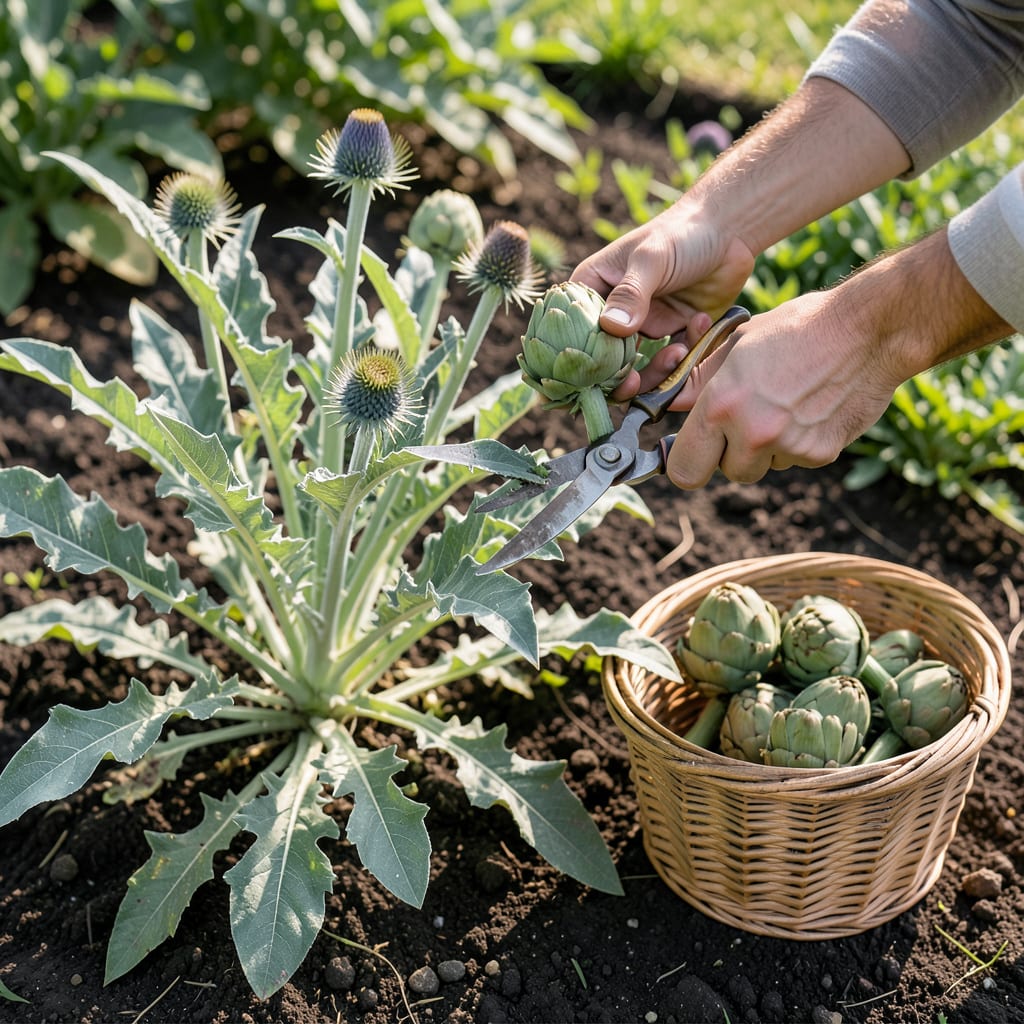
Knowing when to pick your 🌰 Artichoke can make or break your harvest. Timing is everything with this finicky vegetable.
I’ll show you the key visual signs to watch for, so you can enjoy tender, flavorful buds every time. Let’s get started.


I always tell fellow gardeners that artichokes reveal themselves when they’re ready. The most obvious sign is the bud size—typically 3-5 inches in diameter for most varieties. But size alone isn’t enough; you need to check multiple indicators.
Look for tight, compact buds with firm texture and deep green or purple coloring depending on the variety. The top scales should just begin to separate slightly, signaling the perfect window for picking.
| Sign | Ready Indicator |
|---|---|
| Bud Size | 3-5 inches in diameter |
| Color | Deep green or purple hue |
| Texture | Firm and heavy feel |
| Scales | Slight separation at the top |
| Stem | Thick and sturdy, about 1-2 inches |
The stem thickness is another telltale sign. A ready artichoke will have a sturdy stem, usually 1-2 inches thick. If the stem is thin or spongy, the bud isn’t mature enough for harvesting.
I’ve found that timing matters most in the morning. That’s when the buds are most firm. If you squeeze a ready artichoke, you’ll feel a slight give in the outer bracts, but it should still feel solid.
Avoid harvesting if the bud feels light for its size or if the scales are tightly closed with no separation. These are signs the artichoke isn’t ready and needs more time to develop its tender heart.
In my garden, I watch for the first sign of loosening at the bud’s crown. This is nature’s way of saying, “Pick me now!” If you wait until the scales fully open, you’ll miss the window for the best flavor and texture.
The color transformation is subtle but important. Green varieties should be rich and vibrant, while purple types develop a deep, almost metallic sheen. Dull or faded colors often mean the bud is past its prime.
Remember, artichokes grow quickly in warm weather. I check my plants daily during peak season to catch them at the perfect moment. Missing the window by even 24-48 hours can turn a prime bud into a tough, fibrous one.
Lastly, harvest with care. Use sharp pruners or a knife to cut the stem about 1-2 inches below the bud. This preserves the plant and encourages more buds to form for future harvests.
With practice, you’ll develop an eye for the perfect harvest time. Trust me, your taste buds will thank you for the attention to detail 🌱
I always use the squeeze test to confirm my artichokes are ready. Gently press the bud between your fingers—it should feel firm but yield slightly if it’s at peak ripeness.
Another method is examining the bracts closely. Ready artichokes have tight outer leaves with just a hint of separation at the top. If they’re completely closed, wait another day or two.
Check the weight of the bud—a ready artichoke feels heavy for its size. Lift a few to compare. The heaviest ones are usually the most mature and ready to harvest.
The stem tells a story too. A thick, sturdy stem (about 1-2 inches) indicates the plant has put energy into the bud. Thin stems mean the artichoke needs more time to develop.
If you’re still unsure, cut one open to check the heart. A tender, light-colored heart means it’s ready. Dark or fibrous hearts need more time to mature properly.
I recommend checking your plants early in the morning when buds are firmest. This is the best time to assess readiness and make your harvest decisions.
With these tests, you’ll never harvest an artichoke too early or too late again ✂️
I’ve seen many gardeners make the same artichoke mistakes year after year. The biggest error is waiting too long to harvest. Once those tight scales start to open, the bud quickly becomes tough and fibrous.
Another common pitfall is picking too early. Small, underdeveloped buds lack the tender heart that makes artichokes so delicious. Patience is key—let them reach full size and show those readiness signs first.
Don’t wait until the bud opens—it’ll be too tough to eat. Never harvest when the scales are sealed—it’s not ready yet.
Mishandling the buds can also ruin your harvest. Always use clean, sharp tools to cut the stem. Pulling or twisting can damage the plant’s base and reduce future yields.
I’ve learned that ignoring stem thickness leads to disappointment. A thin stem means the artichoke isn’t mature enough. The stem should feel as sturdy as the bud itself.
Lastly,
With these tips, you’ll avoid the most common pitfalls and enjoy a bountiful harvest of tender artichokes 🌿
Most varieties are ready at 3-5 inches in diameter. Look for a globular, plump shape with deep color. Smaller buds usually need more time to develop their tender hearts.
Once scales begin to open, the bud quickly turns tough and fibrous. The prime window is just before this happens, typically when top scales show slight separation.
No, tightly sealed scales mean it’s not ready. Wait until you see slight separation at the top and the bud feels firm but yields slightly when squeezed.
Early morning is ideal when buds are firmest. This is when you’ll get the most accurate assessment of texture and weight for harvesting.
