
Beautiful Plants For Your Interior
Beautiful Plants For Your Interior
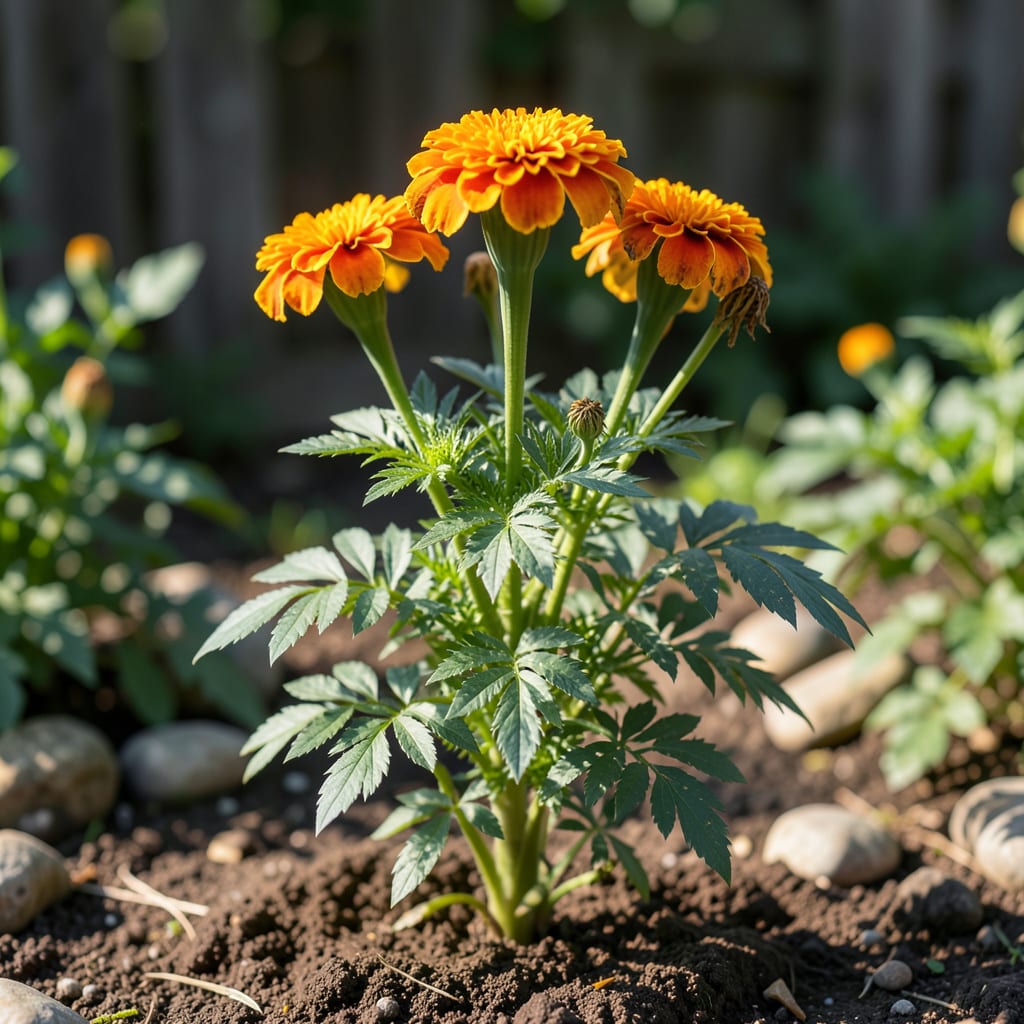
Marigolds attract deer, rabbits, slugs, and snails as primary eaters, while aphids, spider mites, and Japanese beetles may feed on leaves and flowers. Their strong scent deters some pests but not all hungry animals.
I’ve noticed that while marigolds are often planted as pest deterrents, their bright blooms and tender foliage actually make them a target for certain creatures. 🔥 The irony is that their pyrethrin compounds—naturally occurring insect repellents—don’t phase larger animals like deer who simply munch through them anyway. What’s more, slugs and snails are drawn to the moisture-rich leaves, especially during damp weather conditions.
Gardeners frequently overlook that marigolds’ pest-repelling reputation has exceptions. ✨ The same plants that keep mosquitoes away might become a buffet for rabbits when other food sources grow scarce. I always recommend pairing them with stronger deterrents like garlic or mint if you’re dealing with persistent herbivores in your garden.
💡 In This Article
The nutritional composition of marigolds makes them surprisingly appealing to certain herbivores. Their leaves contain about 15-20% protein and 3-5% sugars, which provides a quick energy source for animals like deer and rabbits.
The moisture content in marigold stems and leaves (approximately 80-85%) also attracts slugs and snails during dry periods when other water sources are scarce. 🌱
What’s fascinating is how different pests respond to marigolds’ pyrethrin compounds. While these natural insecticides deter mosquitoes and whiteflies, they don’t affect larger animals. Deer, for instance, have taste receptors that detect bitterness at concentrations 100 times lower than humans, yet they’ll still consume marigolds when hungry enough.
The scent that repels some insects actually becomes a beacon for others—aphids are drawn to the volatile organic compounds released by marigold flowers.
Seasonal patterns play a huge role in marigold predation. In early spring when food is scarce, rabbits will target young marigold shoots that contain higher concentrations of nutrients. During summer droughts, slugs become particularly problematic as they seek out the moisture-rich leaves.
I’ve observed that Japanese beetles prefer marigolds in their peak blooming phase (June-July) when the petals are most fragrant and tender. ✨
The physical structure of marigolds also makes them vulnerable. Their soft stems (measuring only 2-3mm in diameter) can’t support much weight, making them easy targets for grazing animals. The broad, flat leaves provide ample surface area for slugs to feed while the open flower structure allows beetles to access pollen and nectar easily.
Even the plant’s height (6-24 inches typically) puts it at the perfect level for rabbits to nibble without straining.
What many gardeners don’t realize is that marigolds’ bright colors actually attract certain pests. The yellow and orange pigments (lutein and zeaxanthin) are visible to insects at distances up to 300 feet. While these colors deter some flying insects, they act as a dinner bell for ground-dwelling pests.
The contrast between the vibrant flowers and green foliage creates a visual target that slugs can detect from several feet away, even in low light conditions. 💫
Environmental stressors can make marigolds even more appealing to pests. When plants experience drought, their sugar concentration increases by up to 40%, making them sweeter and more attractive to animals. Similarly, over-fertilized marigolds produce more tender growth that’s easier for pests to consume.
I’ve found that marigolds grown in partial shade (receiving 4-6 hours of sunlight daily) are particularly susceptible because their cell walls remain thinner and more palatable.
The feeding patterns vary dramatically between species. Deer will consume entire plants down to the ground, while rabbits prefer to nip off just the flower heads. Slugs create irregular holes in leaves, leaving behind silvery slime trails, whereas Japanese beetles skeletonize leaves by eating only the soft tissue between veins.
Understanding these distinct patterns helps in identifying which pest you’re dealing with and tailoring your protection strategy accordingly. ⚡
An often overlooked factor is how marigolds’ growth stage affects their vulnerability. Seedlings are most susceptible to slug damage, while mature plants with woody stems can better withstand rabbit grazing. The flower buds contain the highest concentration of nutrients, which is why beetles and aphids target them specifically.
I recommend paying extra attention during the first 4-6 weeks of growth when plants are establishing themselves and are most attractive to pests.
The time of day also influences feeding activity. Slugs and snails are most active between 10 PM and 2 AM when humidity is highest, while deer typically feed at dawn and dusk. Japanese beetles are most active on sunny days when temperatures exceed 85°F.
Timing your protection measures to coincide with these patterns can significantly reduce damage to your marigold plants. 💛
Yes, marigolds contain pyrethrin compounds that deter mosquitoes, whiteflies, and nematodes. However, their bright flowers and tender leaves attract deer, rabbits, and slugs. The same scent that repels some insects acts as a dinner bell for others like aphids and Japanese beetles.
Inspect plants at dawn for rabbit damage and slug trails, as these pests are most active overnight. Check for Japanese beetles in late morning when they’re sluggish from cooler temperatures. Evening is ideal for spotting deer activity before they return at dusk.
Sprinkle used coffee grounds in a 1-inch layer around plants to deter slugs and snails. The caffeine is toxic to these pests while adding nitrogen to soil. Refresh every 2-3 weeks or after heavy rain for continued protection.
Install 24-inch tall chicken wire fencing, burying 6 inches deep to prevent digging. For extra security, bend the top 6 inches outward at a 45-degree angle—rabbits won’t climb over this barrier.
Most marigolds will regrow if pests leave the stems intact. Prune damaged foliage and apply organic fertilizer to encourage new growth. Severe cases may require replanting, especially if deer have eaten plants down to the ground.
