
Beautiful Plants For Your Interior
Beautiful Plants For Your Interior
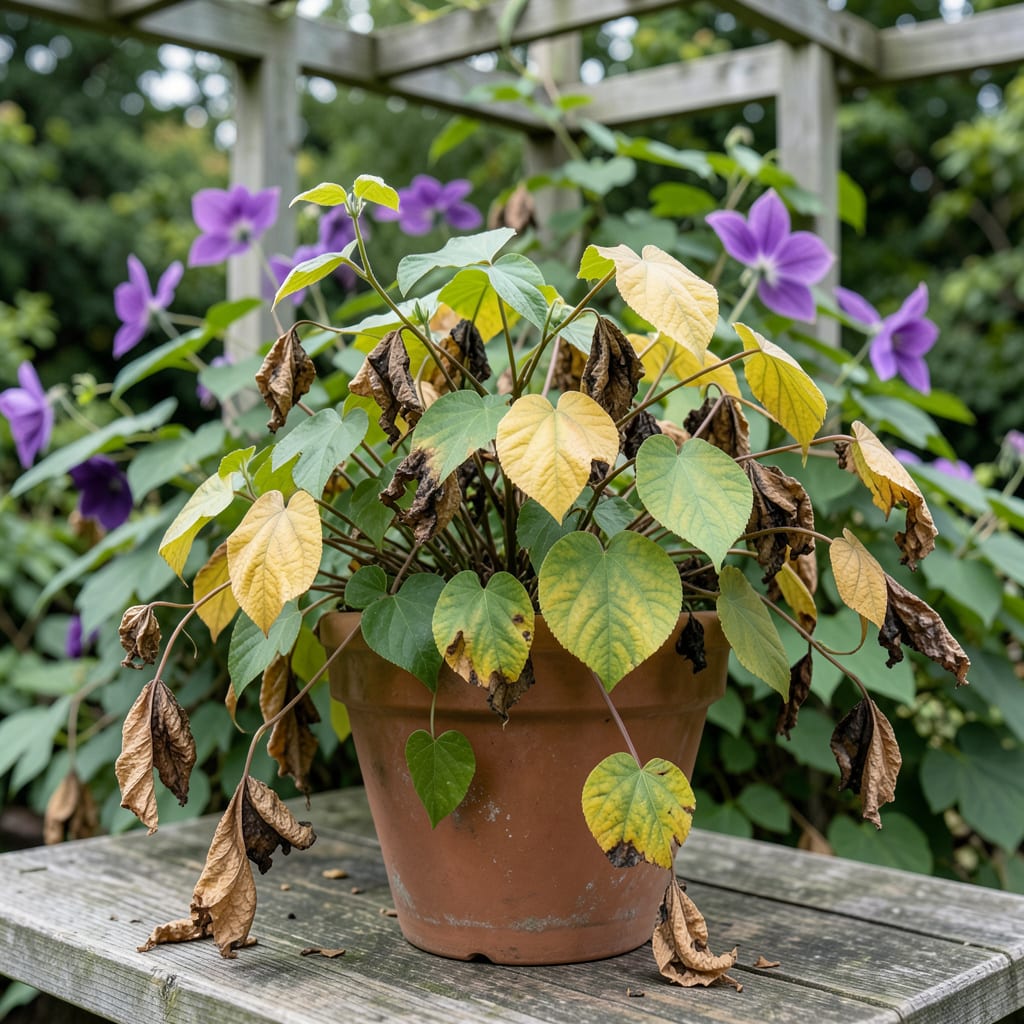
One morning your clematis looks fine, the next it’s a sad, wilted mess. Clematis wilt hits fast, turning healthy vines into blackened, collapsed stems overnight. I’ve seen it wipe out half a plant in 24 hours.
The telltale signs start at the base—black or brown lesions on stems, followed by rapid wilting of entire sections. Leaves turn black and crisp, while the rest of the plant may still look perfectly healthy. It’s shocking how quick it moves.
Here’s the thing—this fungus thrives in wet conditions, so spring and early summer are prime time. The good news? Most clematis bounce back if you act fast and cut out the infected parts.
Fair warning: don’t confuse this with drought stress. Wilted stems from lack of water perk up after a drink. Clematis wilt doesn’t.
Clematis wilt is a frustrating fungal disease that can quickly devastate your vines. Understanding its causes helps you prevent and manage it effectively. Below are the primary reasons this issue develops:
The most common culprit is the fungus Ascochyta clematidina, which thrives in warm, wet conditions. It enters the plant through wounds or natural openings, blocking the vascular system and causing rapid wilting. Another fungus, Phoma clematidina, can also trigger similar symptoms.
Overwatering or poor drainage creates the perfect environment for fungal spores to spread. Clematis roots prefer cool, moist soil, but waterlogged conditions stress the plant and invite infection. Mulching too close to the stem can also trap moisture against the base.
Dense foliage or crowded planting spaces limit airflow, keeping leaves wet longer and encouraging fungal growth. Pruning to open up the plant and spacing vines properly can reduce this risk.
Fungal spores can linger on pruning shears, garden tools, or even in the soil from previous infections. Sterilizing tools between cuts and removing infected plant debris helps prevent reinfection.
By addressing these root causes, you can significantly lower the chances of clematis wilt taking hold in your garden.
Tackling clematis wilt starts with quick action and smart prevention. Here’s how to address the most common causes and keep your plants thriving.
If you spot wilting stems with dark, water-soaked lesions, act fast. Prune the affected stems back to healthy growth—disinfect your shears with rubbing alcohol between cuts to avoid spreading the fungus. Destroy the infected material (do not compost). Apply a copper-based fungicide to the remaining plant and surrounding soil to halt further spread. For prevention, improve air circulation by spacing plants properly and watering at the base to keep foliage dry.
Soggy soil encourages fungal growth. If overwatering is the culprit, let the soil dry out between waterings—clematis prefers moist but well-drained conditions. Check the top inch of soil; if it’s dry, it’s time to water. Mulch around the base with organic material to retain moisture without waterlogging. Tip: Use a drip irrigation system to target roots directly and avoid wetting the leaves.
Heavy or clay soil can trap water, leading to root rot and wilt. Amend the planting area with compost or well-rotted manure to boost drainage. For potted clematis, ensure containers have drainage holes and use a quality potting mix. Raised beds can also help prevent water pooling. Pro tip: 💡 Test drainage by digging a small hole, filling it with water, and seeing how quickly it drains—ideally, it should empty within a few hours.
A stressed clematis is more vulnerable to wilt. Fertilize lightly in early spring with a balanced, slow-release product to promote vigorous growth. Avoid high-nitrogen feeds, which can soften stems and make them more susceptible to disease. Choose resistant varieties like Clematis montana or Clematis viticella if wilt is a recurring issue. Prevention bonus: ✨ Apply a layer of mulch to regulate soil temperature and reduce stress.
With these steps, your clematis can bounce back—and stay healthier for seasons to come!
No, it’s specific to clematis and won’t spread to other species. However, it can jump between clematis plants through contaminated tools or splashing water.
Yes! Prune infected stems below the damage and disinfect tools. Healthy growth often resumes from the base or unaffected vines.
The fungus blocks water flow in stems, causing rapid collapse. Warm, wet weather speeds up its spread.
Only remove infected parts. Healthy leaves support recovery, but dispose of diseased material far from the garden.
