
Beautiful Plants For Your Interior
Beautiful Plants For Your Interior
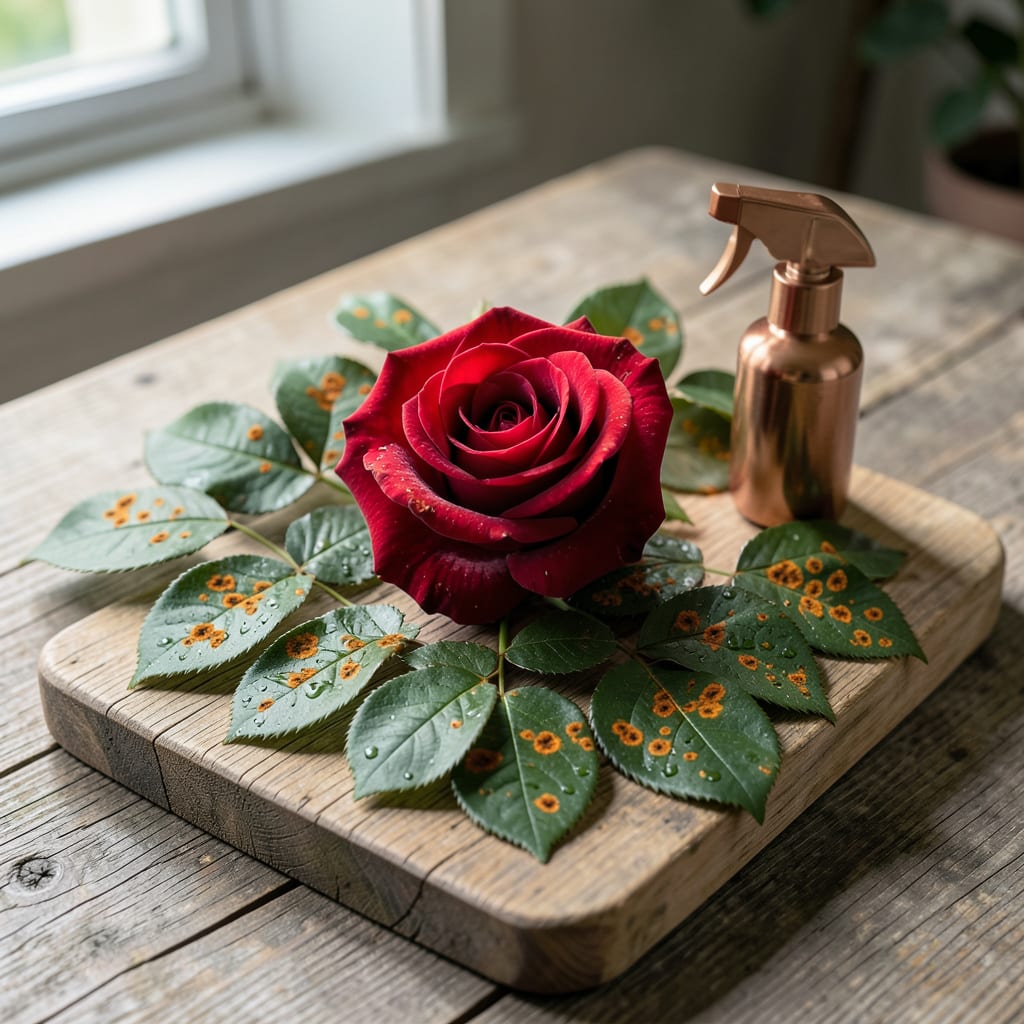
Those orange pustules on your rose leaves aren’t just ugly—they’re stealing your plant’s energy. Rose rust spreads when fungal spores land on wet foliage and take hold.
Between you and me, I’ve lost entire bushes to this after ignoring the early warning signs. The fungus thrives in cool, damp conditions, especially when leaves stay wet for 6+ hours.
You’ll first notice yellow spots on upper leaves, then those telltale orange bumps underneath. Left unchecked, it weakens stems and reduces blooms dramatically.
Prevention is simpler than cure: improve air circulation, water at the base, and remove infected leaves immediately. Here’s how to stop it in its tracks.
Rose rust is a common fungal disease caused by the pathogen Phragmidium mucronatum. It thrives under specific environmental conditions and spreads through airborne spores. Below are the primary reasons this disease takes hold in your garden.
Prolonged wetness on rose foliage is the #1 trigger for rust. The fungal spores require 6-8 hours of continuous moisture to germinate. Frequent rain, overhead watering, or high humidity create the perfect breeding ground. Even dew-heavy mornings can contribute if leaves stay wet for extended periods.
Rose rust flourishes in moderate to warm temperatures (60–75°F / 15–24°C). This range accelerates spore production and infection rates. Cooler or hotter conditions slow its spread, but the fungus can survive in a dormant state until ideal temperatures return.
Dense plantings or overgrown rose bushes trap moisture and limit airflow, creating a microclimate that fosters rust. Prune regularly to open the canopy and allow breezes to dry leaves faster. Crowded gardens also make it easier for spores to jump between plants.
The fungus overwinters in fallen leaves and stems. If old debris isn’t removed, spores can reinfect new growth in spring. Always clean up plant litter and dispose of it far from your garden—never compost it, as home compost piles often don’t get hot enough to kill the spores.
Some roses are genetically more vulnerable to rust. Hybrid teas, grandifloras, and certain climbers are frequent targets, while species like Rosa rugosa show more resistance. If rust is a recurring issue, consider planting resistant cultivars to reduce reliance on fungicides.
Rose rust can be frustrating, but with the right approach, you can stop its spread and restore your plant’s health. Below are targeted fixes for each cause, plus prevention tips to keep your roses thriving. 🌹✨
Cause: Fungal spores thrive on wet, damaged leaves. Fix: Prune and destroy (do not compost) all infected leaves, stems, and canes using sterilized shears. Disinfect tools with rubbing alcohol between cuts to prevent spreading spores. Prevention tip: 💡 Water at the base of the plant to keep foliage dry, and space roses for good airflow.
Cause: High humidity and moisture fuel rust growth. Fix: Treat affected plants with a copper-based fungicide or neem oil (apply in the evening to avoid leaf burn). Repeat every 7–10 days until symptoms disappear. Prevention tip: 🌡️ Avoid overhead watering, and water early in the day so leaves dry quickly.
Cause: Crowded plants trap moisture, creating a breeding ground for rust. Fix: Thin out dense growth and prune nearby plants to boost airflow. Remove weeds and debris around the base. Prevention tip: ✨ Plant roses with ample spacing (3–4 feet apart) and in sunny, well-ventilated areas.
Cause: Weak or stressed roses are more susceptible to rust. Fix: Fertilize with a balanced rose food (e.g., 10-10-10) to promote vigor. Avoid high-nitrogen fertilizers, which encourage leafy growth that’s prone to rust. Prevention tip: 🎯 Mulch around the base with organic matter to reduce soil-borne spores and retain moisture without wetting leaves.
By addressing the root causes and following these steps, your roses can bounce back and stay rust-free for seasons to come!
High humidity creates ideal conditions for fungal spores to thrive. When moisture lingers on leaves for 6-8 hours, it triggers germination and spread. Always water at the base to keep foliage dry.
The fungus overwinters in fallen leaves and stems. If not removed, spores reinfect new growth in spring. Always clean up plant debris and dispose of it far from your garden.
No, never compost infected plant material. Home compost piles rarely get hot enough to kill fungal spores. Burn or bag the debris for disposal instead.
