
Beautiful Plants For Your Interior
Beautiful Plants For Your Interior
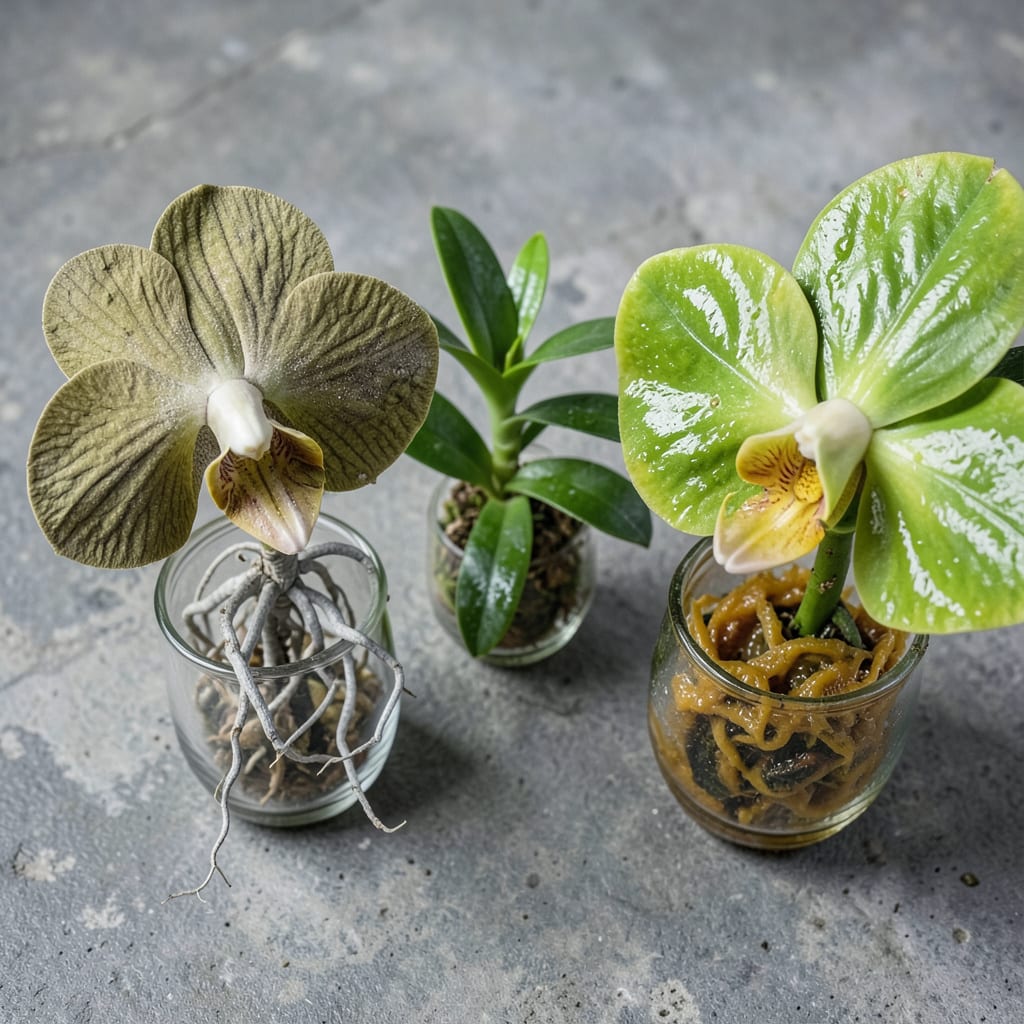
That moment when your orchid’s leaves start looking “off” is every plant parent’s nightmare. I’ve been there—staring at yellowing leaves or limp roots, wondering if I drowned them or left them thirsty. The good news? Both problems are fixable once you know what to look for.
Underwatered orchids send clear distress signals: wrinkled leaves that feel papery, silver-gray roots, or pseudobulbs that shrivel like raisins. Overwatered ones go the opposite direction—mushy yellow leaves, blackened roots, and that telltale sour smell from the pot. The tricky part? Some symptoms overlap, which is why I always check the roots first.
Here’s what changed everything for me: roots tell the real story. Healthy ones are plump and green (when wet) or silvery (when dry). Rotten roots turn brown and squishy, while dehydrated ones look like shriveled wires. Once you spot the difference, the fix becomes straightforward—adjust watering, trim damage, and let the plant recover.
Most orchids bounce back surprisingly well with the right care. We’ll cover exactly how to diagnose your plant’s issue and the step-by-step recovery process that’s saved my collection more times than I can count. No more guessing games—just clear solutions.
Orchids are epiphytes—they naturally grow on trees or rocks, not in soil! Their roots are covered in velamen, a spongy tissue designed to absorb moisture and air. When potted in dense, soil-like mixes, roots suffocate if overwatered because:
Actionable fix: Use chunky bark-based mixes (fir bark, perlite, or LECA) to mimic their natural habitat. Repot every 1–2 years to prevent compaction.
Orchids die from routine-based watering (e.g., “every Monday”) instead of need-based care. Their water needs fluctuate with:
Actionable fix: Check moisture by sticking a wooden chopstick 2 inches deep—if it’s dry, water; if damp, wait. Use the “finger test” for bark mixes (top inch should dry between waterings).
Yellow leaves or droopy stems often trigger panic-watering—but these signs can mean both underwatering and overwatering! Here’s why:
| Symptom | Underwatered Cause | Overwatered Cause |
|---|---|---|
| Wrinkled leaves | Cells lose turgor (pressure) from dehydration. | Roots rot, unable to absorb water even if soil is wet. |
| Yellowing leaves | Chlorosis from nutrient uptake failure (dry roots can’t absorb fertilizers). | Fungal toxins (e.g., Fusarium) poison leaves; often starts at the base. |
Actionable fix: Diagnose roots first. Healthy roots are plump and green; mushy/brown roots = overwatering; shriveled/gray roots = underwatering.
Orchids metabolize water slower in:
Actionable fix: Adjust watering with the environment:
If your orchid is dry, wrinkled, or limp, it’s likely thirsty! Here’s how to revive it:
💡 Pro Tip: After soaking, let excess water drain completely—never let your orchid sit in a saucer of water!
Yellowing leaves, mushy roots, or a foul smell? Your orchid is drowning! Act fast:
🌡️ Pro Tip: If rot has spread to the stem, dab with 3% hydrogen peroxide (1 part peroxide to 2 parts water) to disinfect.
Avoid future drama with these habits:
| ❌ Don’t Do This | ✅ Do This Instead |
|---|---|
| Water on a rigid “once a week” schedule | Check moisture levels before watering |
| Use dense soil or moss (holds too much water) | Repot in chunky orchid bark mix |
| Let water pool in the saucer | Empty saucers immediately after watering |
There’s no one-size-fits-all schedule! Most orchids thrive with watering every 7-10 days, but check the roots first. Healthy roots are plump and green when wet, silvery when dry. Use the finger test: if the top inch of mix feels dry, it’s time to water.
Yes, but quick action is key! Trim all black, mushy roots with sterilized scissors, then repot in fresh bark mix. Skip watering for 5-7 days to let remaining roots heal. If only one healthy root remains, your orchid can still regrow with proper care.
This usually signals dehydration! Wrinkled leaves mean the plant is using its stored water reserves. Soak the roots for 10-15 minutes in room-temperature water, then mist the leaves. If leaves stay wrinkled after 24 hours, check for root damage.
Ice cubes are controversial! While they provide slow water release, the cold can shock tropical orchids. If you prefer this method, limit to 1-2 small cubes per week and place them away from the crown to prevent rot.
Check the pattern: yellow leaves starting from the bottom often mean overwatering, while top leaves yellowing suggest underwatering. Also examine roots—brown/mushy means too much water, while gray/shriveled means too little.
